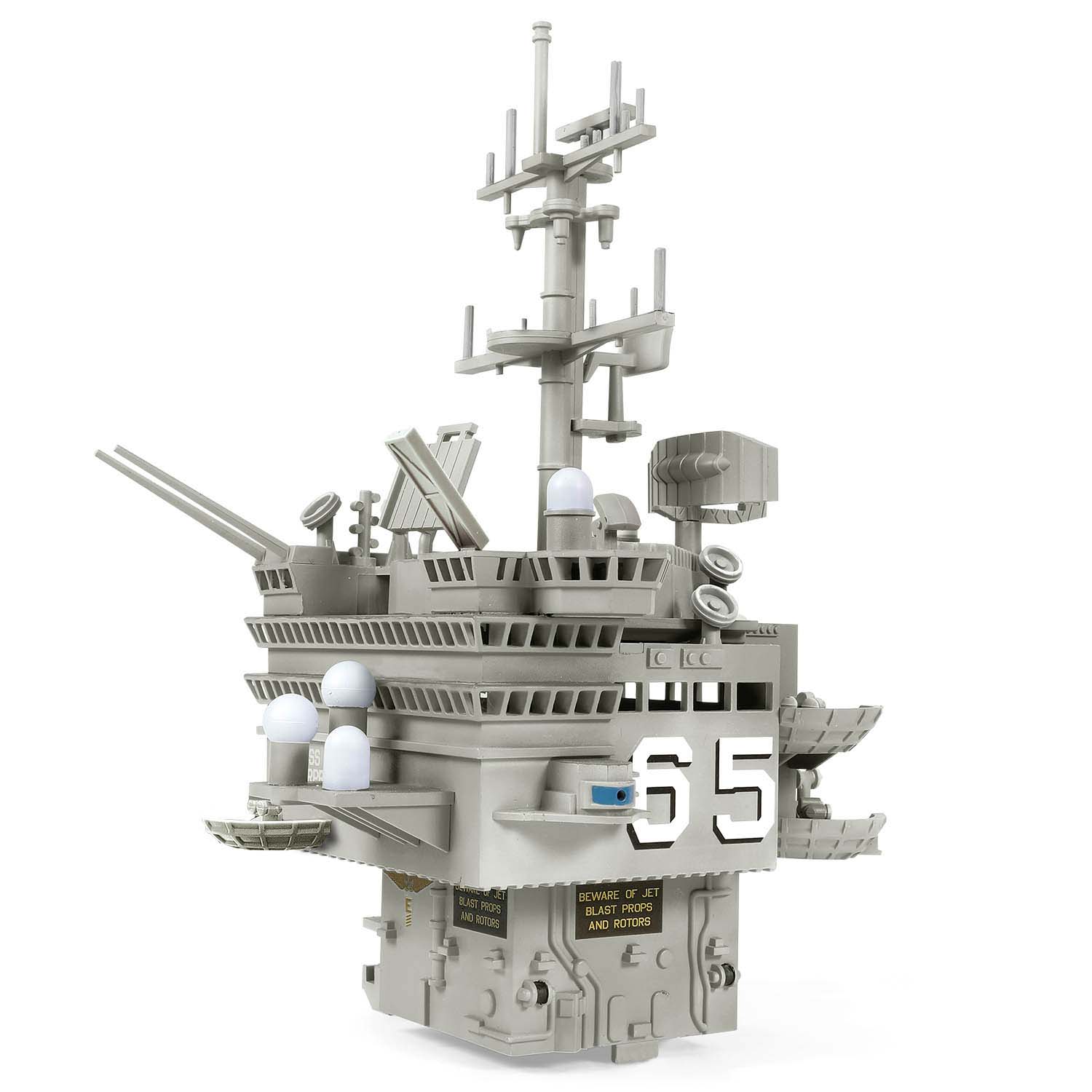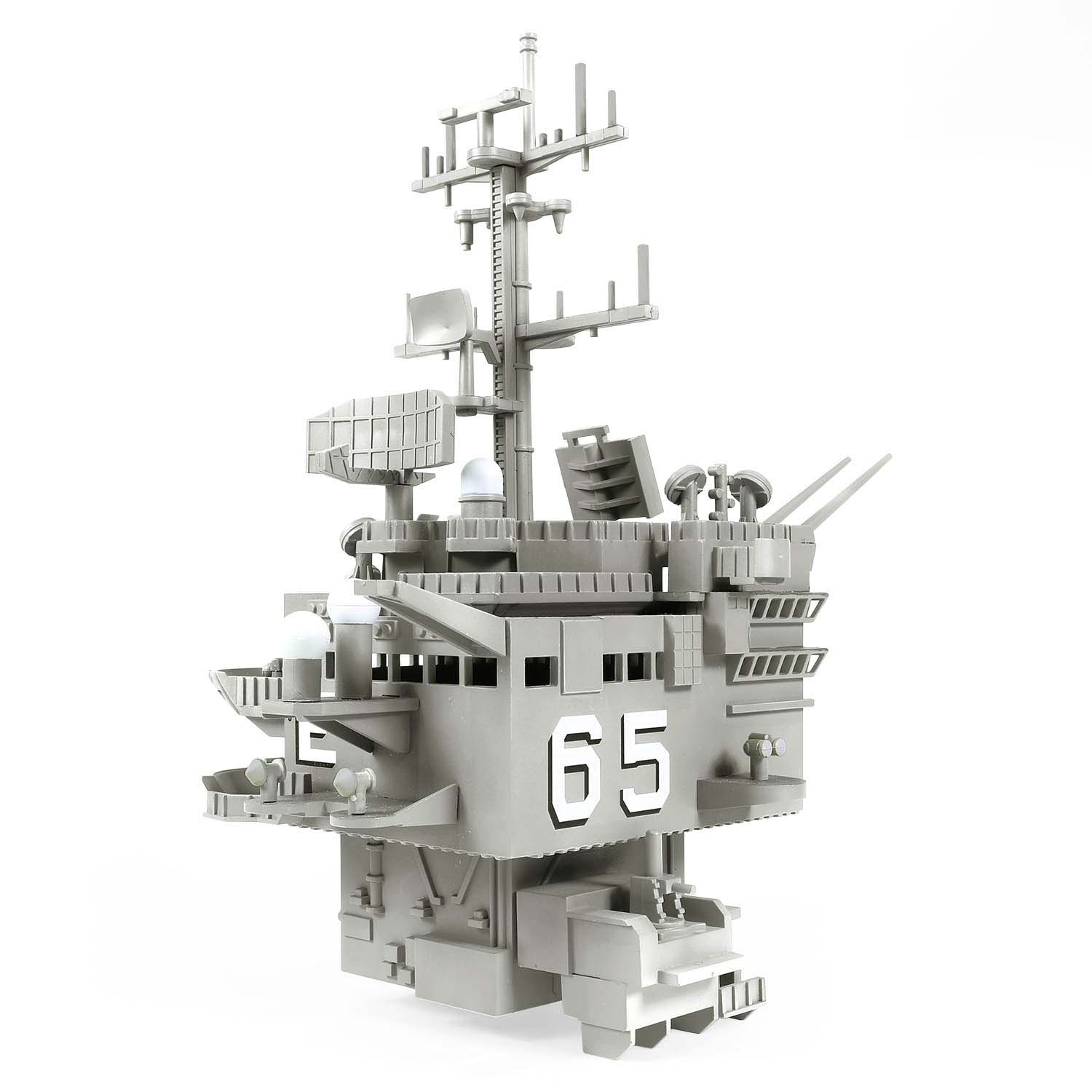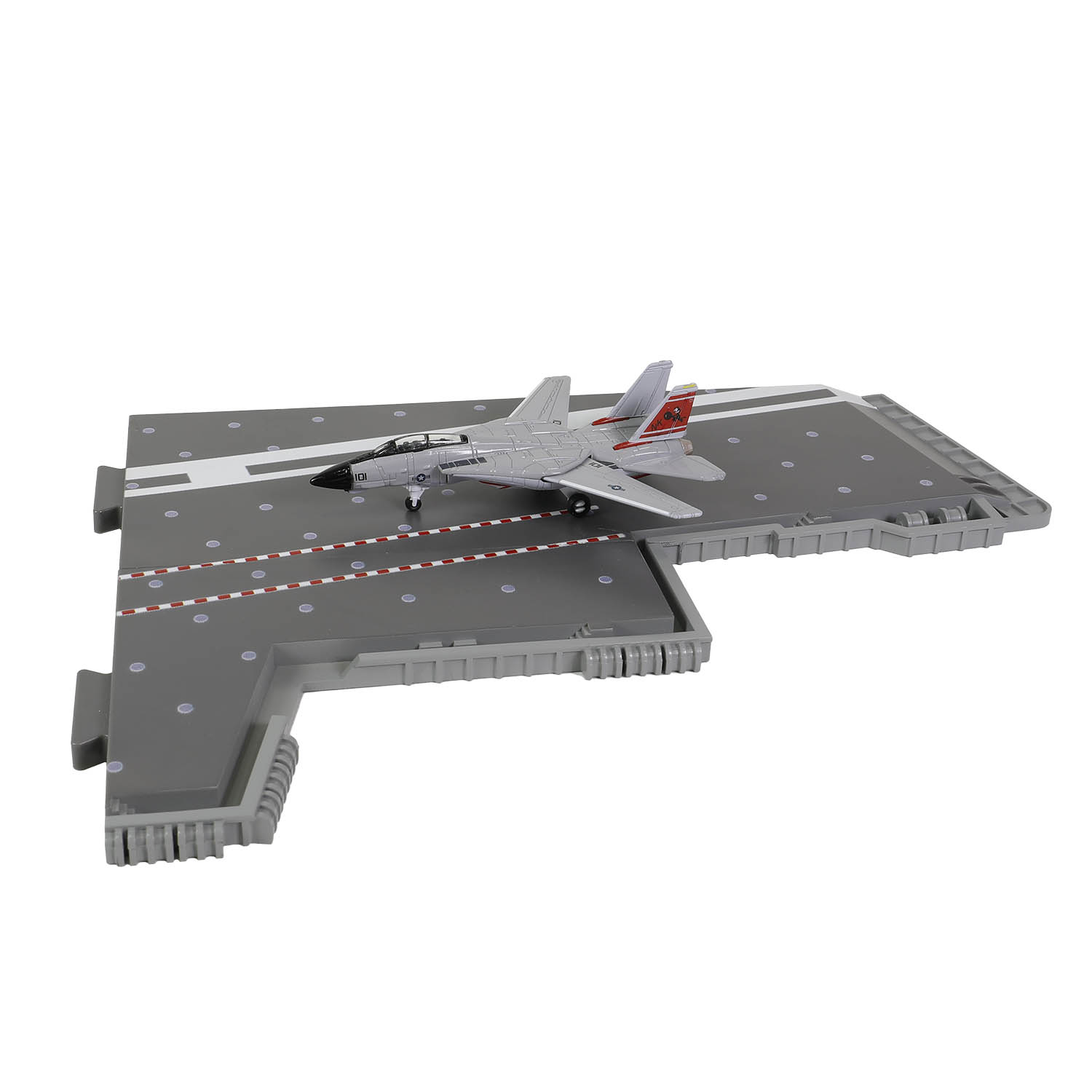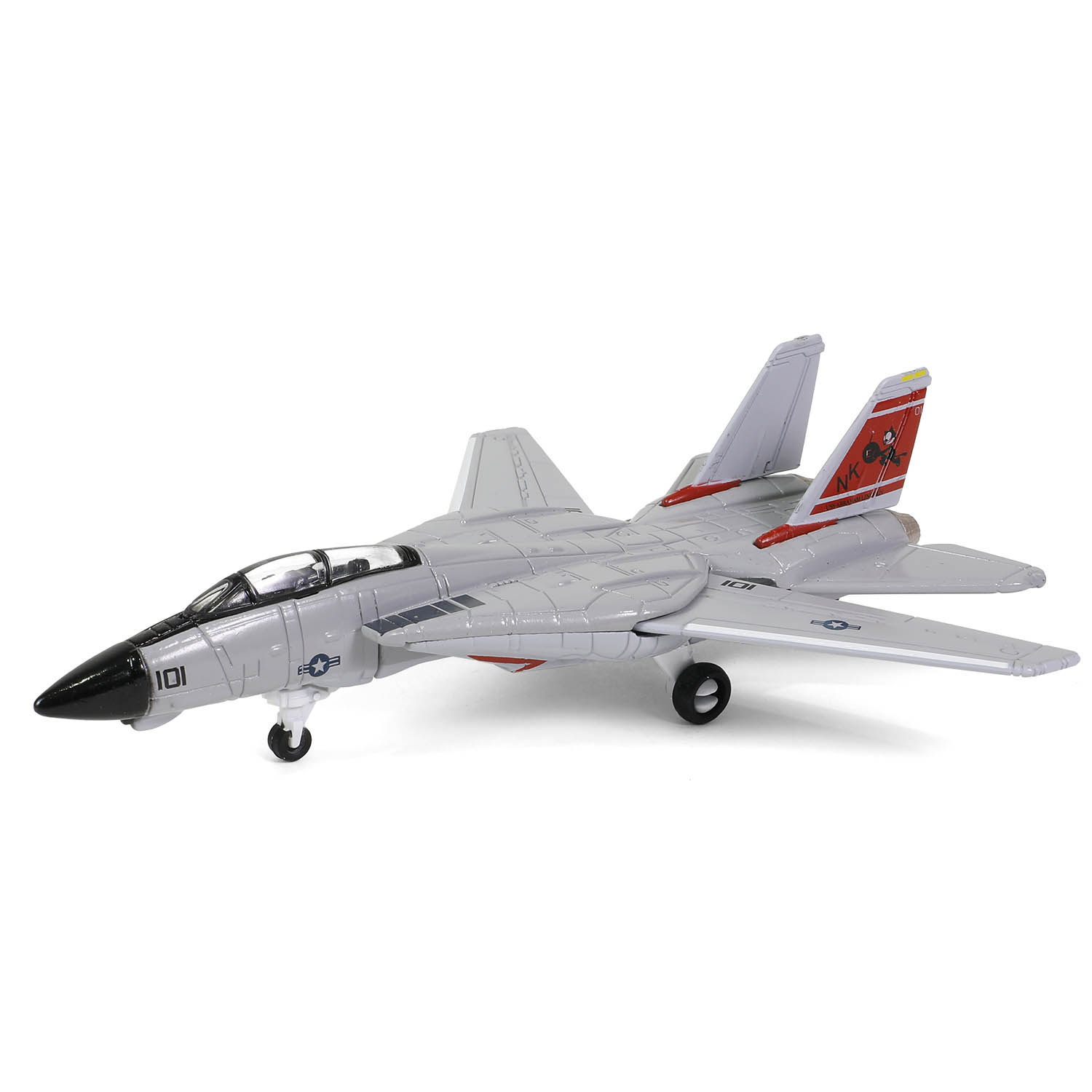






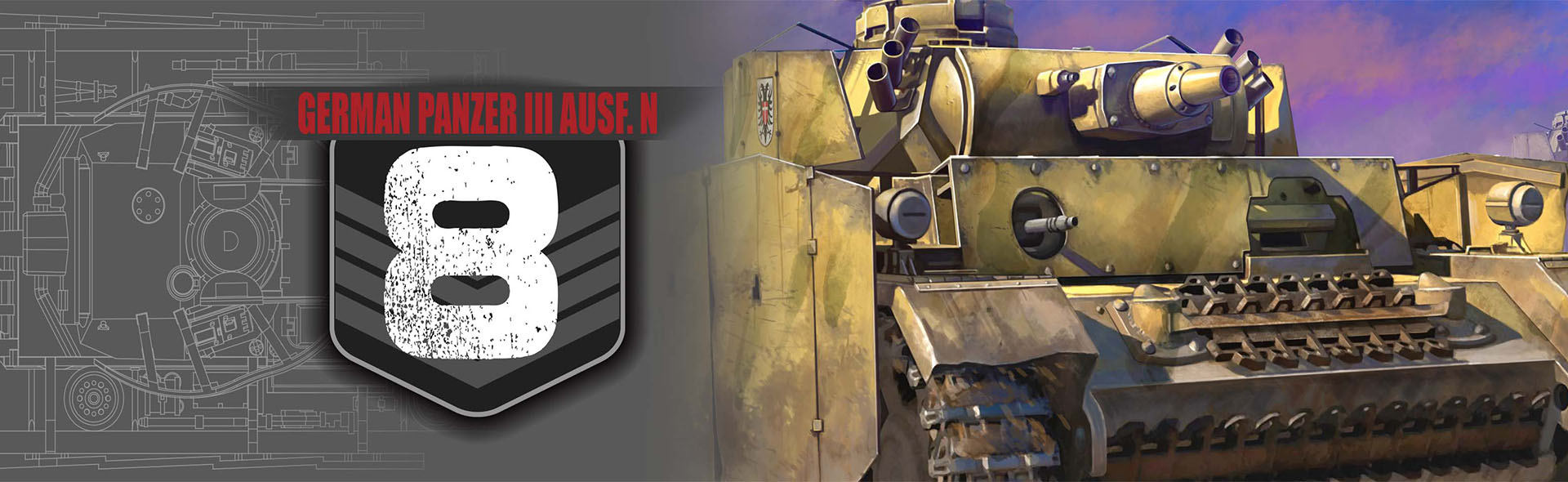
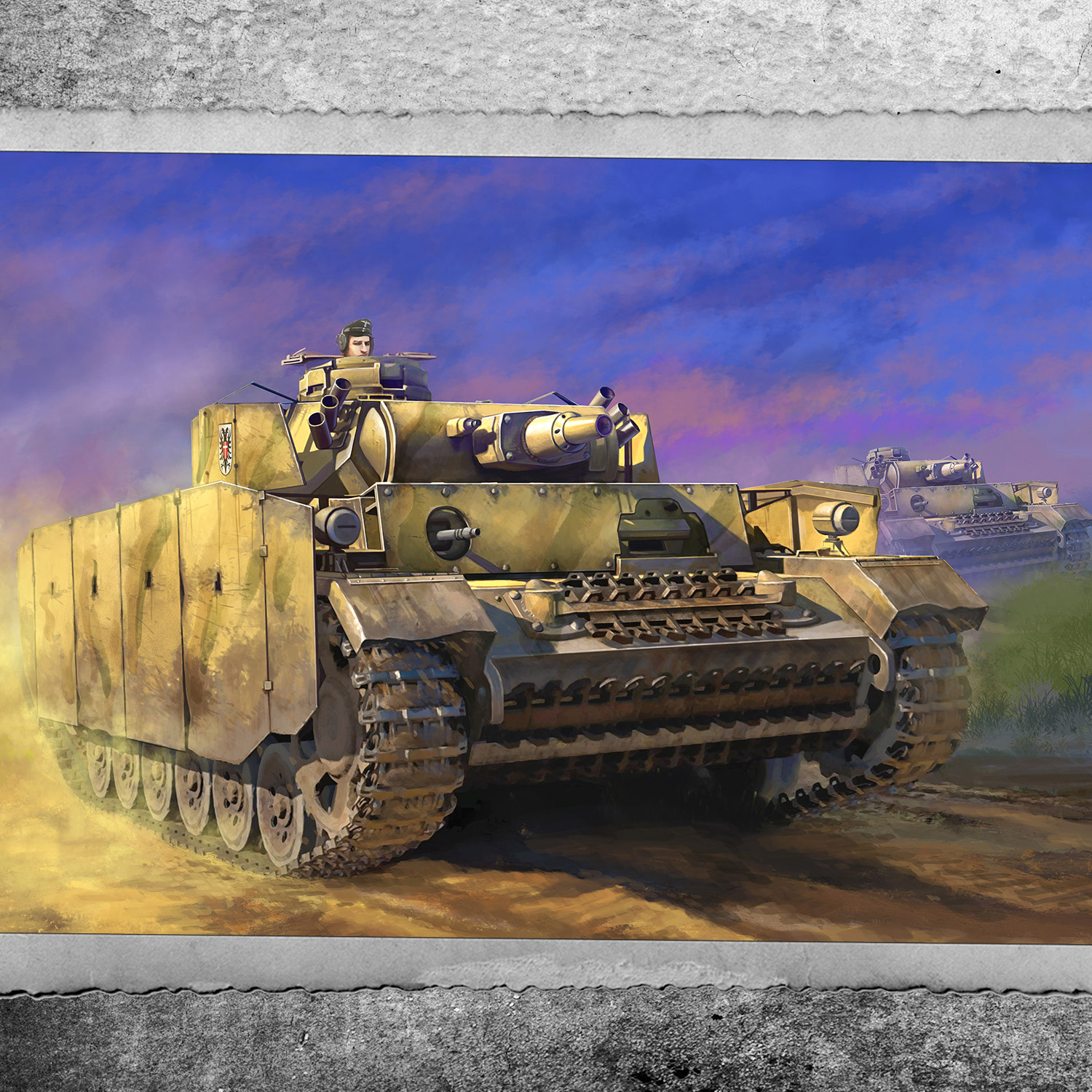
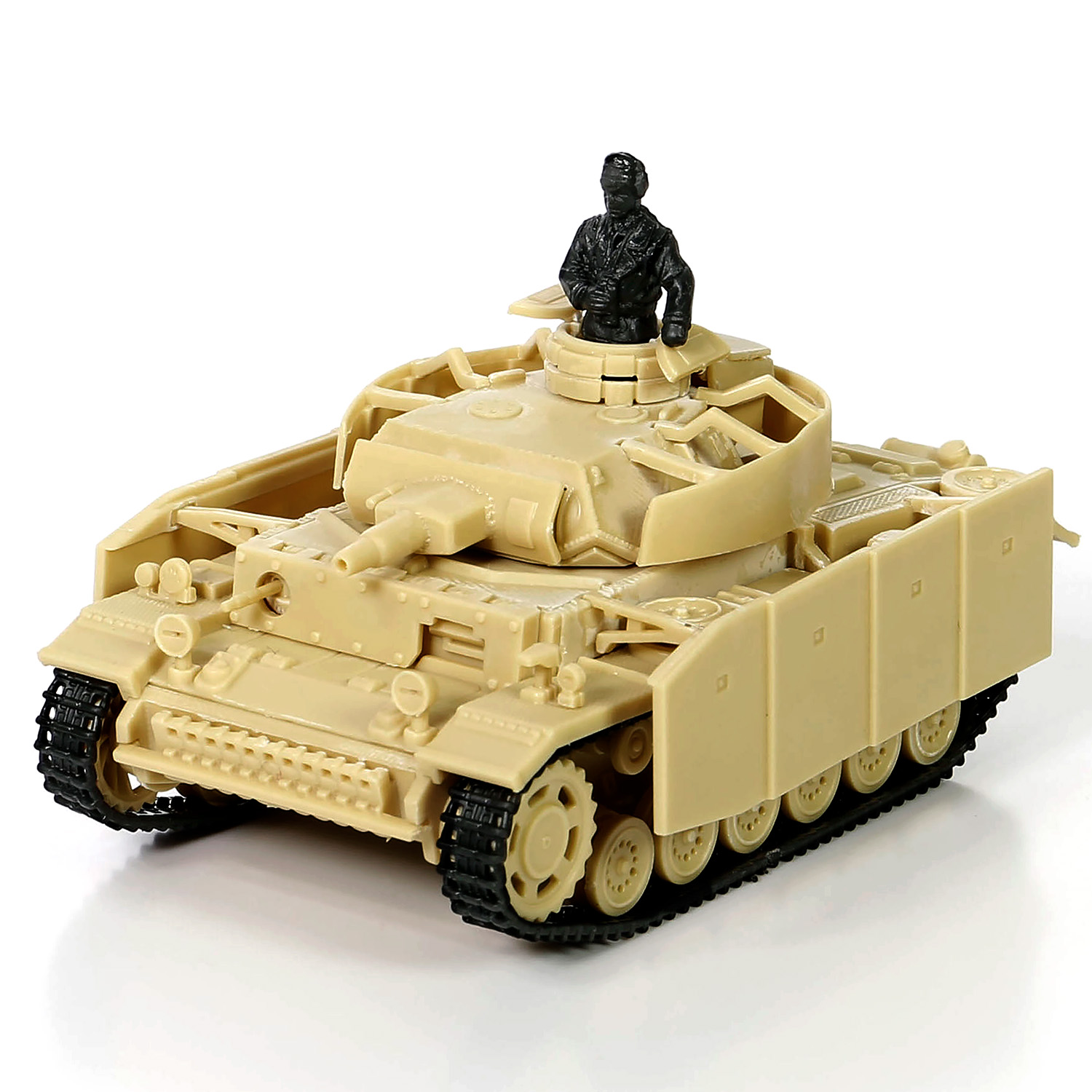
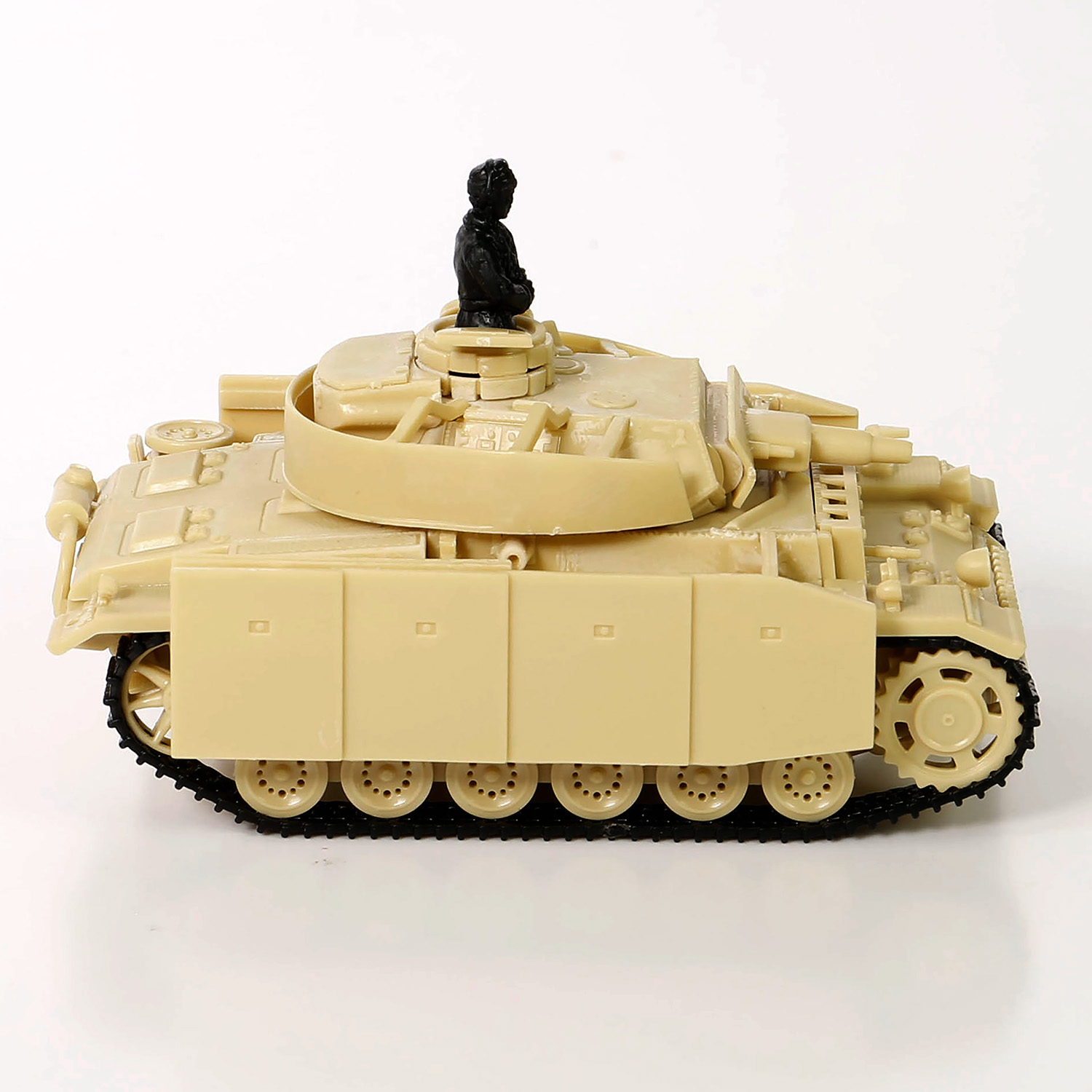
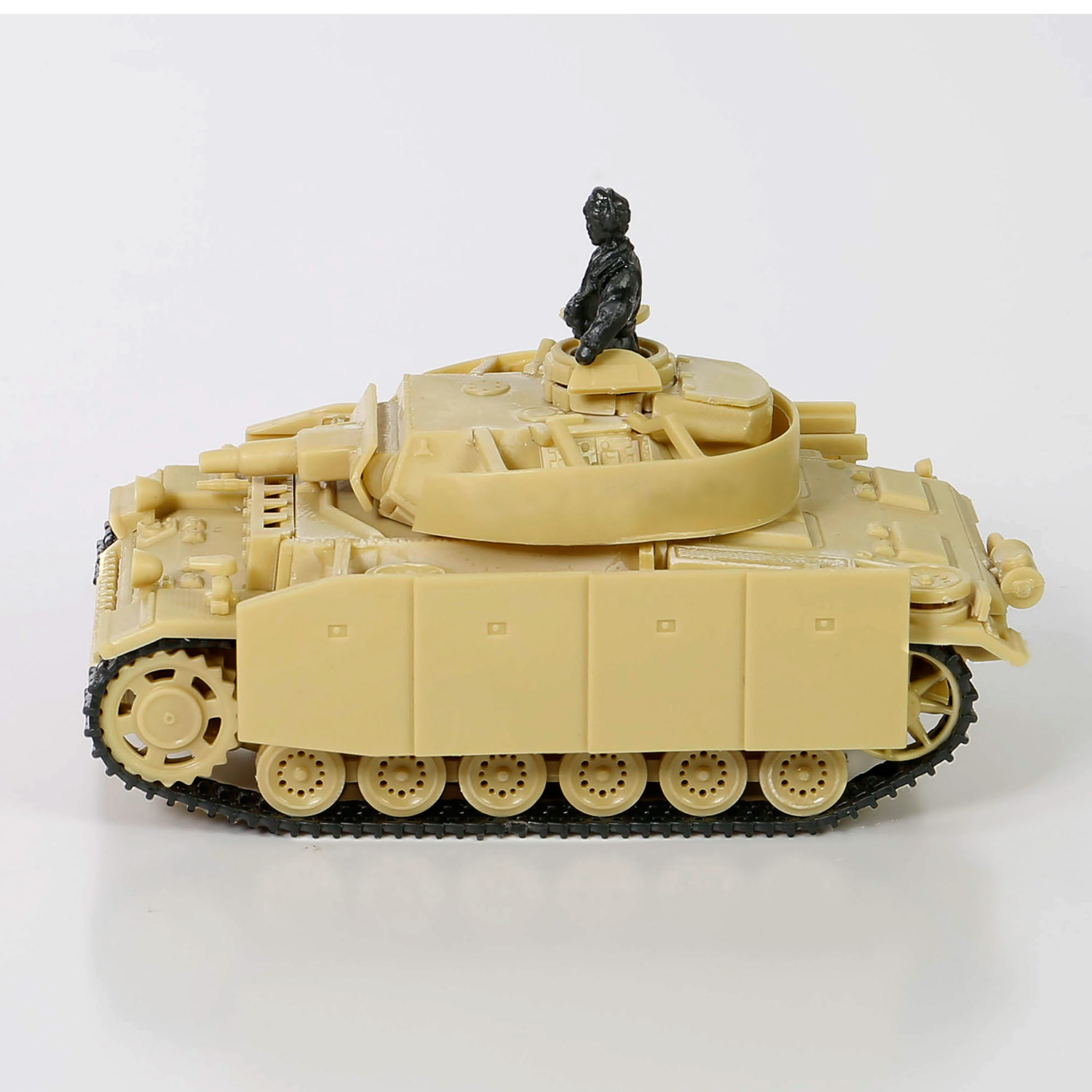
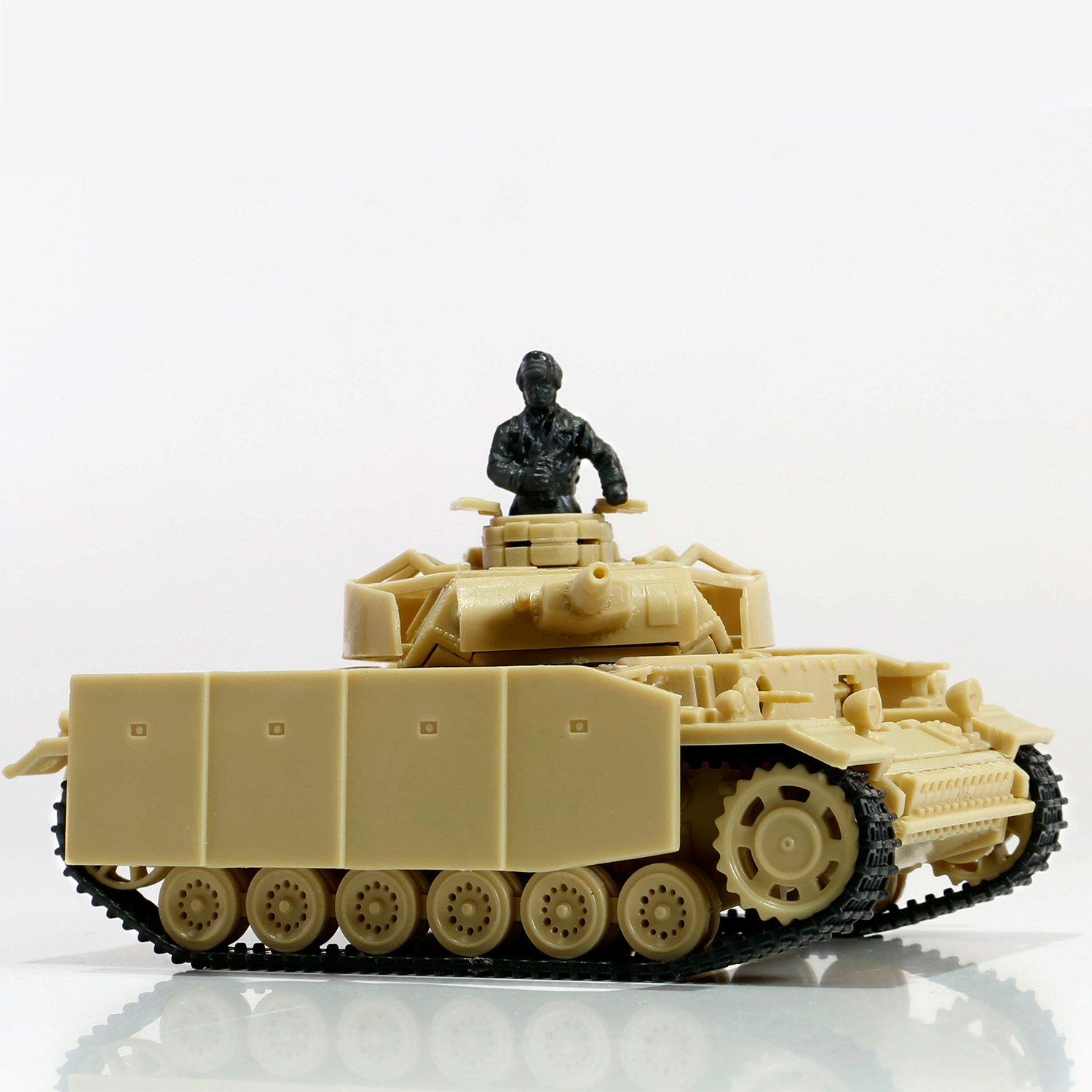
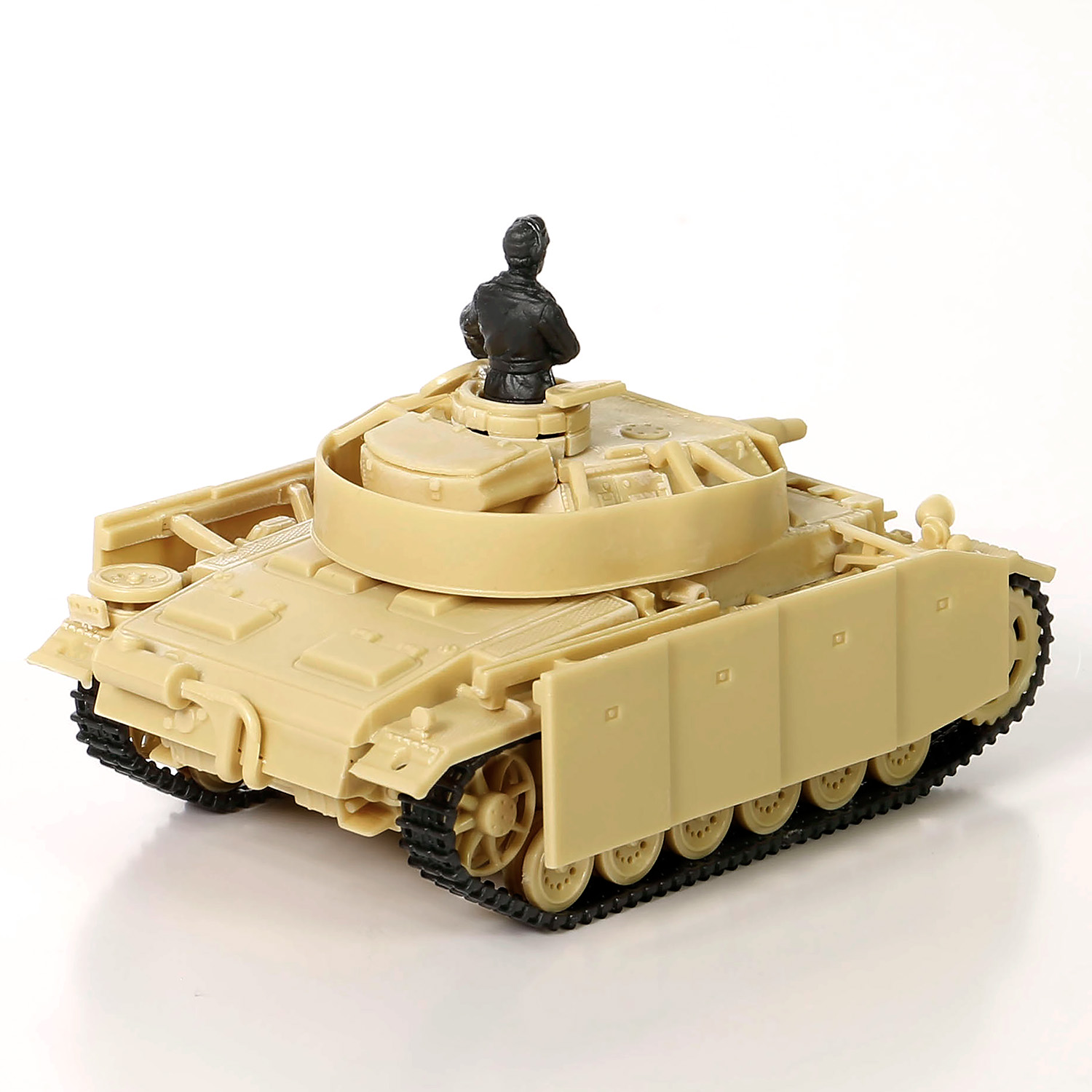
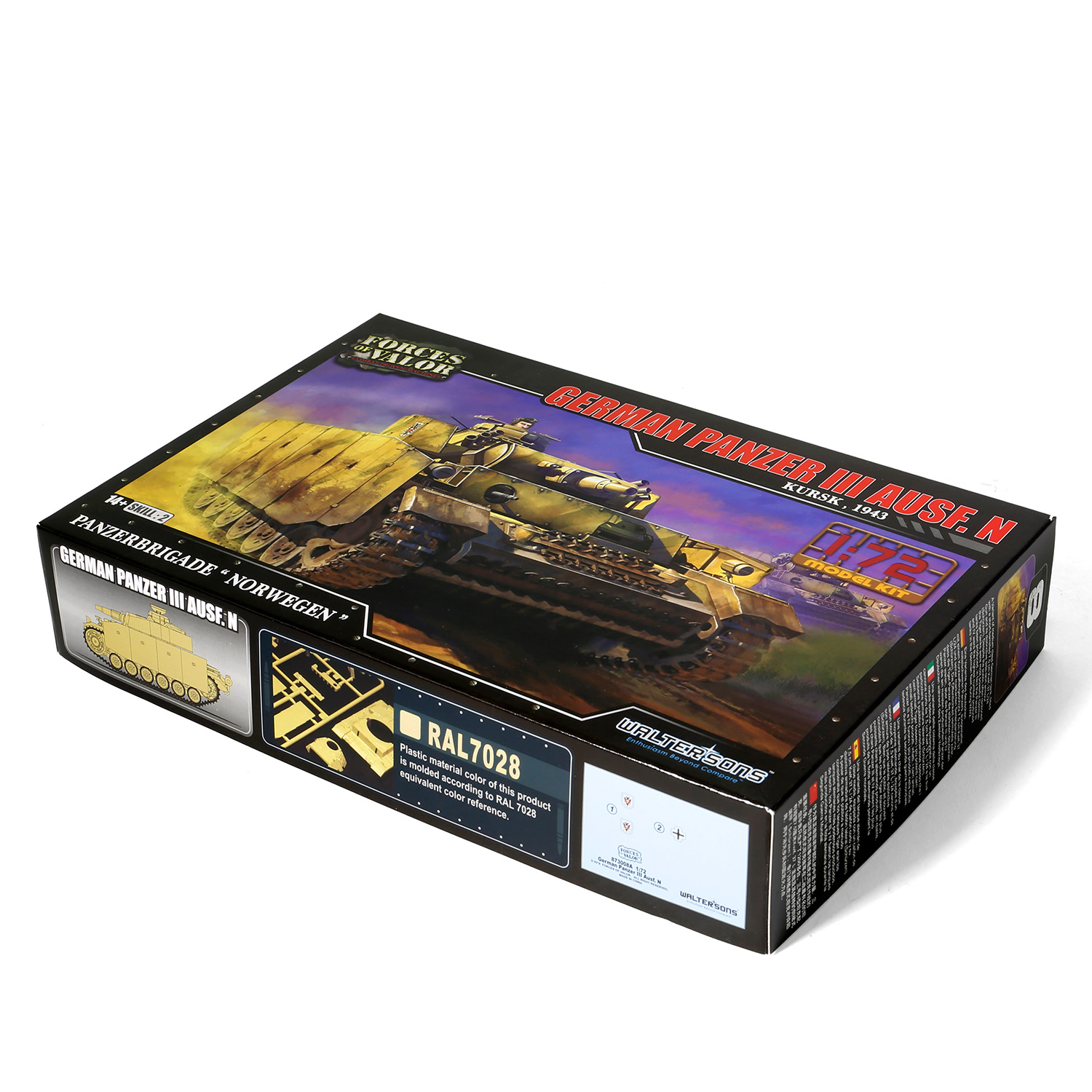
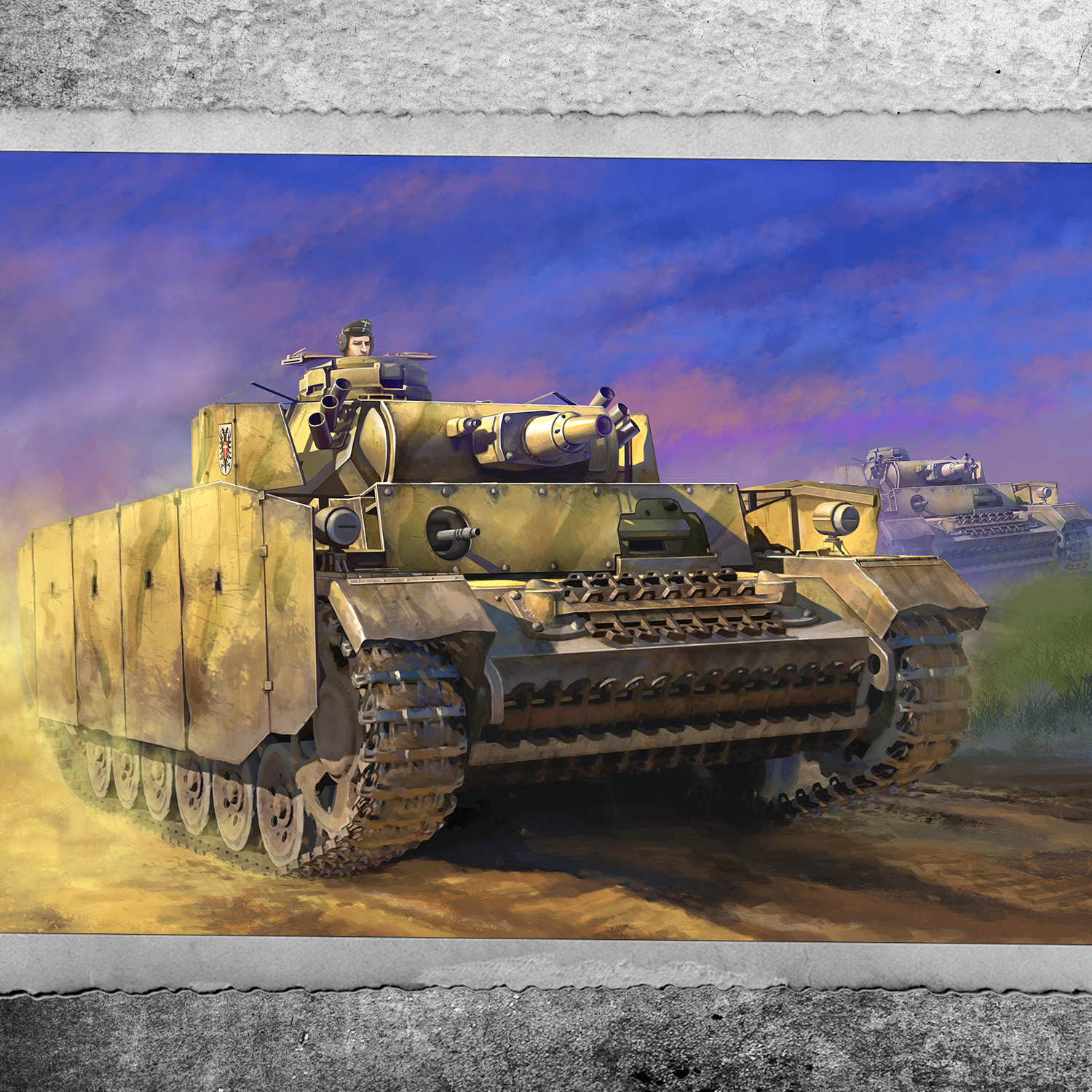
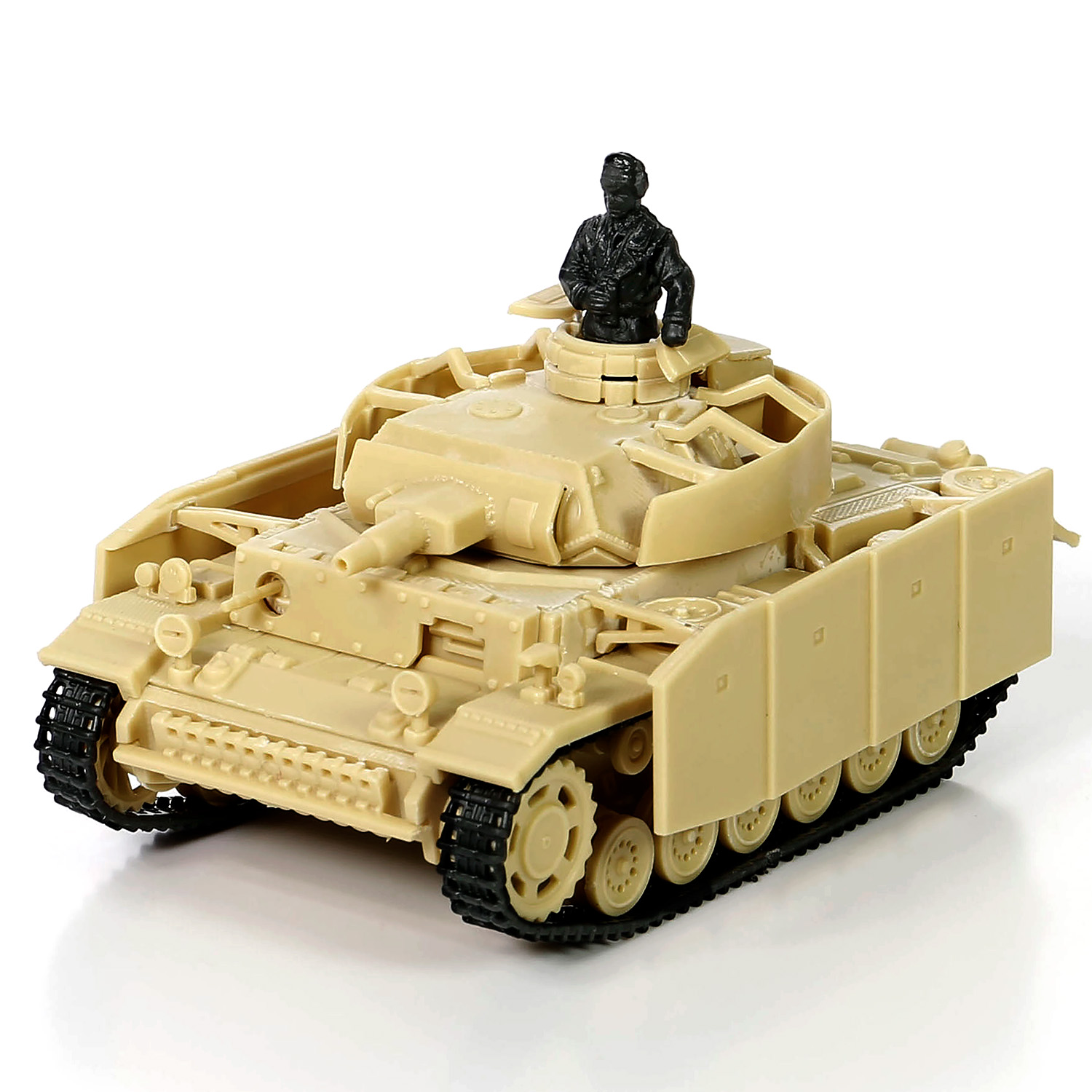
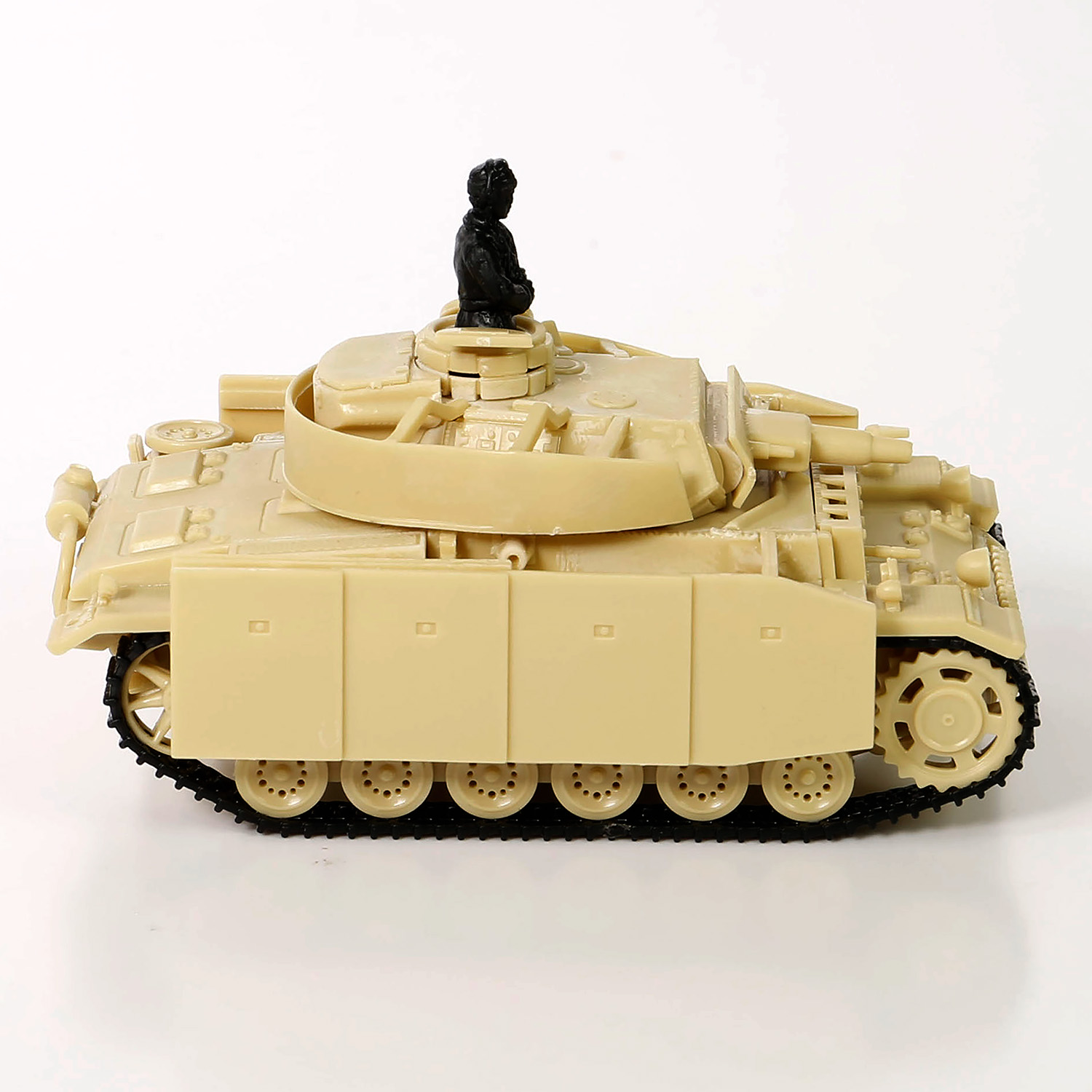
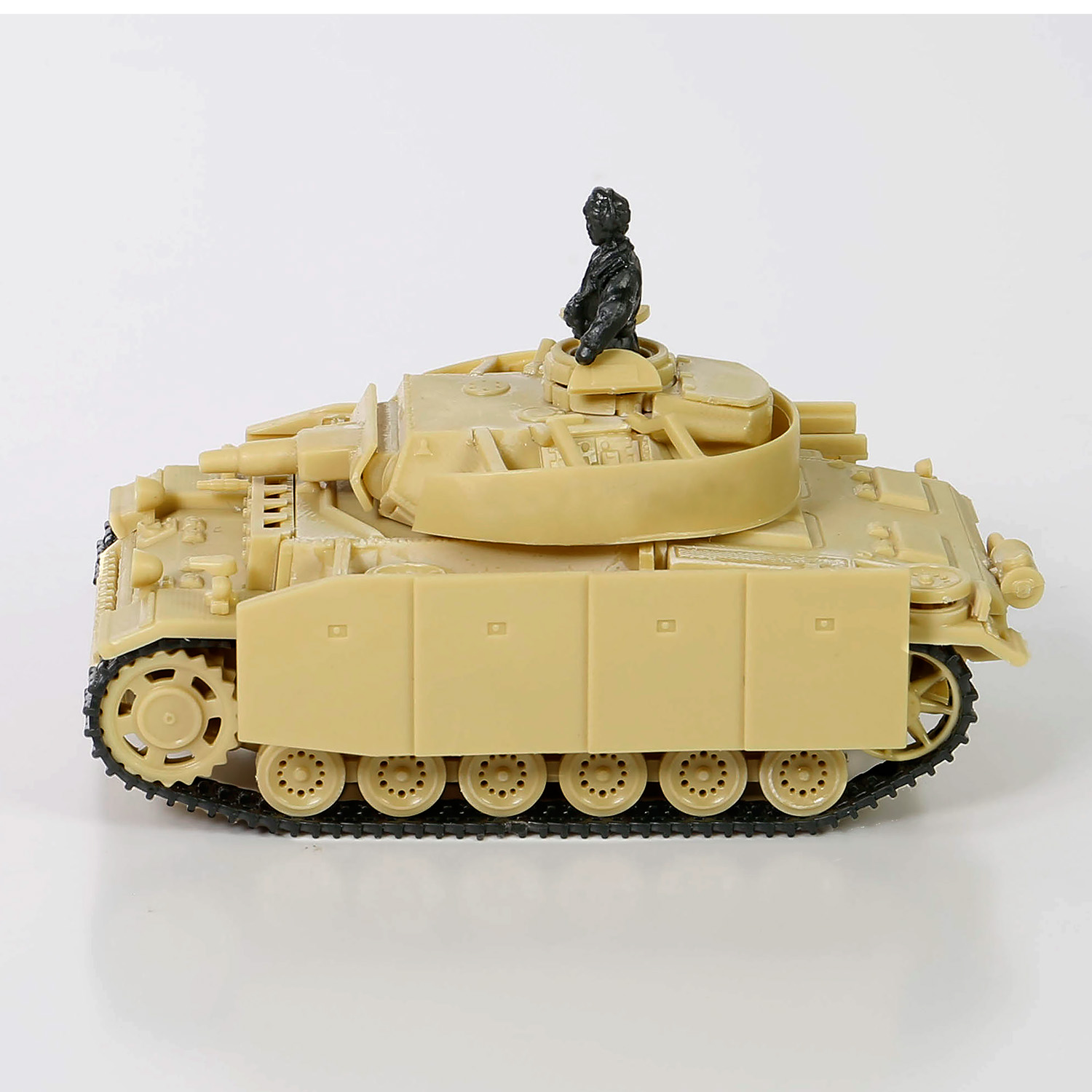
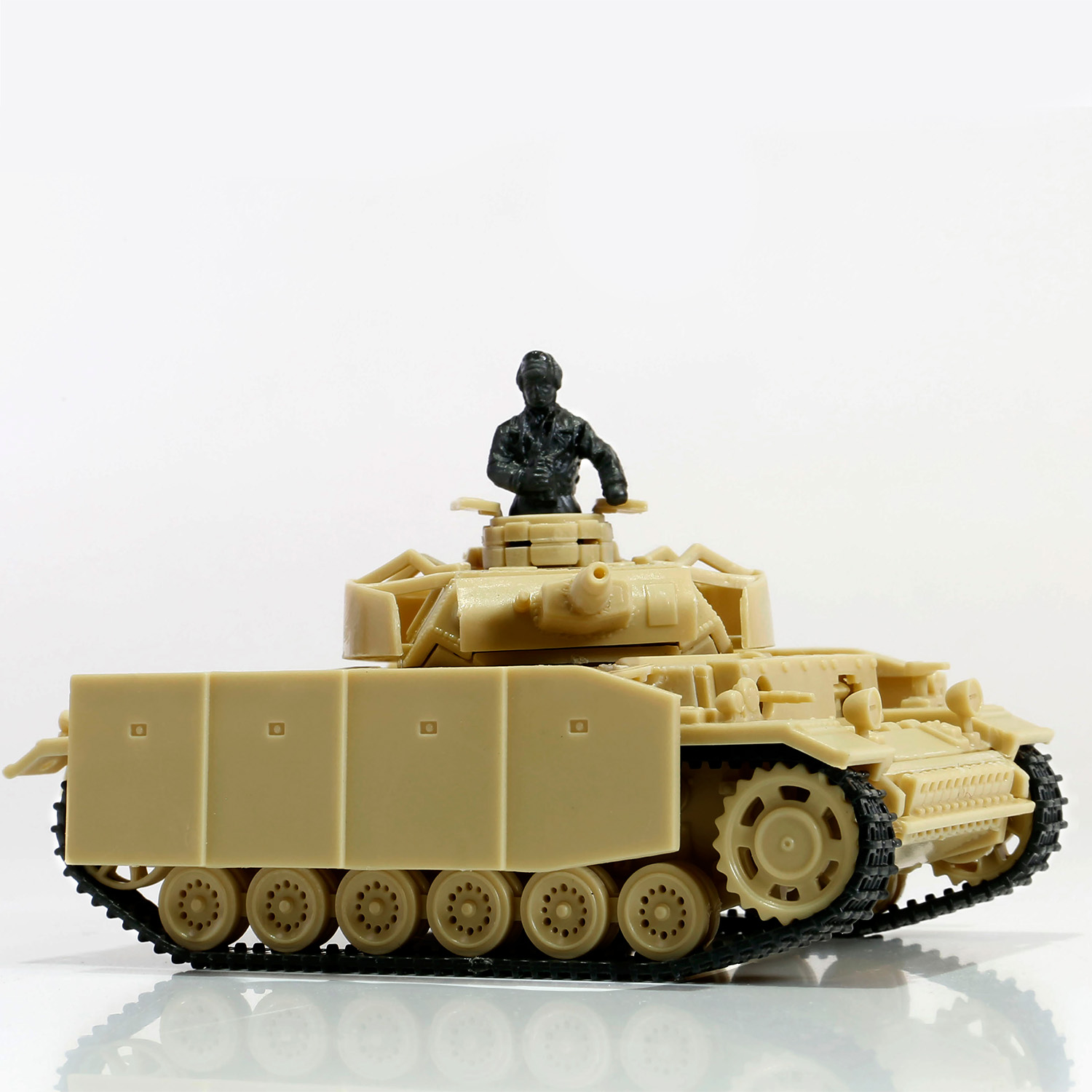
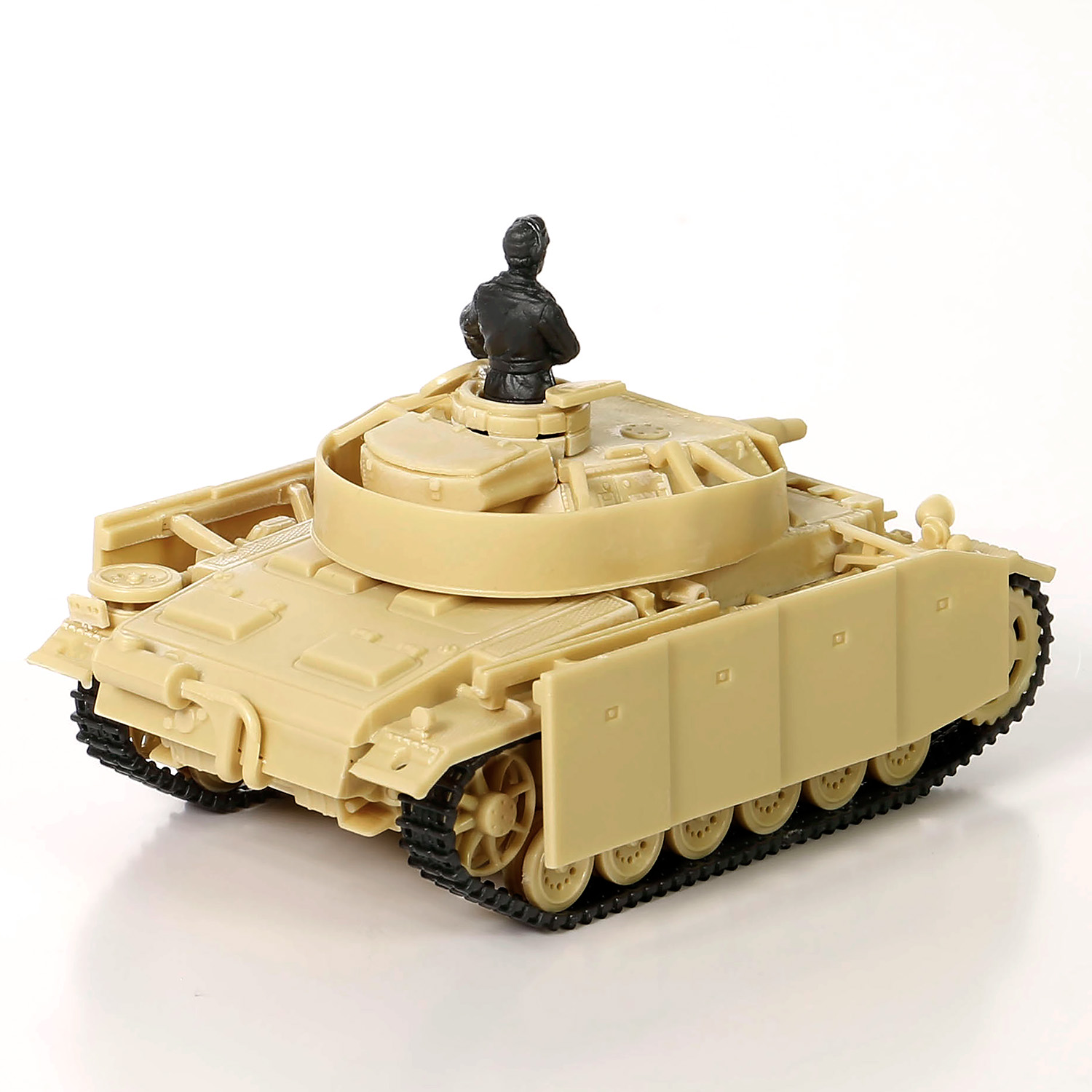
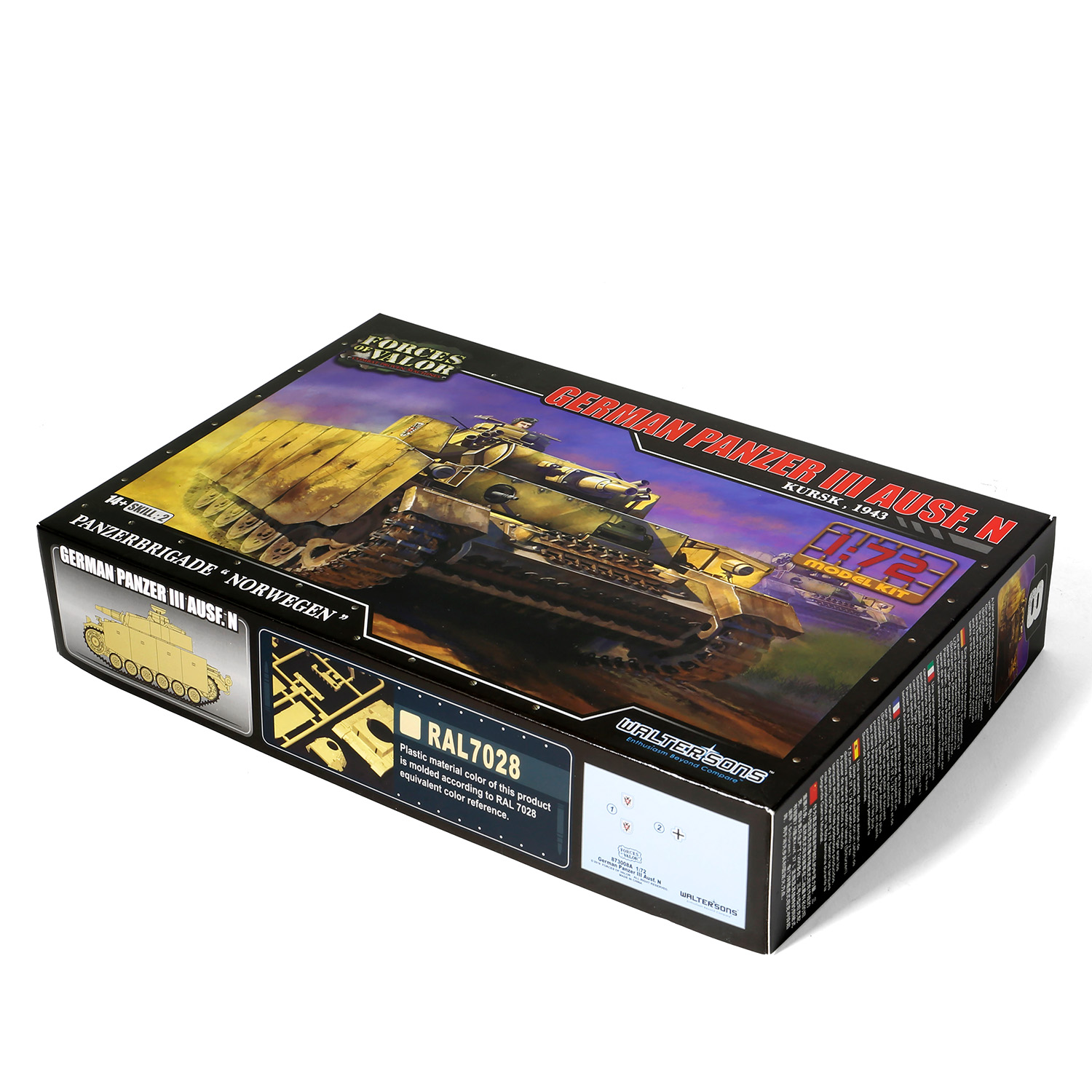
Panzer III Ausf. N tank Norway May, 1945
Item code:
FOV-873008A
$12.99
$12.99
Get 6.00 W-coin
Reviews
(0)0 Sold
| Item No | FOV-873008A |
|---|---|
| Scale | 1/72 |
| Product Name | Panzer III Ausf. N tank Norway May, 1945 |
| Country | USA |
| Machine Type | Tanks |
| Materials | ABS, Polycarbonate , PVC |
| Weight | 90 g / 3.17 ounce |
| Product Size | 132 x 51 x 53 mm / 5.2 x 2 x 2.08 in. |
| Box Size | 260 x 130 x 40 mm / 10.24 x 5.12 x 1.5 in. |
The Final Variant: Panzer III Ausf. N
The Type N began joint production in June 1942 by Henschel, Wegmann, MNH, MIAG, and Maschinenfabrik Augsburg-Nürnberg (MAN). Production continued until August 1943, with a total of 700 units manufactured or converted. The chassis numbers ranged from 73851 to 77800.
In 1942, the weak 50mm gun of the Panzer III had become ineffective against Soviet tanks. That same June, the German military began planning to equip the Panzer III with a 75mm gun. The artillery and ammunition types used were the same as those of the short-barreled Panzer IV, capable of firing both high-explosive shells and high-velocity armor-piercing rounds, offering superior firepower compared to the original 50mm L/60 gun.
The initial Type N tanks were converted from partially completed Panzer III J and L models on the production line, with approximately 3 J models and 447 L models modified. Due to positive feedback from the troops, it was decided in November to also retrofit the Panzer III M model with the 75mm gun, resulting in 213 conversions. The final 37 units were refitted from earlier battle-damaged Panzer III tanks.
Since the Panzer III Ausf. N was primarily converted from the chassis of the J, L, and M models, its basic structure remained largely the same, with the main difference being its main gun. To better understand the Ausf. N, let’s briefly review the J, L, and M variants.
Compared to earlier models, the Ausf. J featured a redesigned hull and 50mm armor. The driver received an improved vision port, while the lower hull incorporated a newly designed air intake and engine cooling system. Smoke grenade launchers were relocated to the rear sides of the hull. Starting in April 1942, an additional 20mm armor plate was added to the gun mantlet and the upper front hull.
By the time of the Ausf. J, the tank began mounting the 50mm L/60 gun, which had a longer shell length, resulting in reduced ammunition capacity.
The Ausf. L introduced a new torsion-bar counterbalance system to replace the old coiled-spring recoil mechanism. The turret front armor was increased from 30mm to 57mm, while the lower hull and gun mantlet also received the aforementioned 20mm add-on armor.
The air intakes and covers were modified, and some features - such as the crew escape hatches on the hull, the loader’s vision port on the mantlet, and parts of the turret side - were removed. Additionally, a system was added to transfer engine heat between vehicles, and the commander’s cupola was fitted with a Fliegerbeschussgerät 41/42 anti-aircraft machine gun mount, which later became standard across variants.
The Ausf. M was equipped with a new wading kit, allowing it to ford depths of 1.3 meters (previous models could only manage 0.8–0.9 meters). Modified mufflers with shut-off valves were installed at the rear, ensuring all air intakes, exhausts, and other openings were sealed. Interestingly, this wading system was further refined and later used on the Panzer III Tauchpanzer (submersible tank).
Regarding the Ausf. M and N, to speed up the production of the Ausf. N, some were assembled by directly mounting the N’s turret onto the M’s hull.
Starting in March 1943, newly produced Ausf. N tanks were fitted with side skirt armor (Schürzen) on both sides of the hull. From early 1943 onward, all variants - including the Ausf. N - were coated with Zimmerit, an anti-magnetic paste to protect against handheld magnetic mines.
The Ausf. N was primarily used for close infantry support, often assigned to Tiger tank battalions to protect them from enemy infantry and anti-tank teams. It performed secondary roles such as reconnaissance, escort duties, anti-infantry operations, and fire support for armored units.
During the Battle of Kursk, the German frontline forces deployed a total of 155 Panzer III Ausf. N tanks. However, there is no evidence suggesting that they suffered heavy losses or achieved significant combat success in this battle.