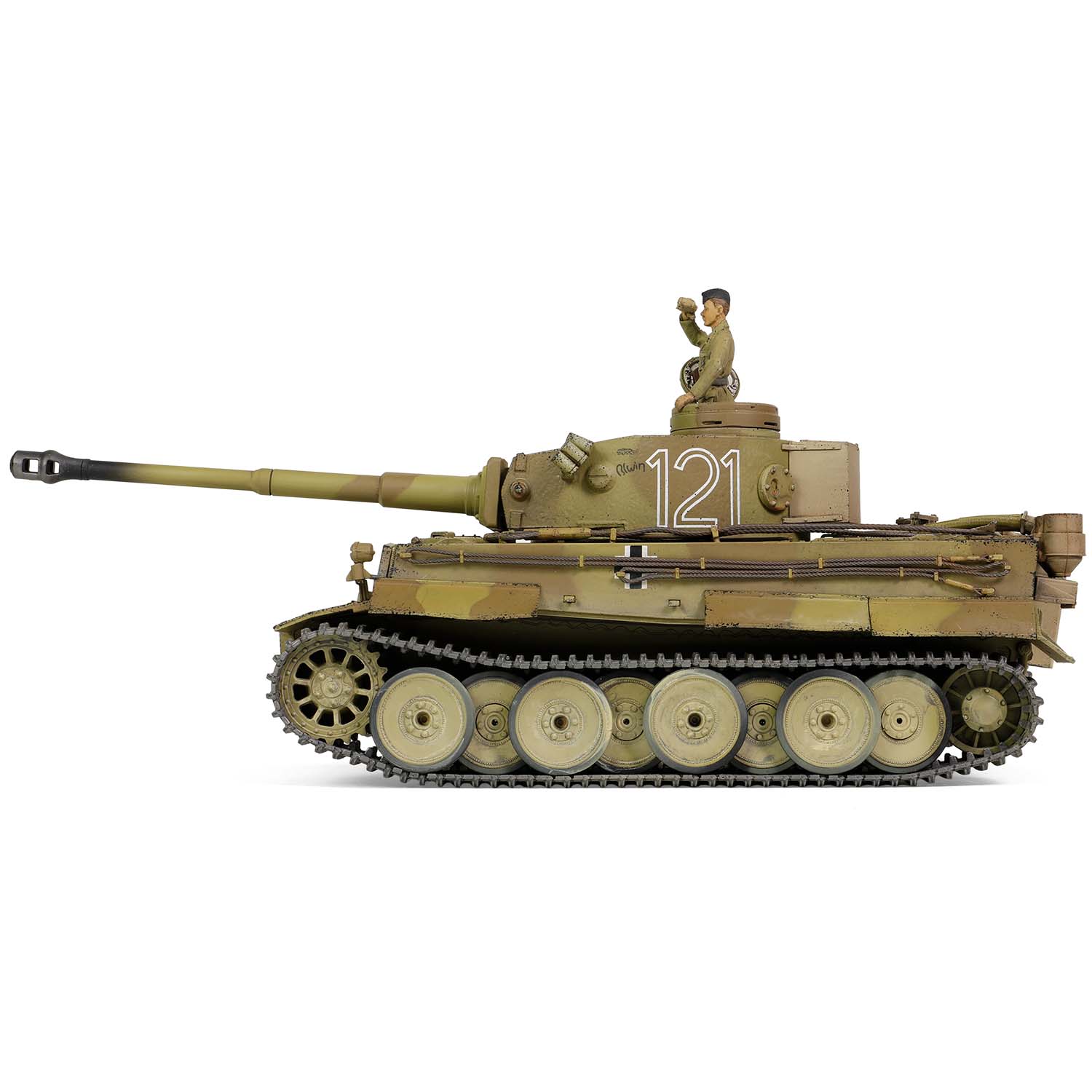
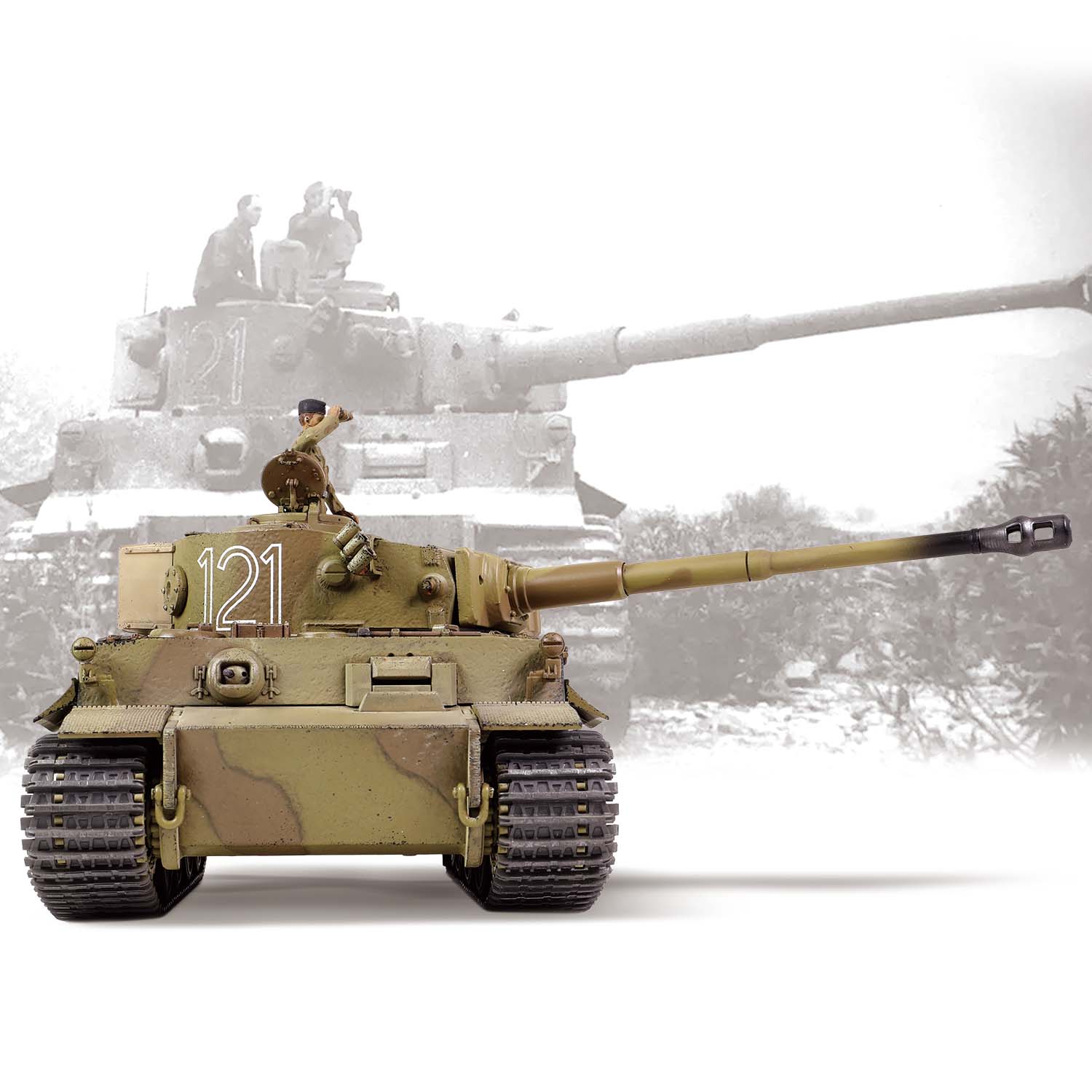
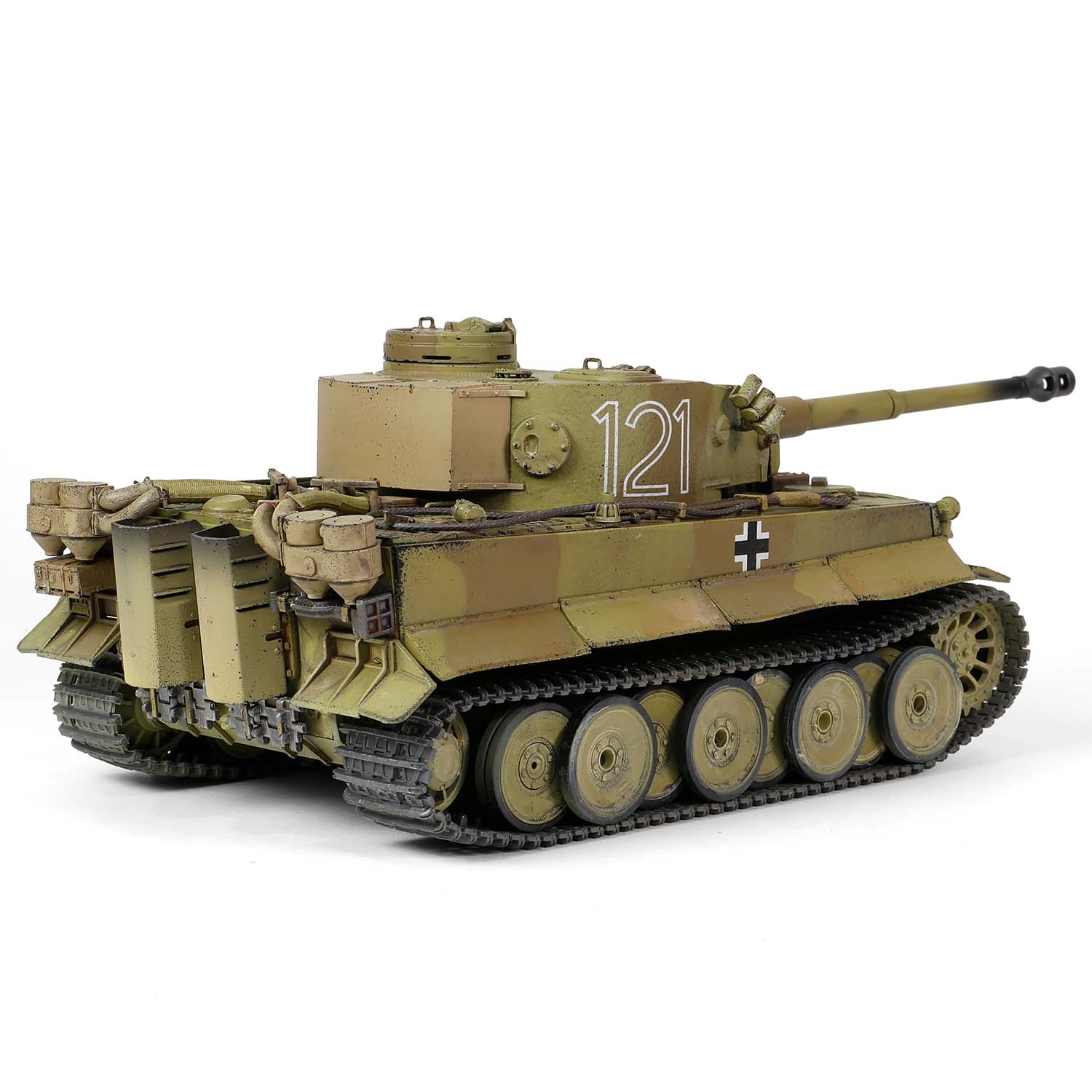
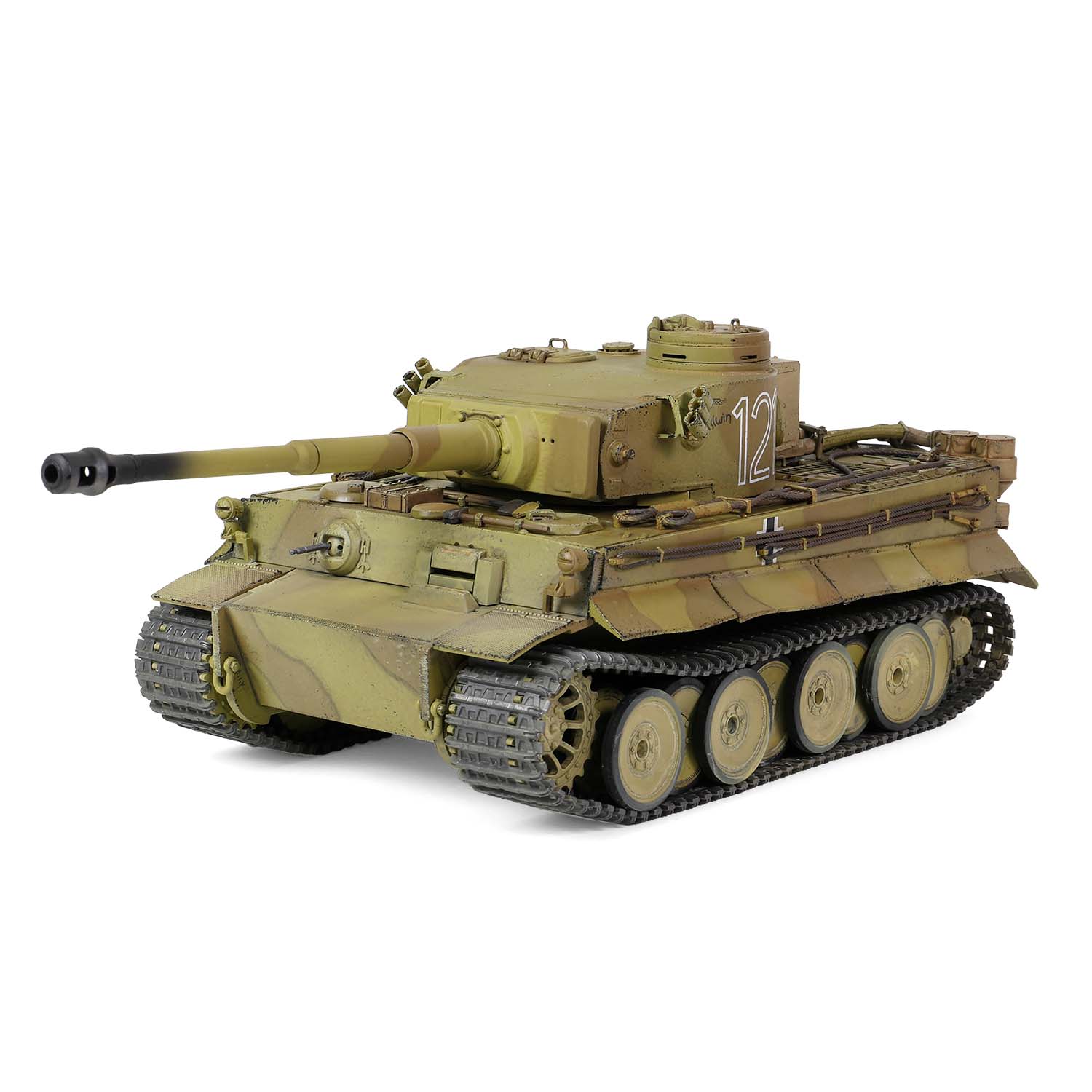
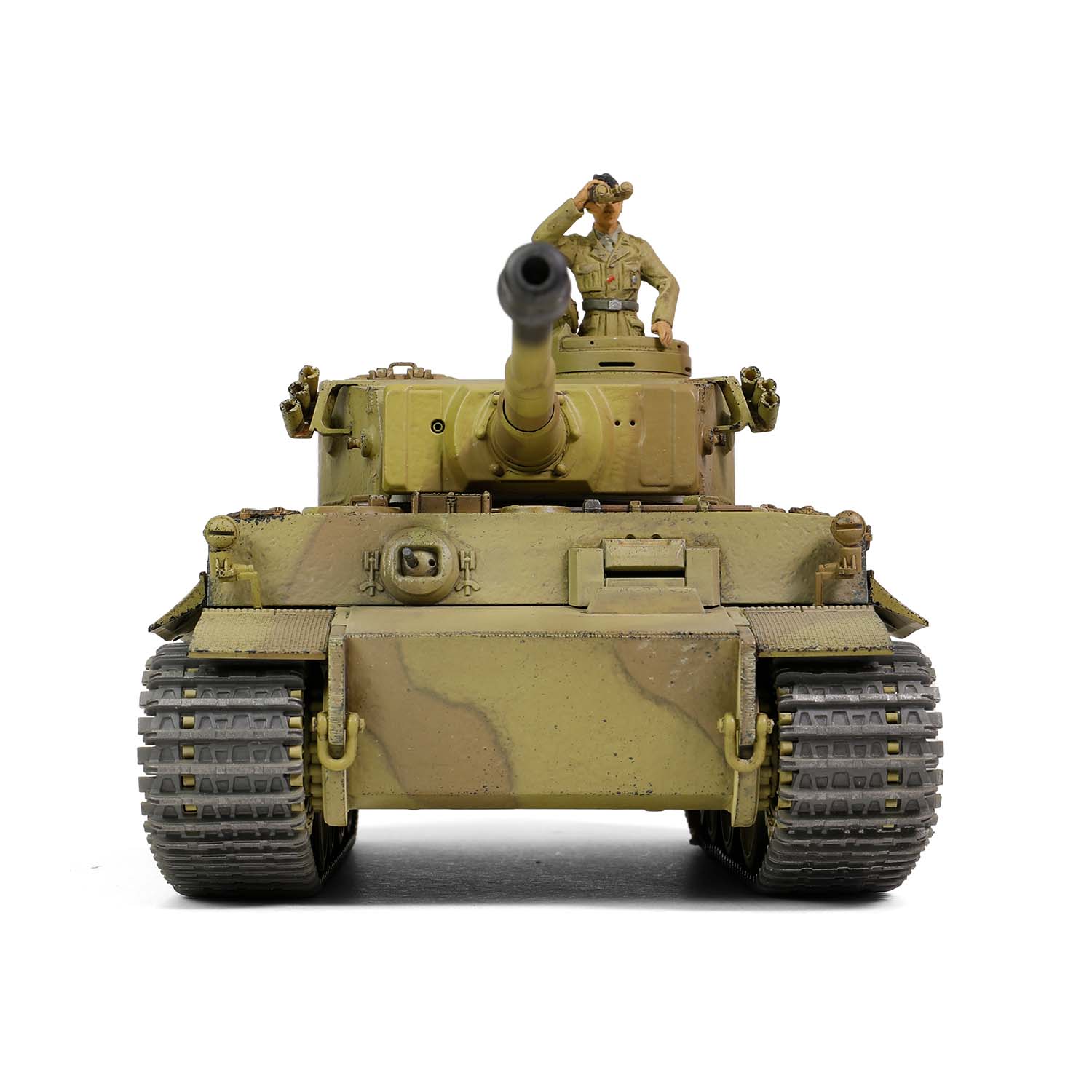
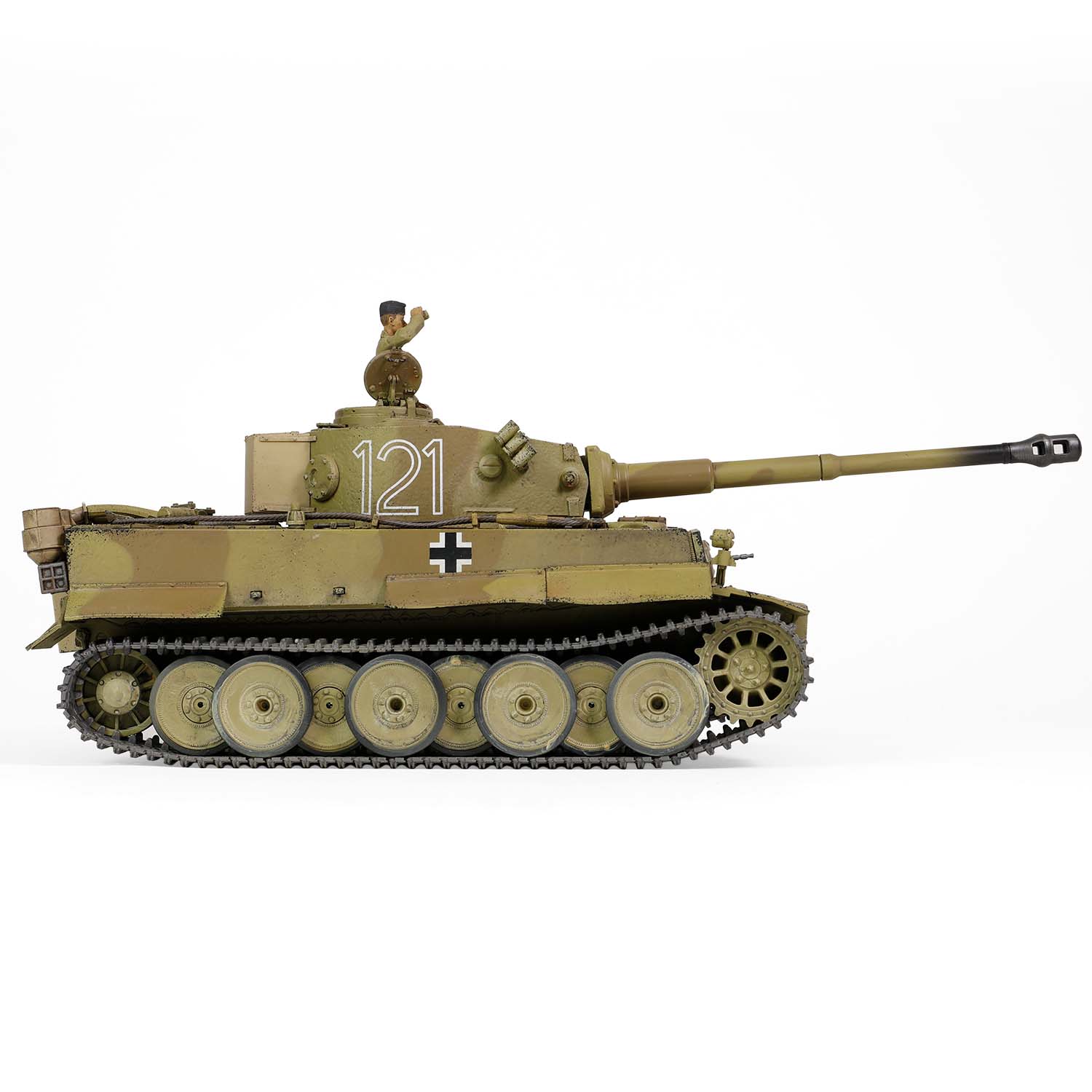
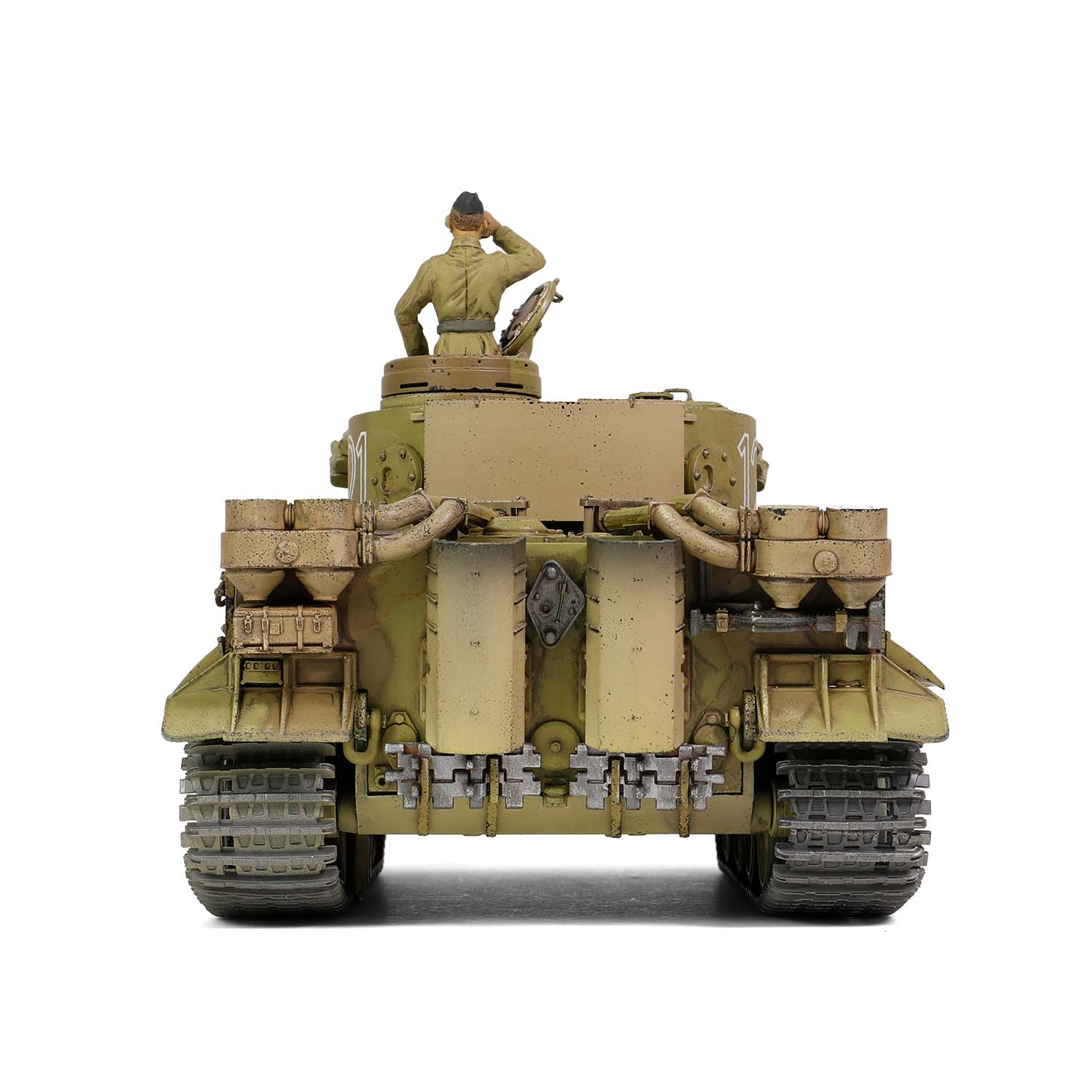
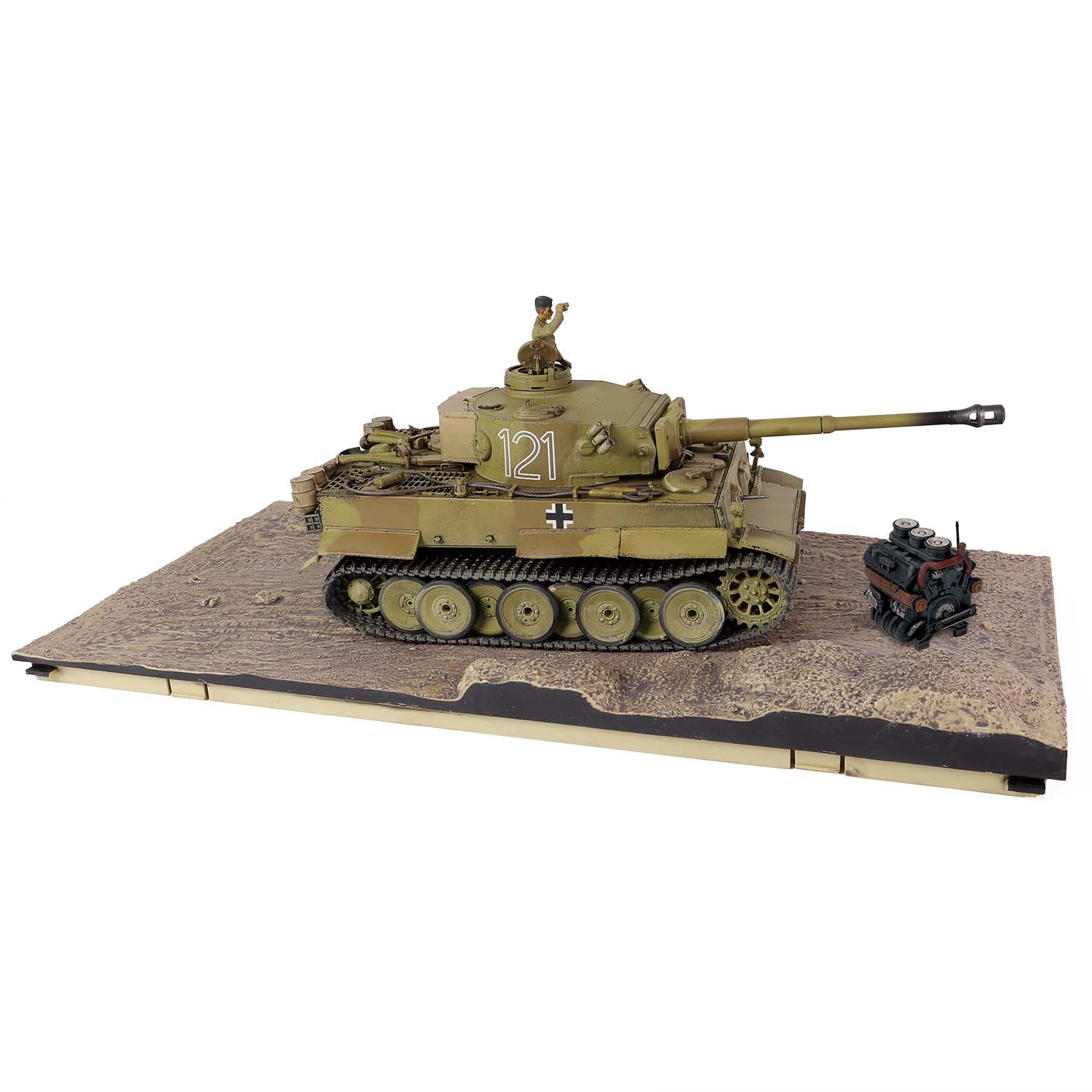
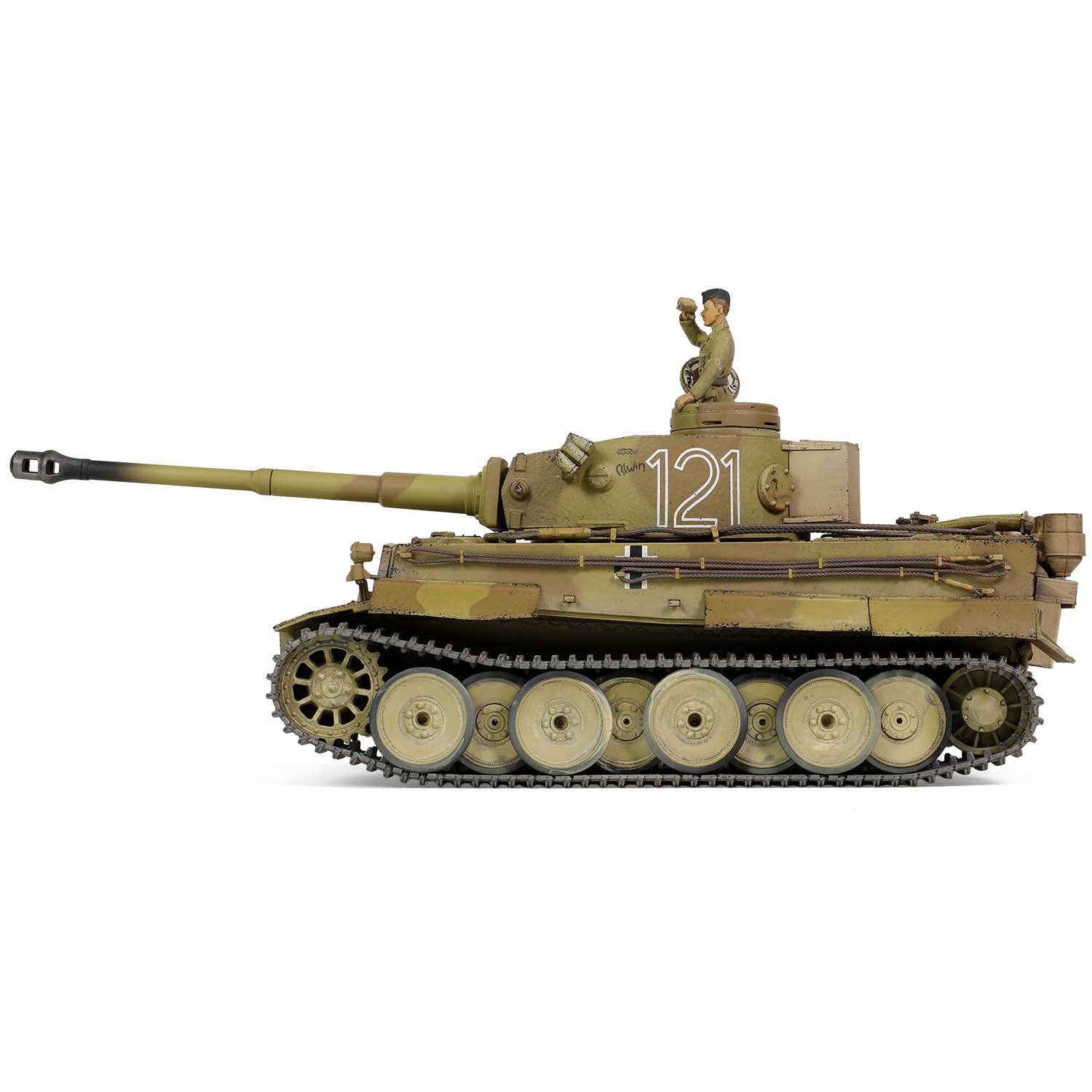
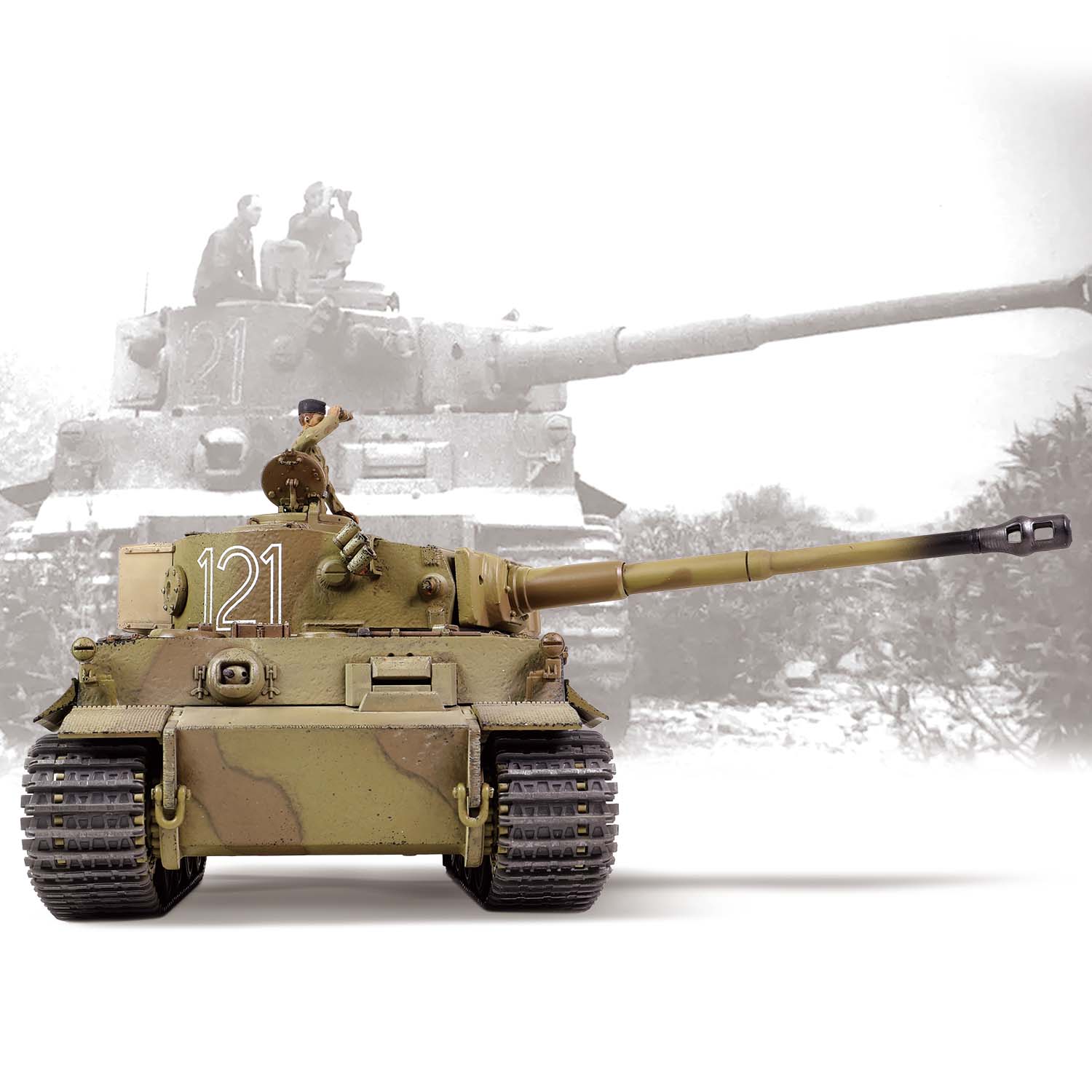
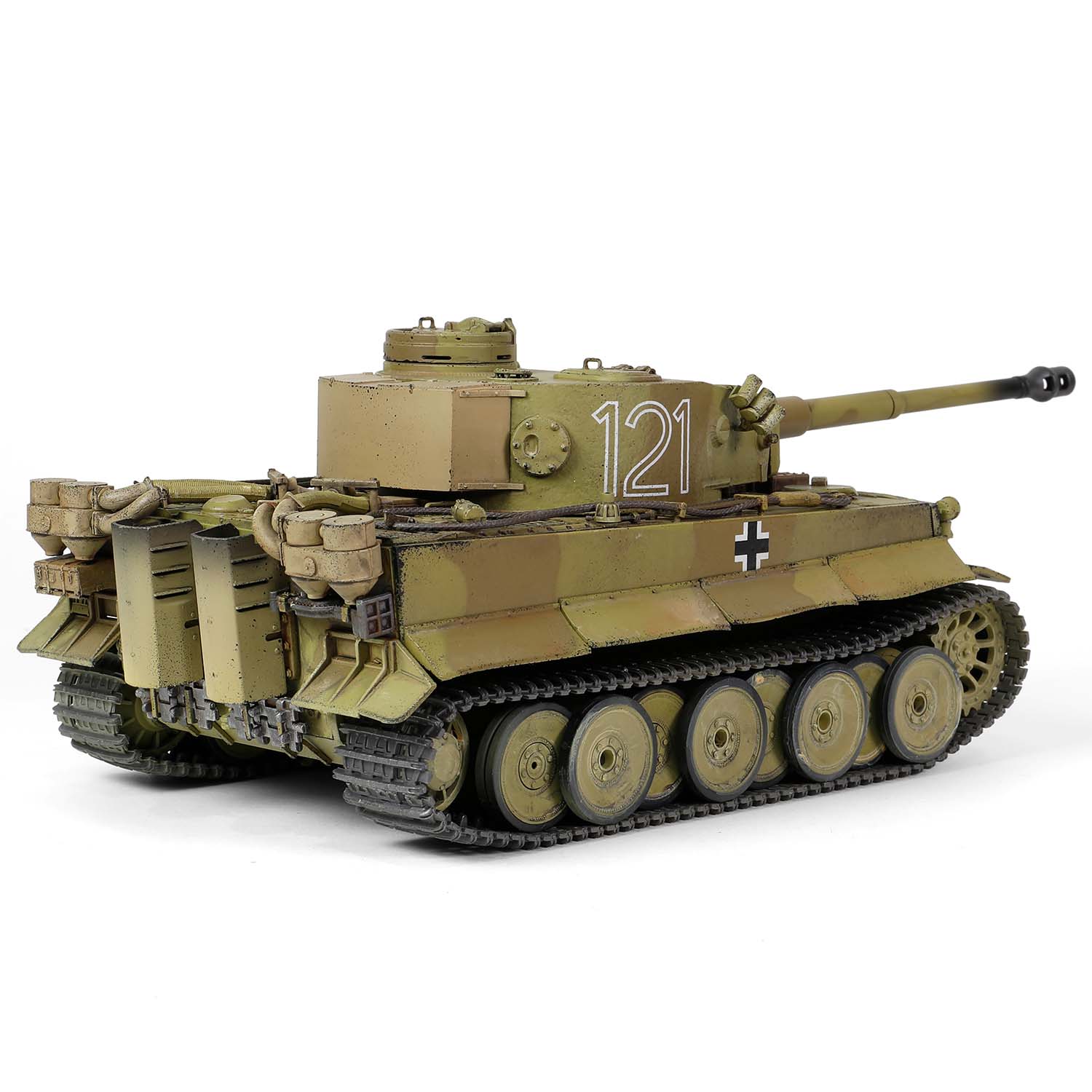
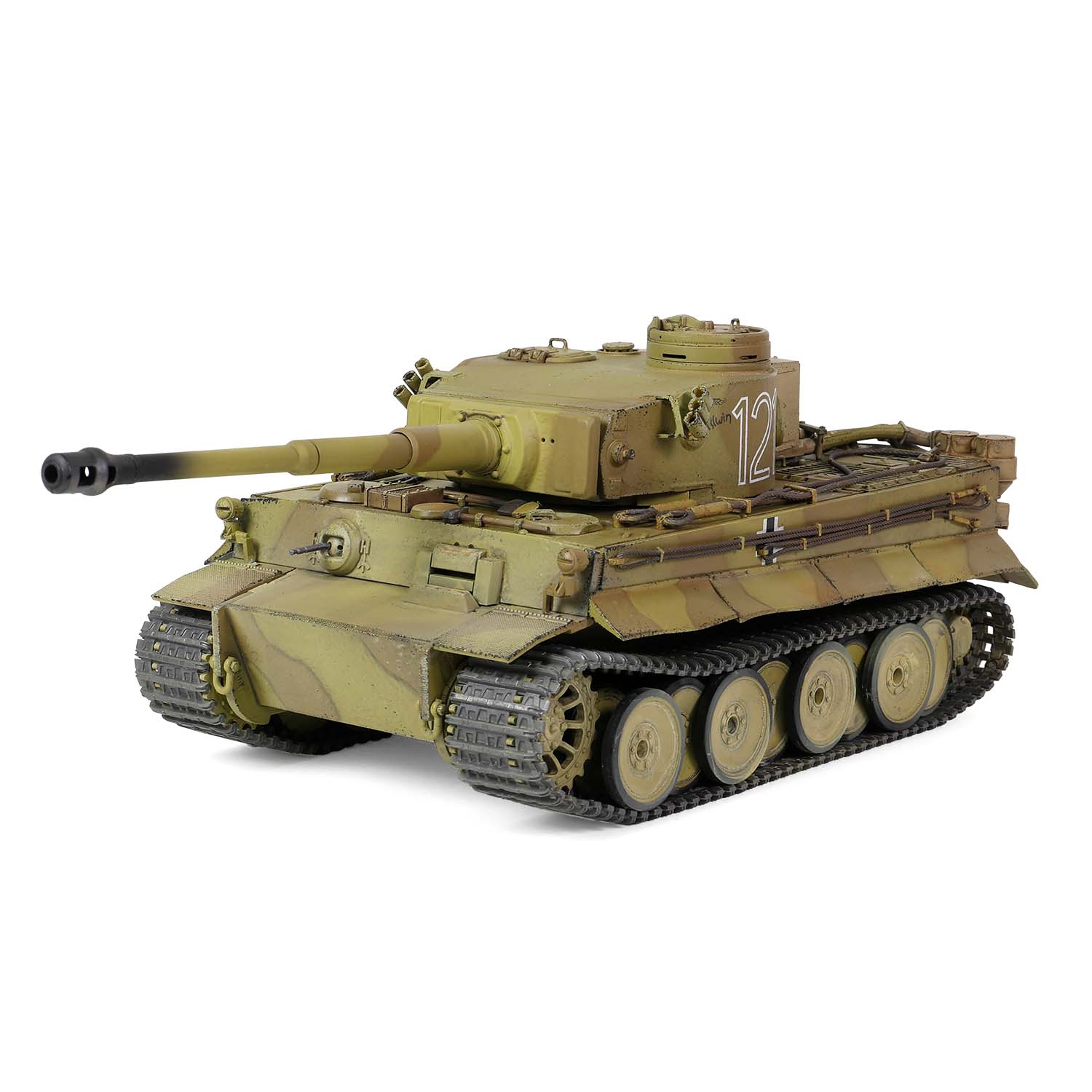
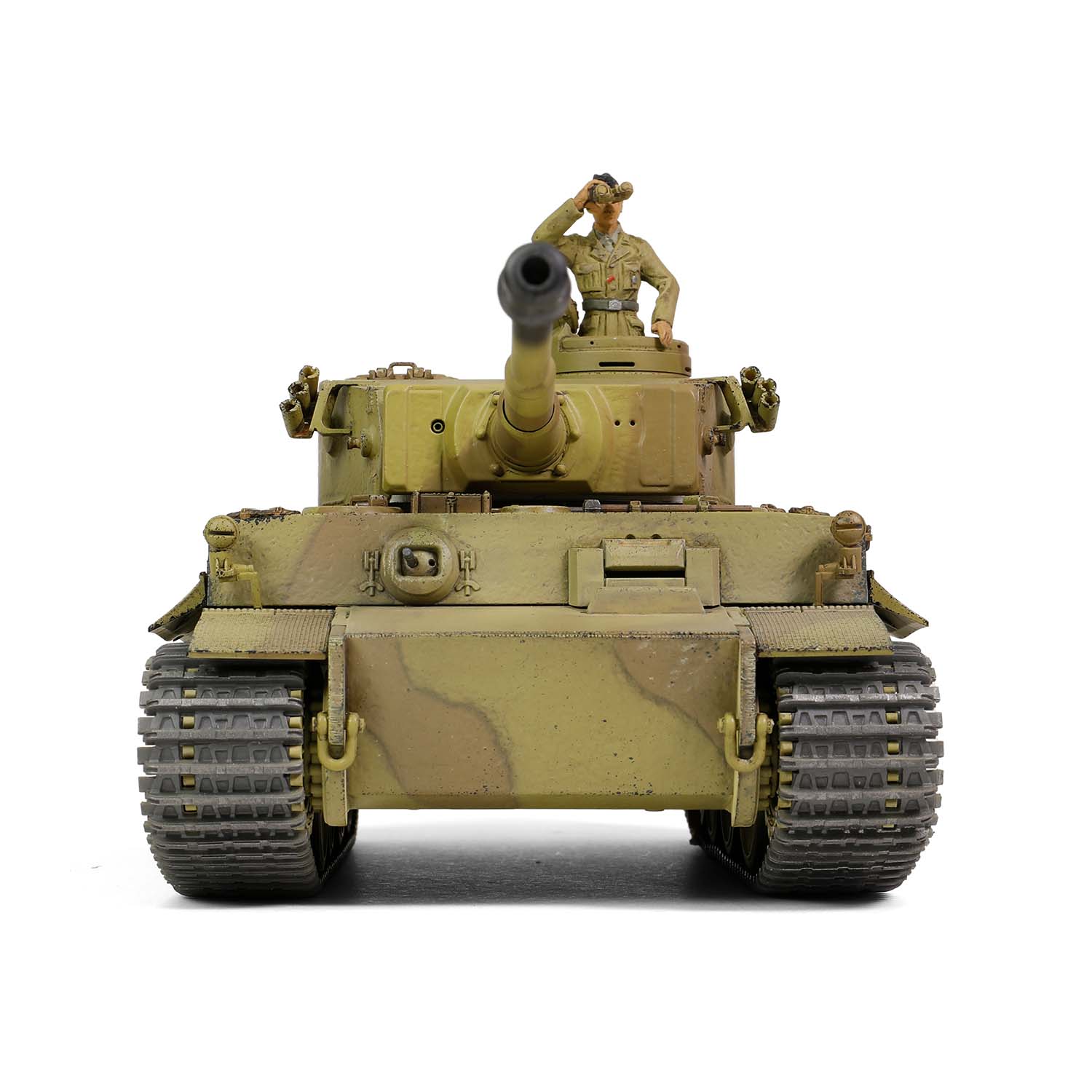
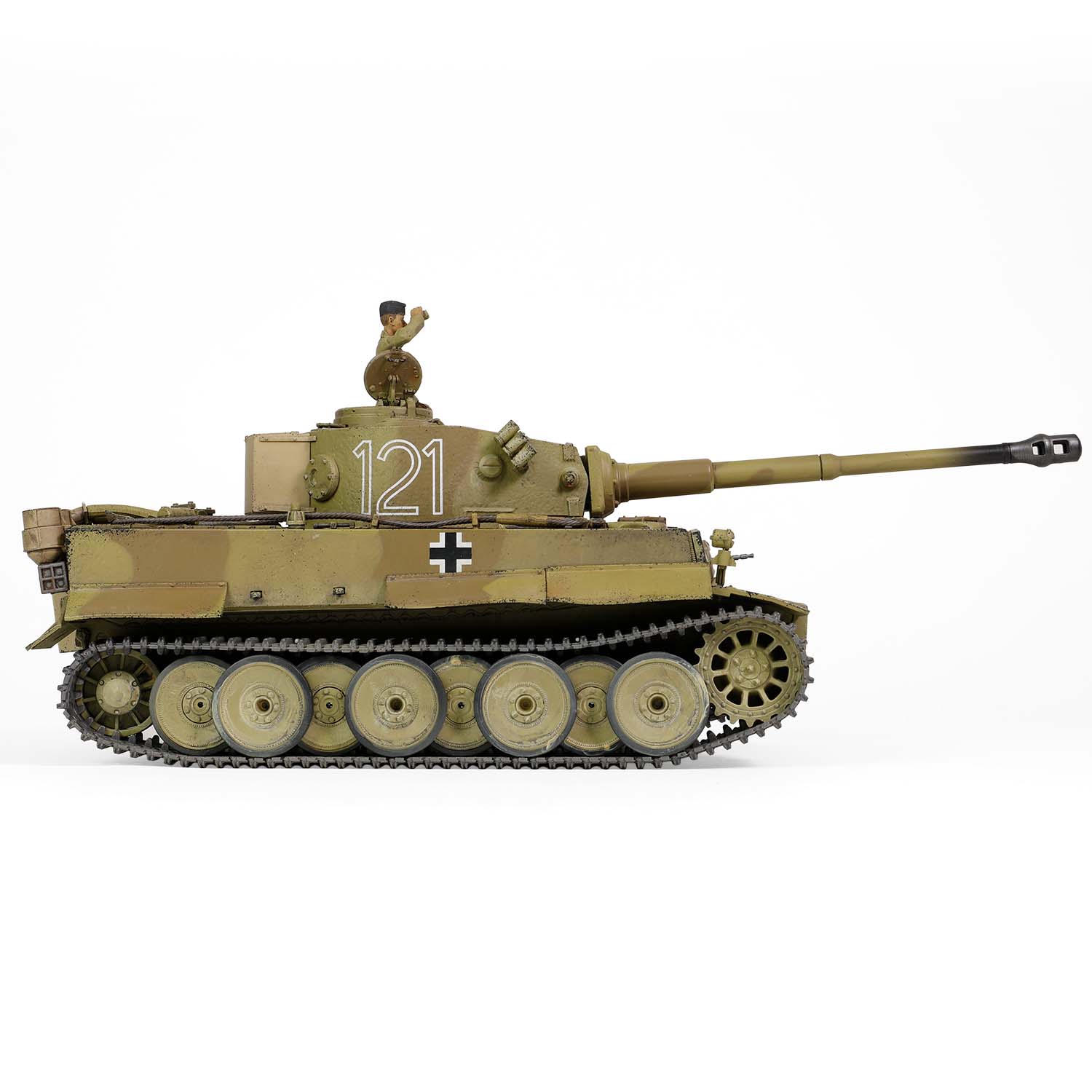
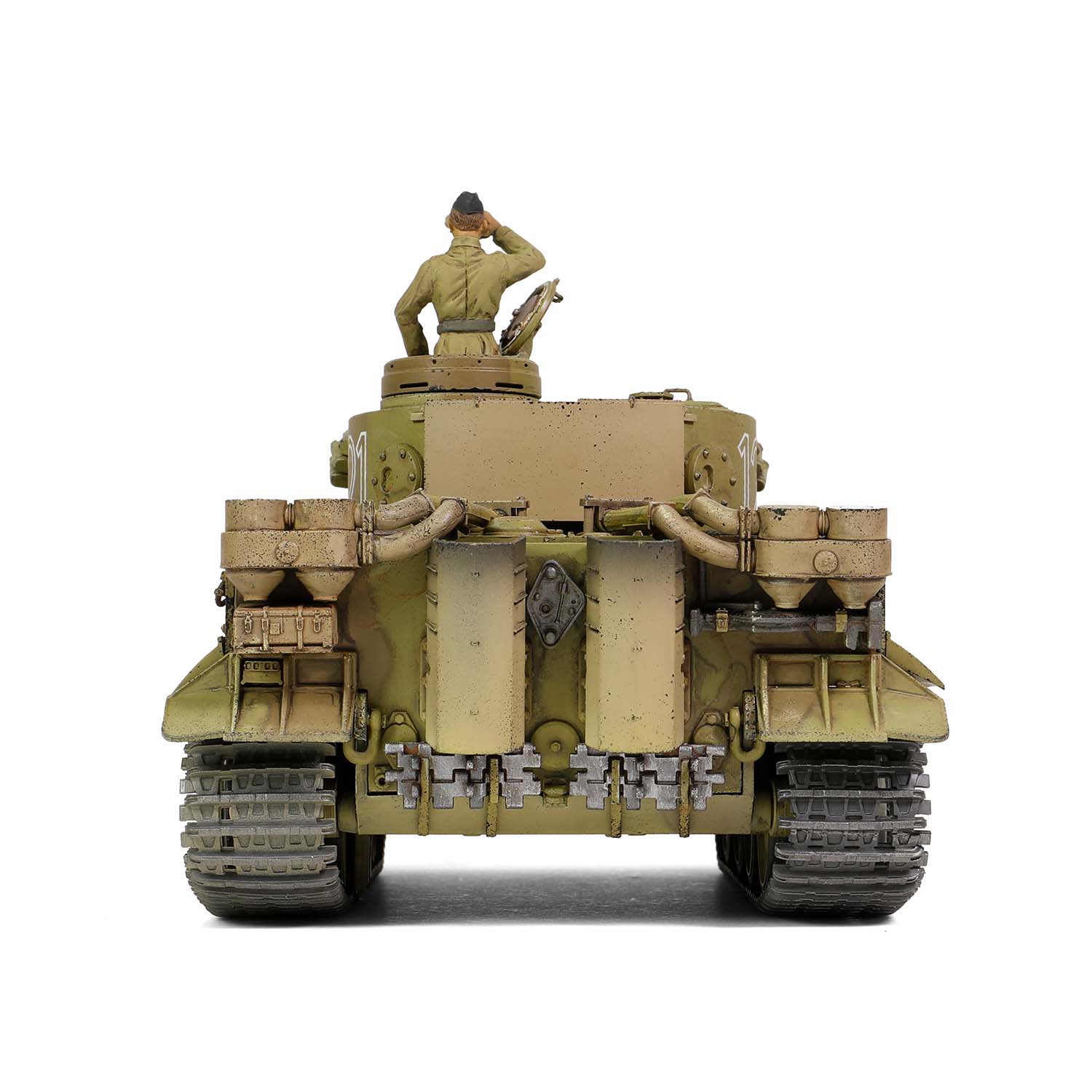
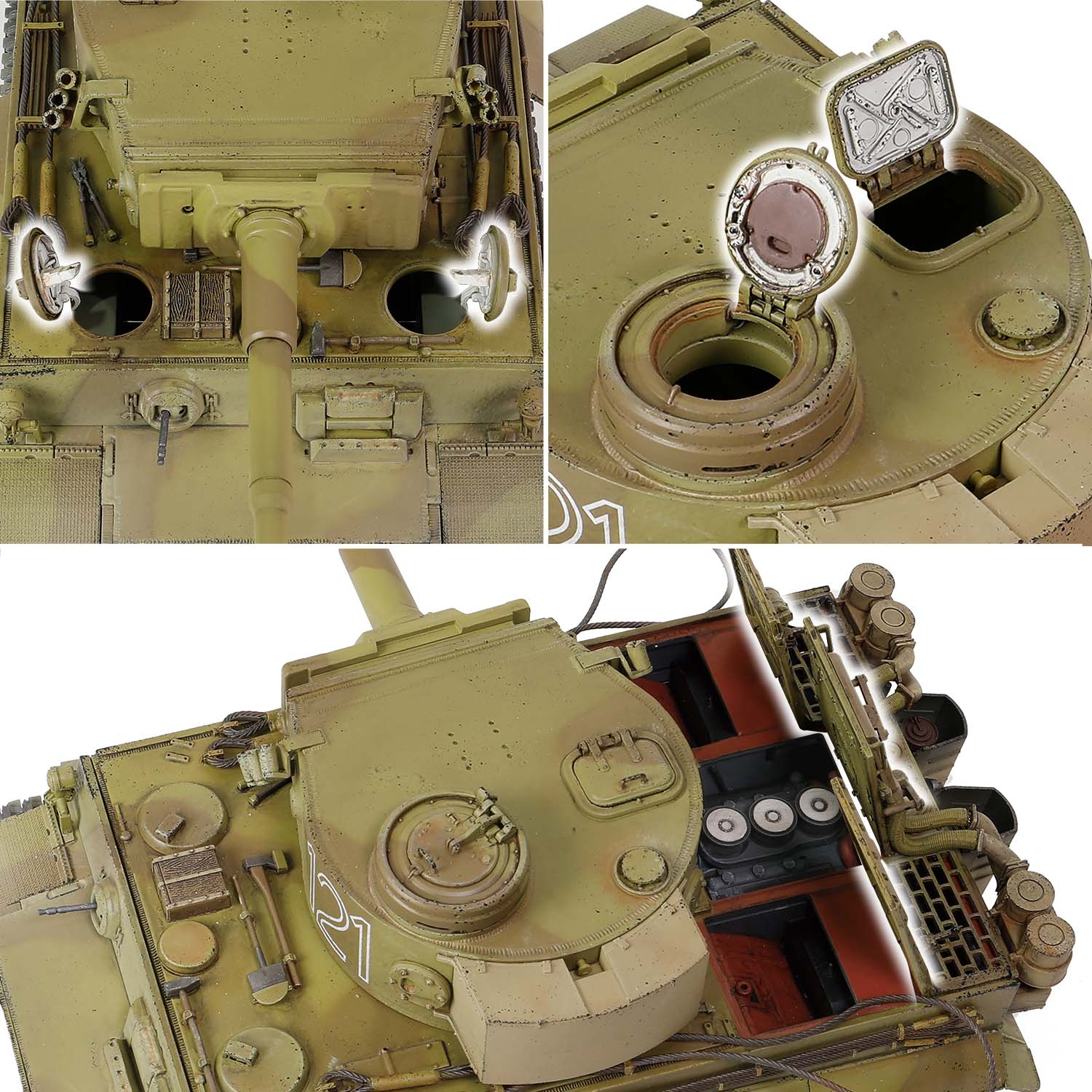
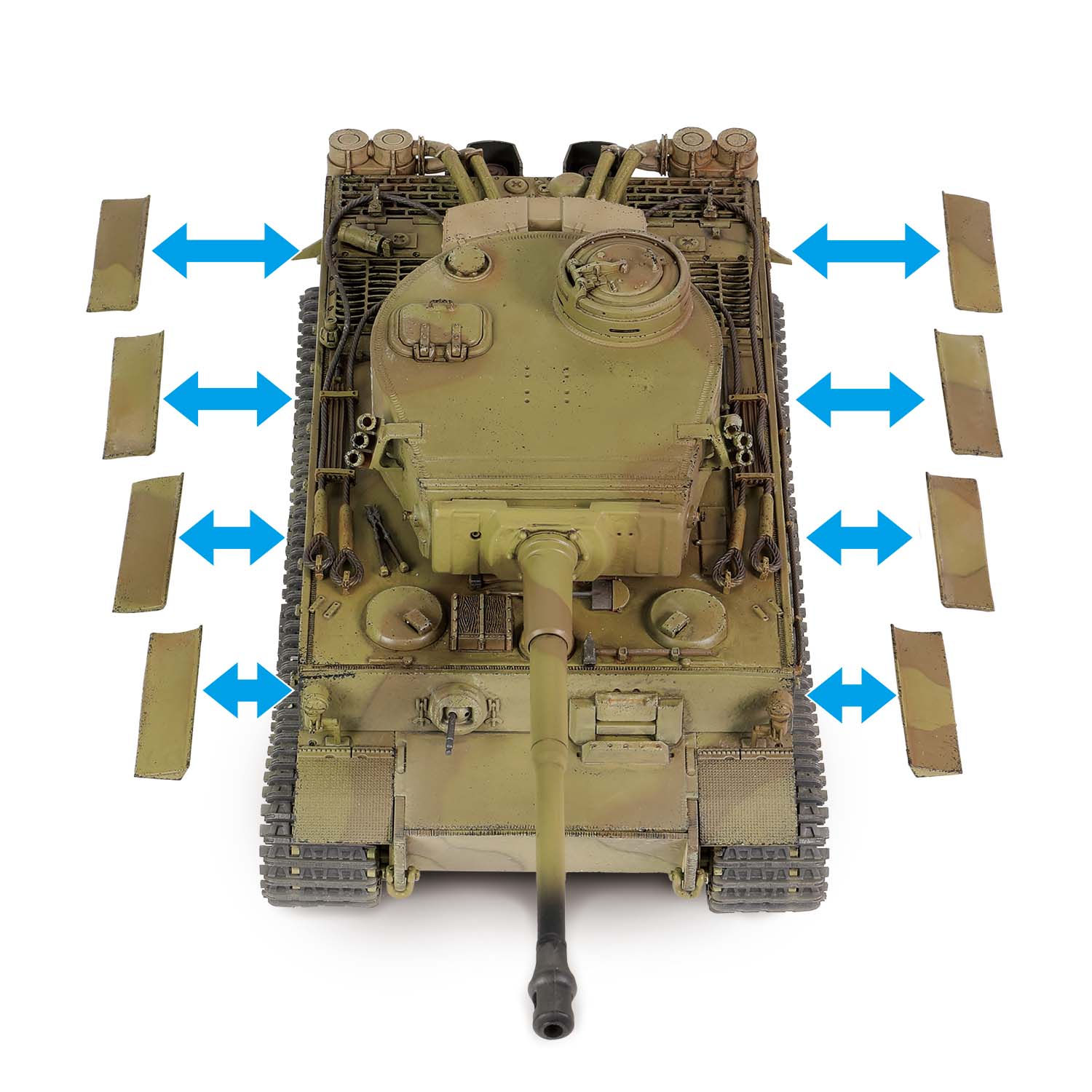
The Tiger I, officially known as Panzerkampfwagen VI Ausführung H (PzKpfw VI Ausf H) and assigned the ordnance code Sd.Kfz. 182, was produced in 1,347 units from 1942 to 1945. Commonly referred to as the 'Tiger' by Allied forces, it was one of the most formidable tanks encountered during the war. Since its debut in late 1942, the Tiger I underwent regular modifications approximately every three months, resulting in various iterations. Its production evolved through four main phases: prototype, early, mid, and late models.
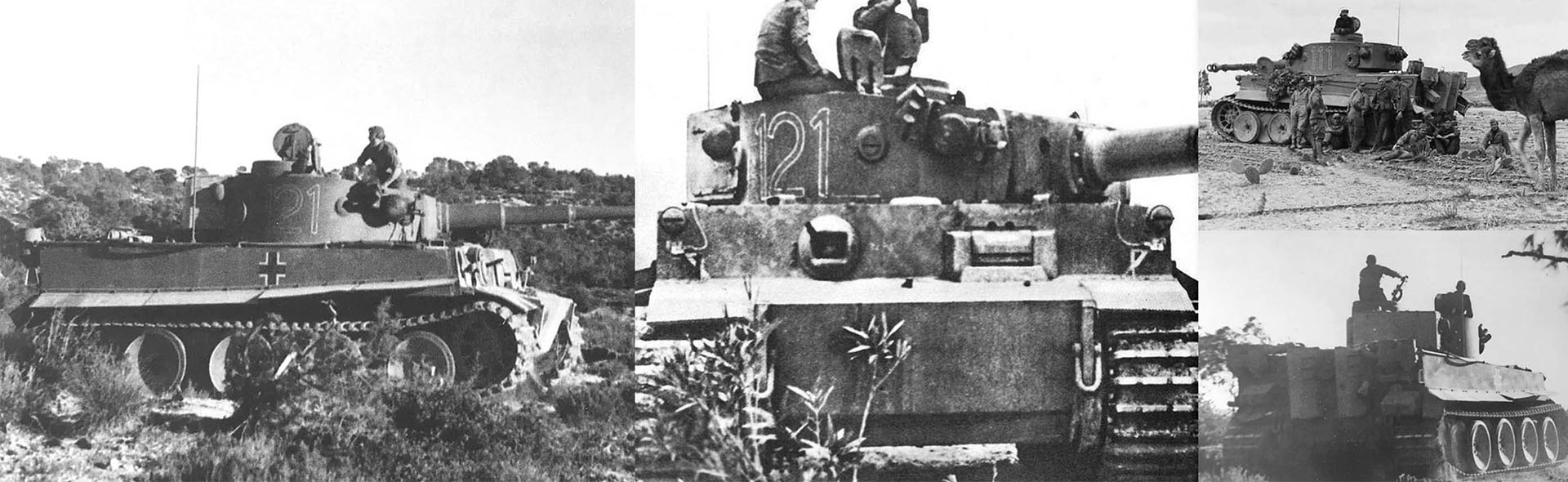
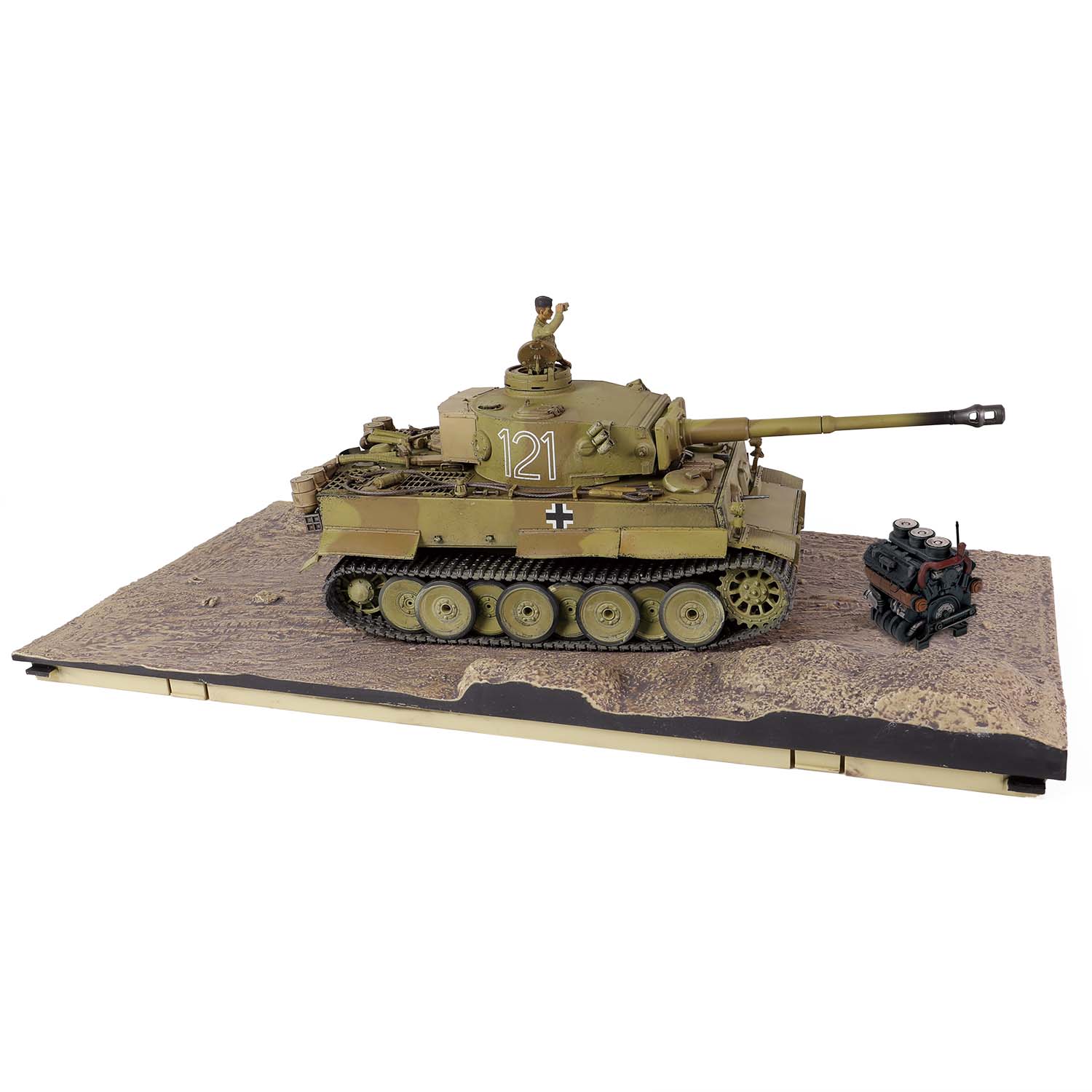
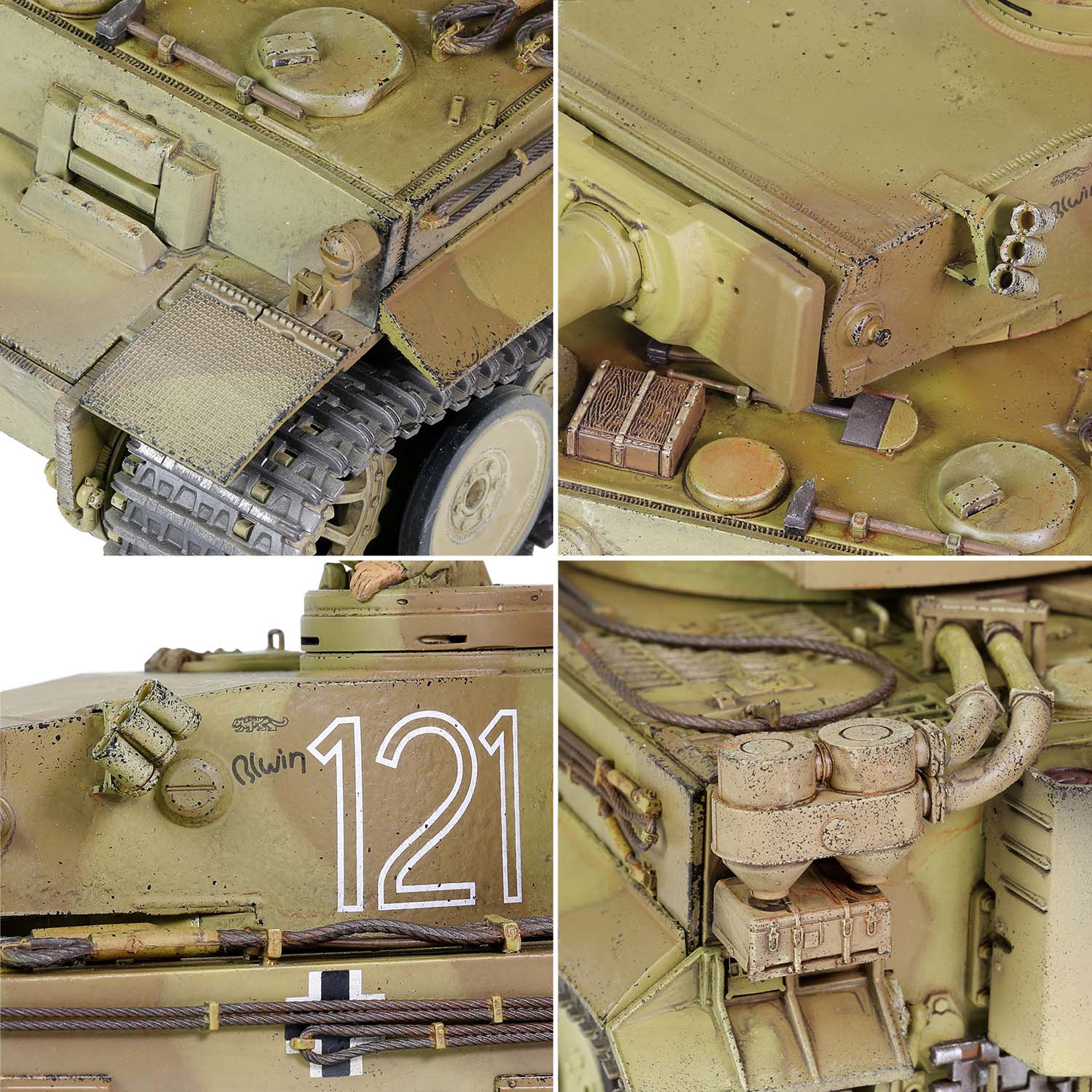
The first units were allocated to the 501st Heavy Panzer Battalion (s.Pz.Abt 501), formed in 1942 and attached to the 5th Panzer Army under General Jürgen von Arnim, participating in Operation Torch in Tunisia. Originally intended for the Eastern Front, these early tanks were initially painted in standard German gray (Dunkelgrau RAL 7021) but were quickly repainted in desert yellow/brown (Gelb-braun RAL 8000) after a last-minute decision to deploy them to North Africa. This repainting created a richer yellow hue, complemented by gray-green (Grau-Grün RAL 7008) for disruptive camouflage. Upon arrival in Tunisia, modifications included the installation of Feifel air filters and rear turret stowage bins, which were finished in a lighter desert brown (Braun RAL 8020), resulting in a striking appearance even in black-and-white photographs. The 501st Battalion engaged in numerous battles to slow the Allied advance but ultimately suffered heavy losses during the confrontation at Beja.
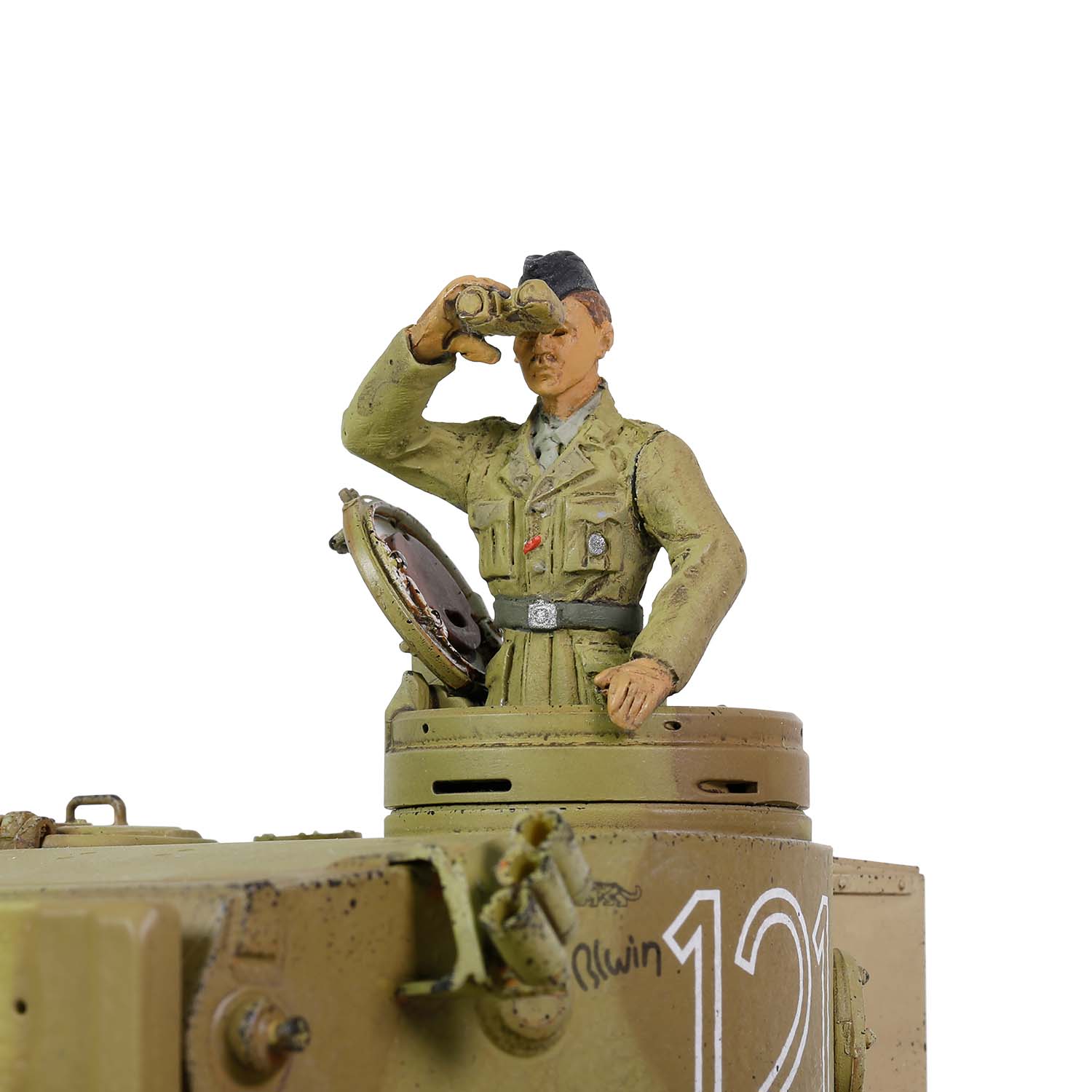
One notable Tiger I, designated turret number '121', belonged to the battalion's command company, typically identified as '11' or '21'. It featured a unique stencil on the left side of the turret, showcasing a hand-painted tiger alongside the name 'Alwin', symbolizing the unit. This particular Tiger I participated in Operation Ochsenkopf, also known as the Battle of Hunt’s Gap, but was ultimately mined and rendered inoperable. Despite its challenges, it managed to survive until the end of the Tunisian Campaign, although its ultimate fate remains uncertain.