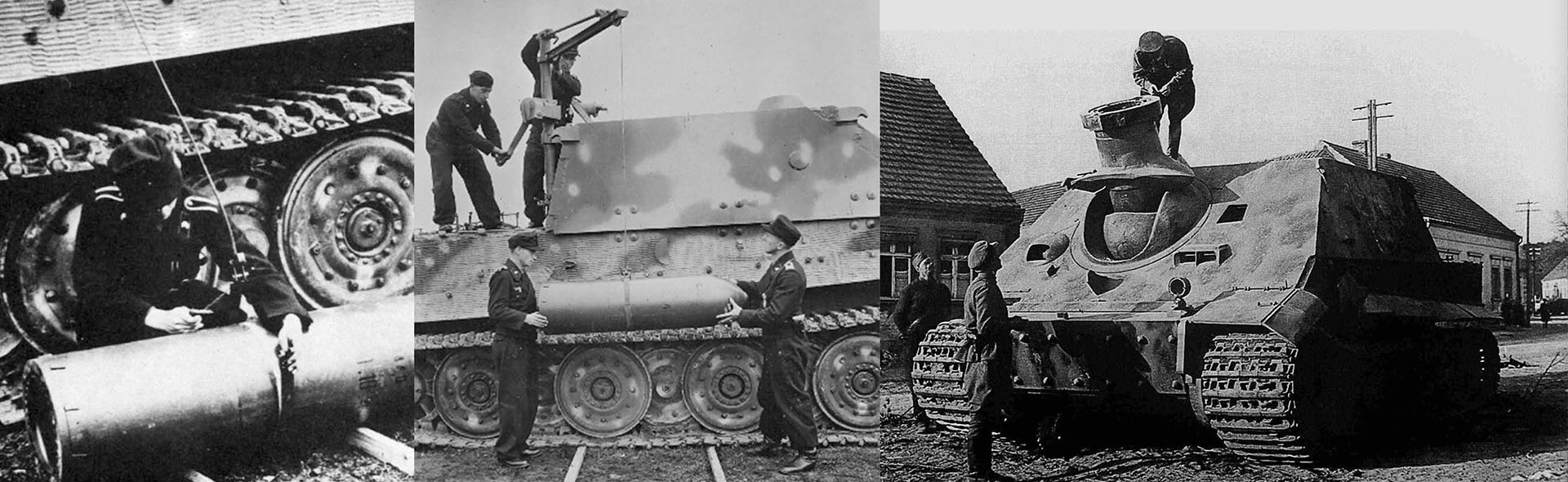
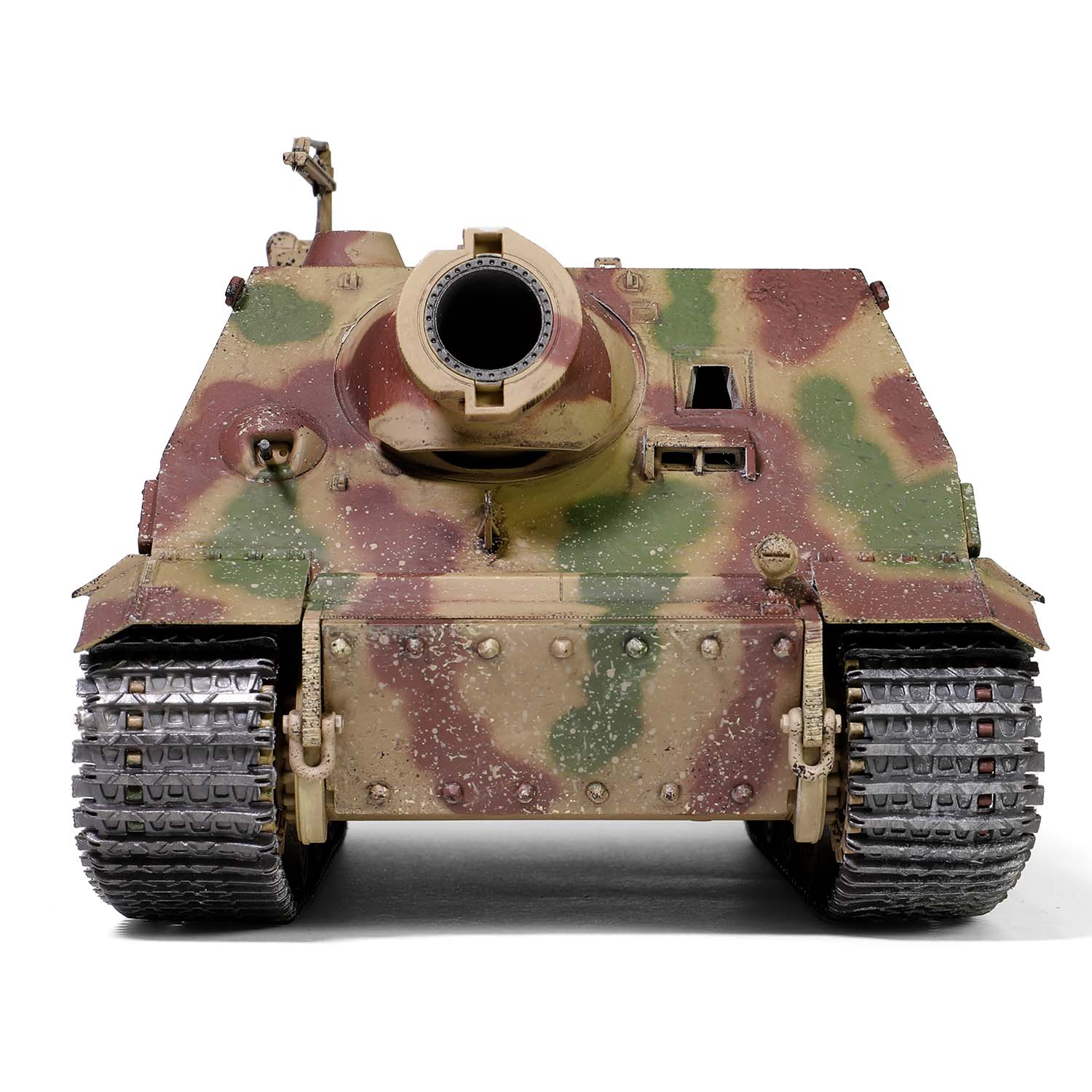
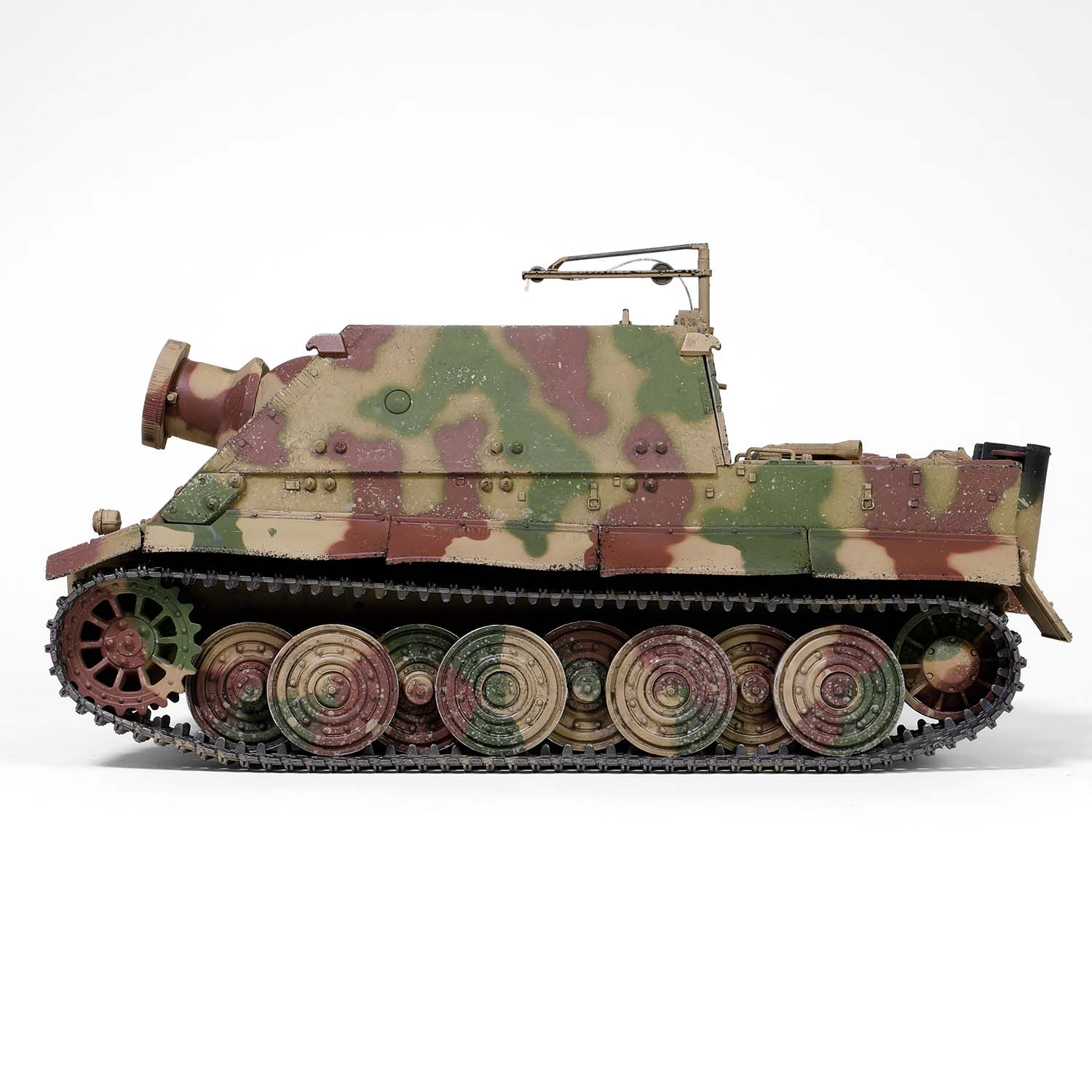
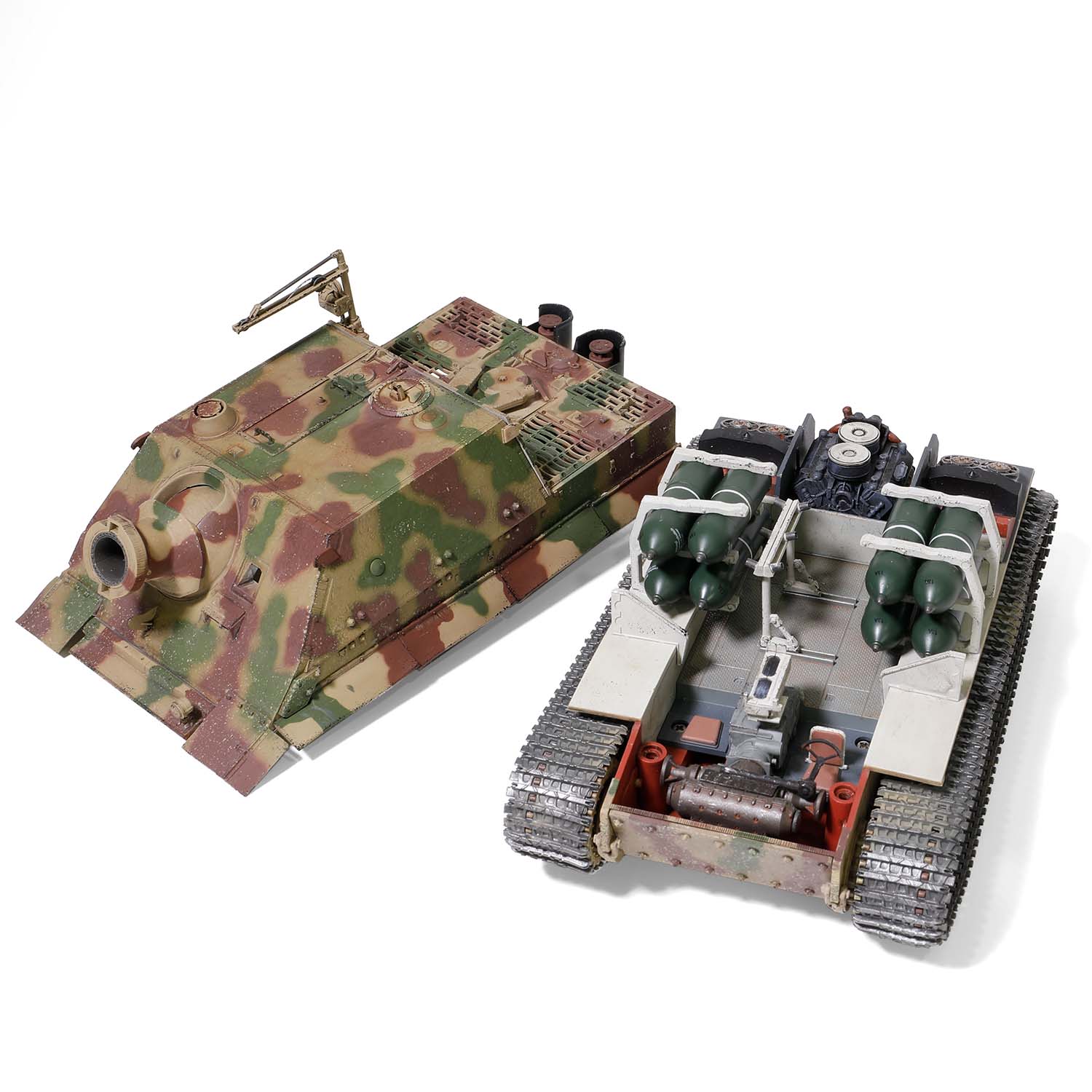
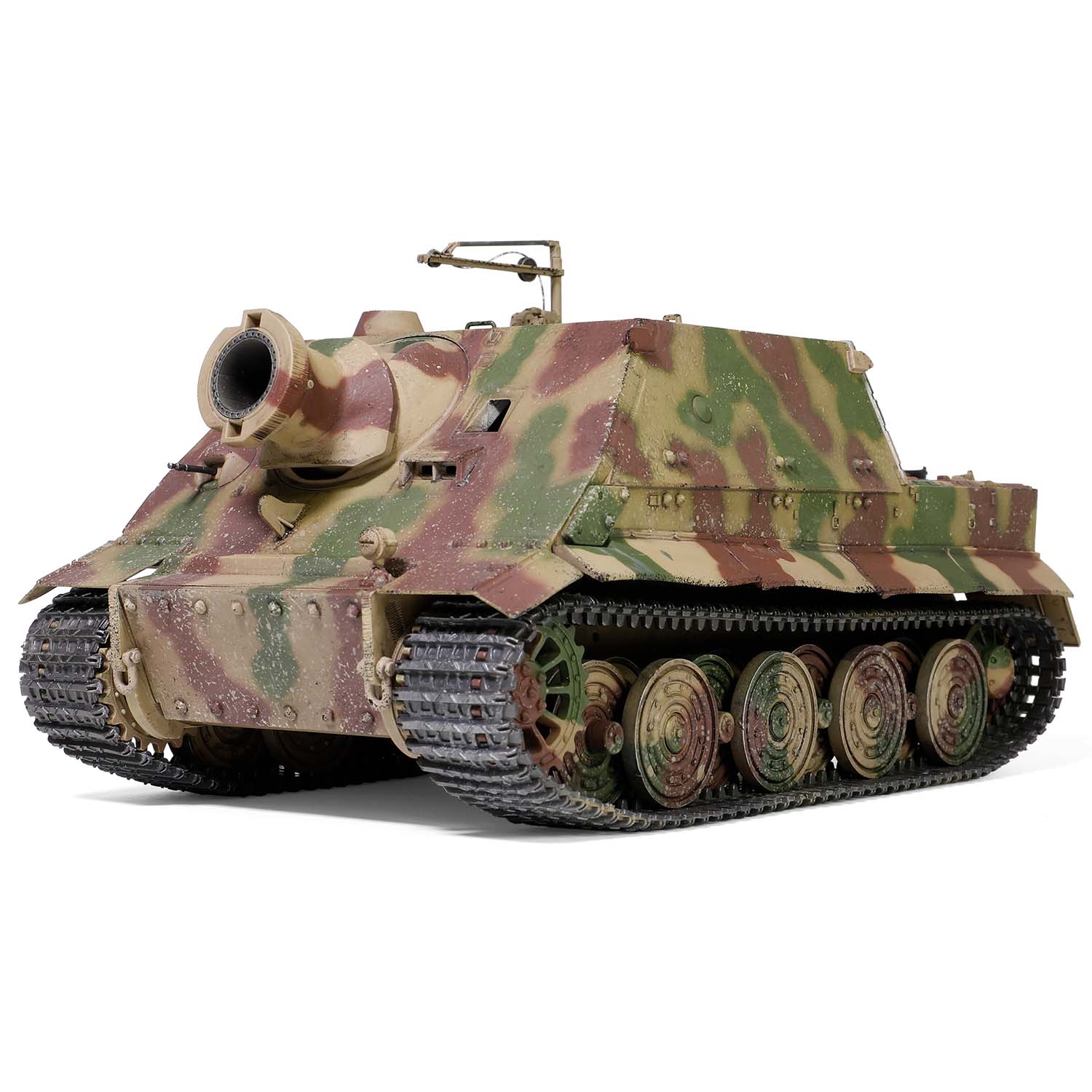
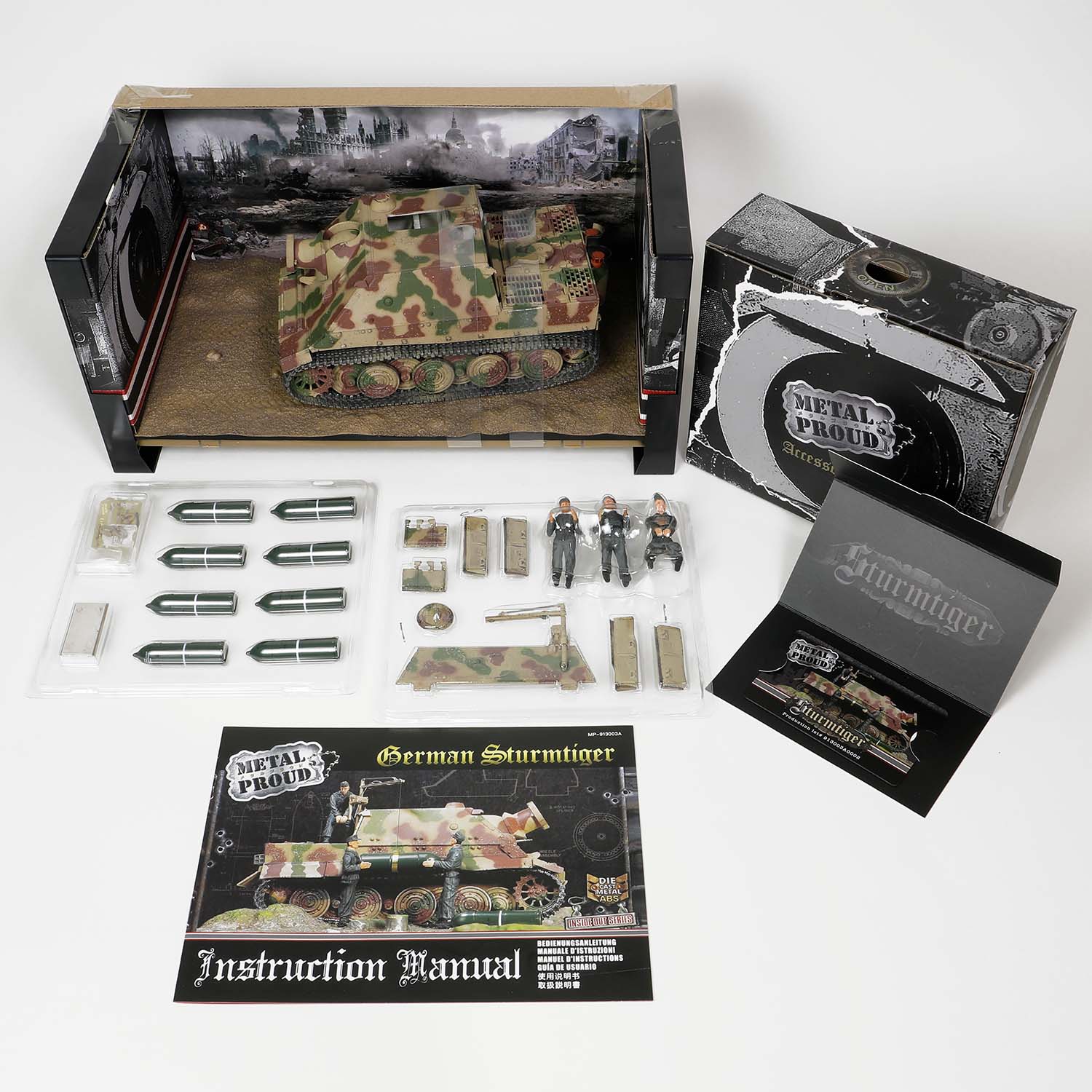
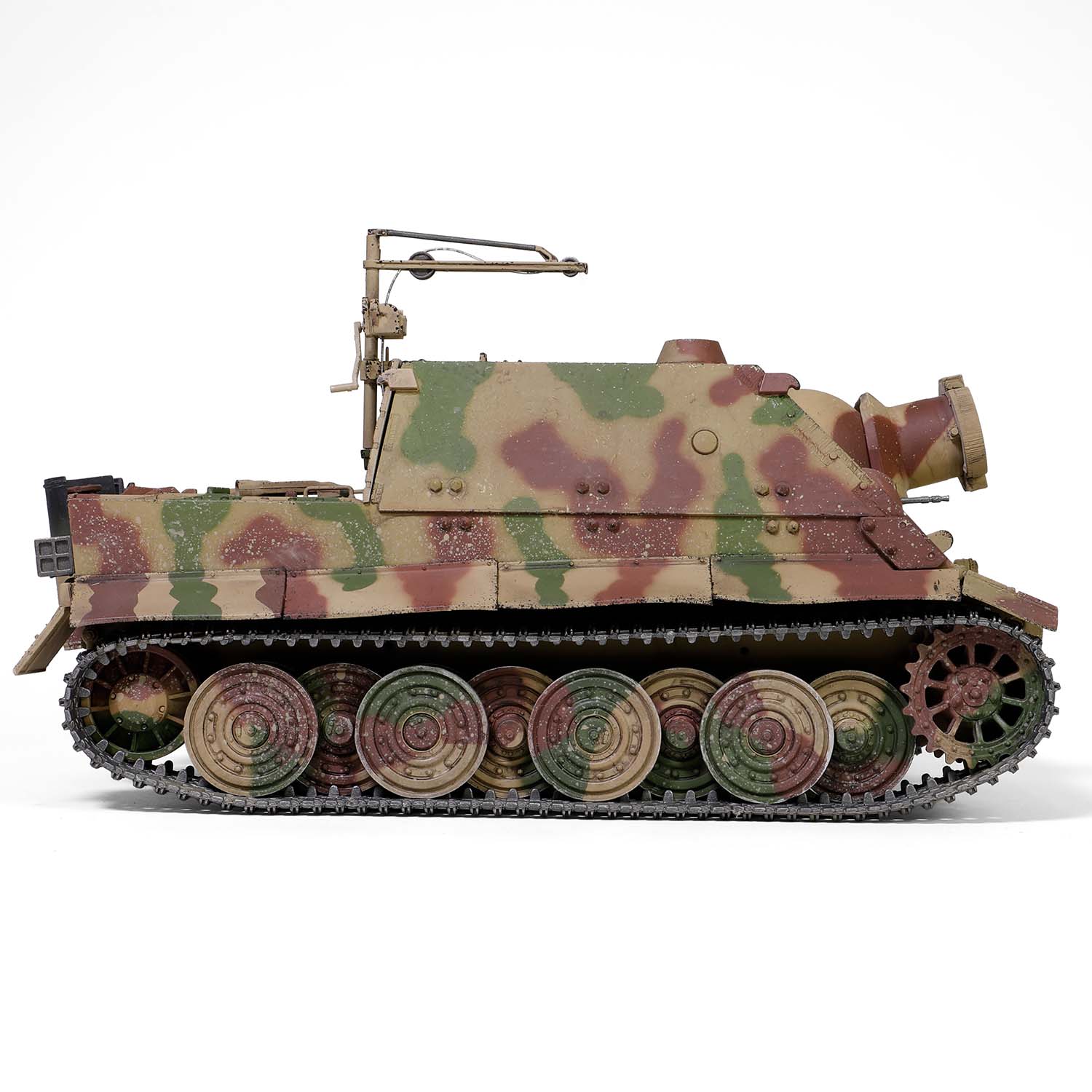
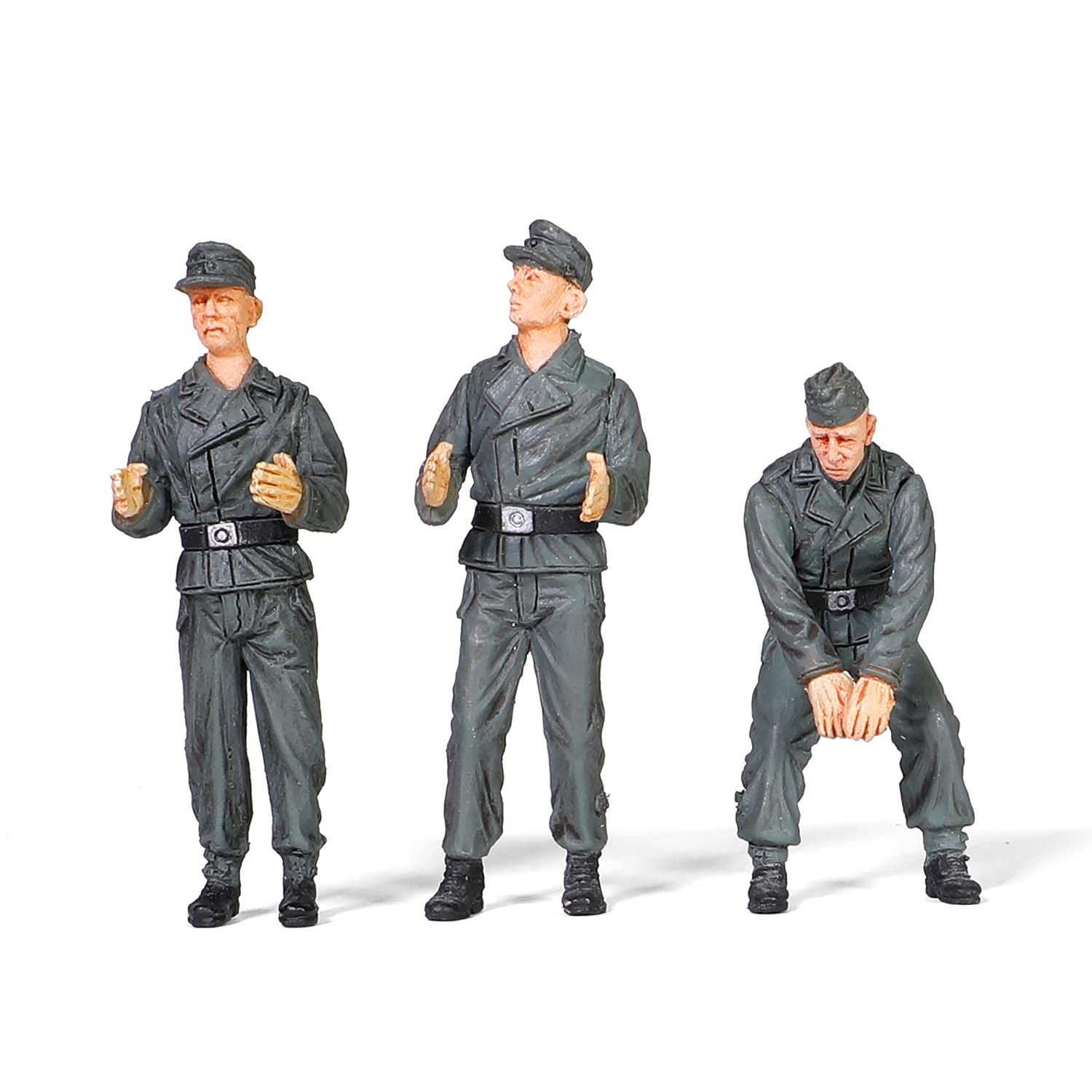
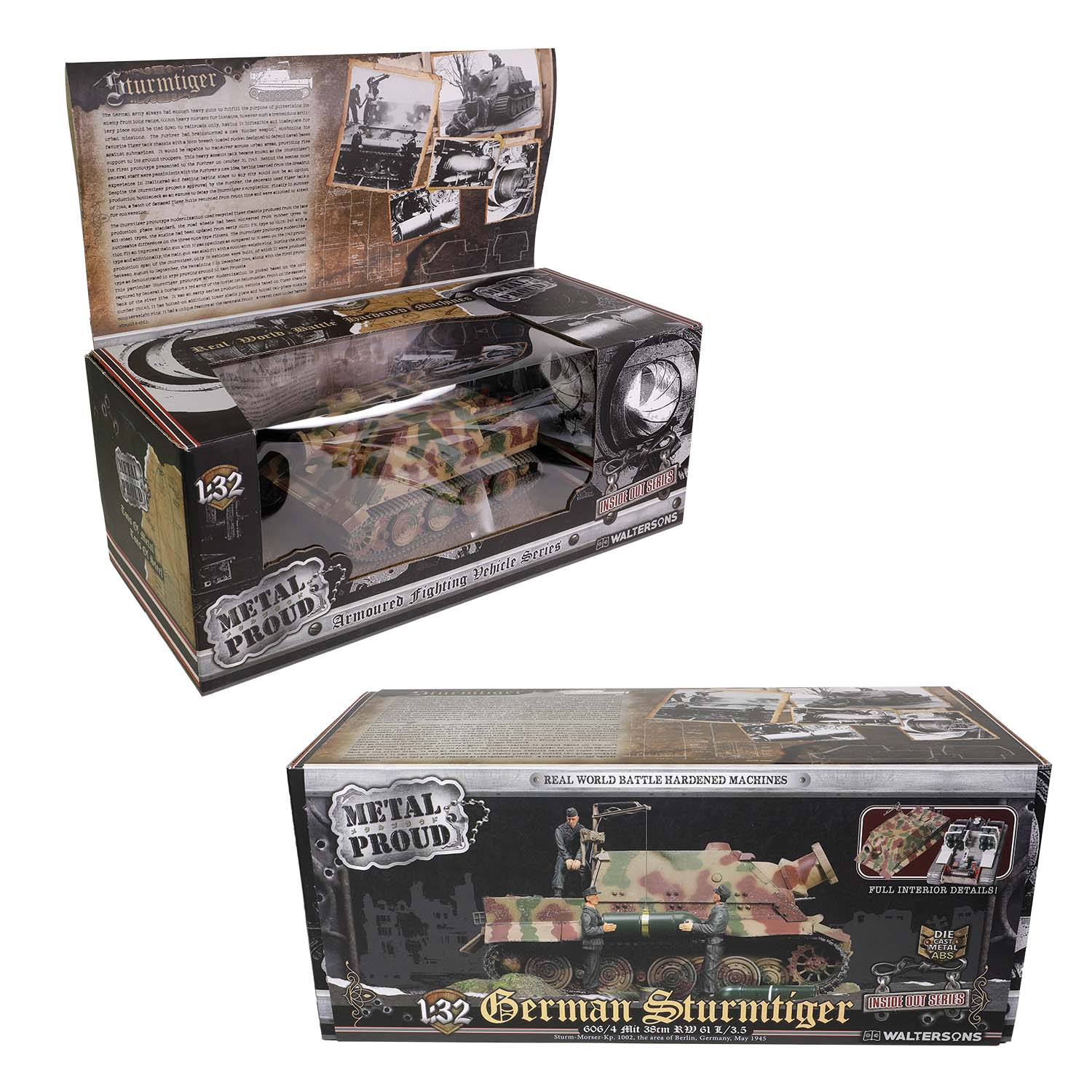
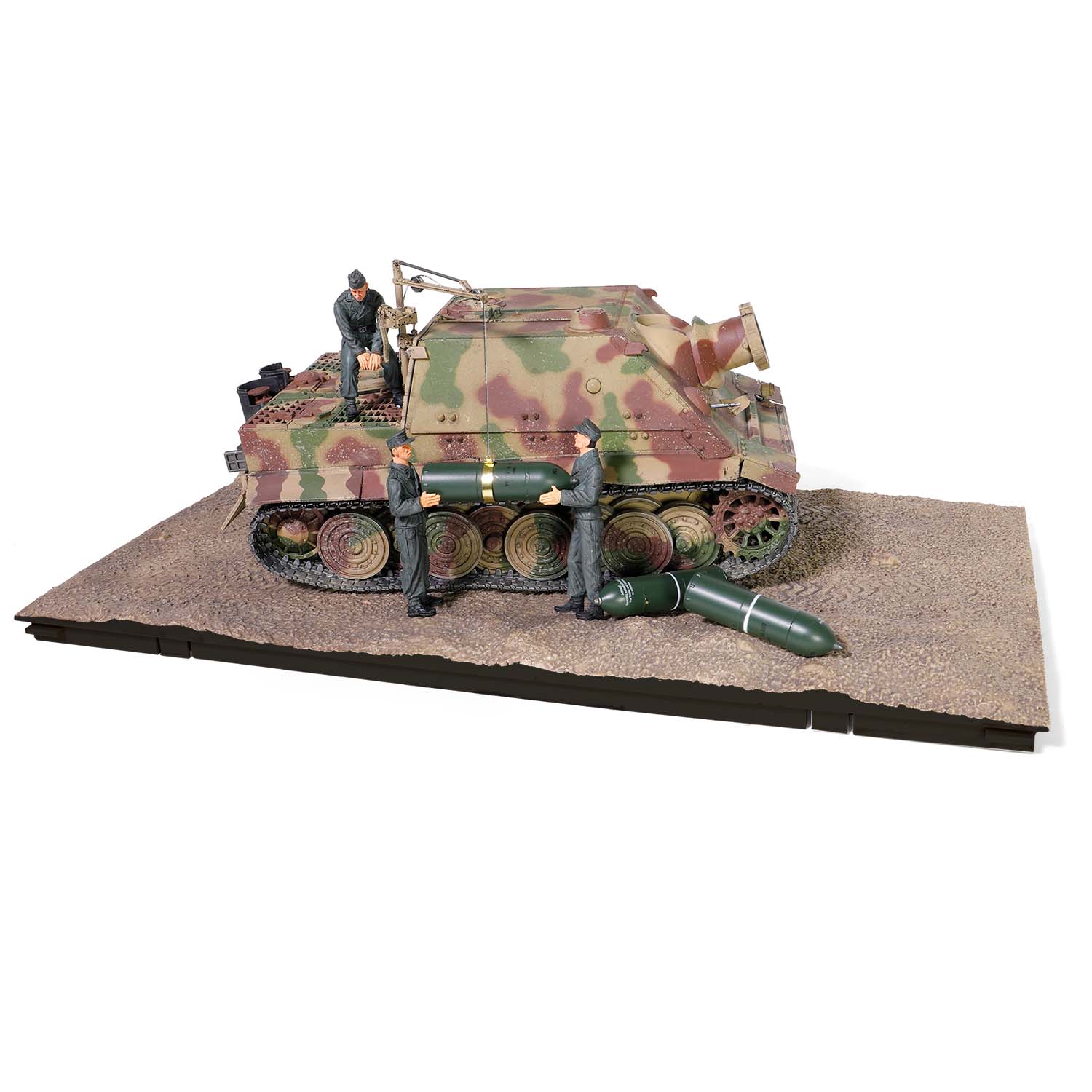
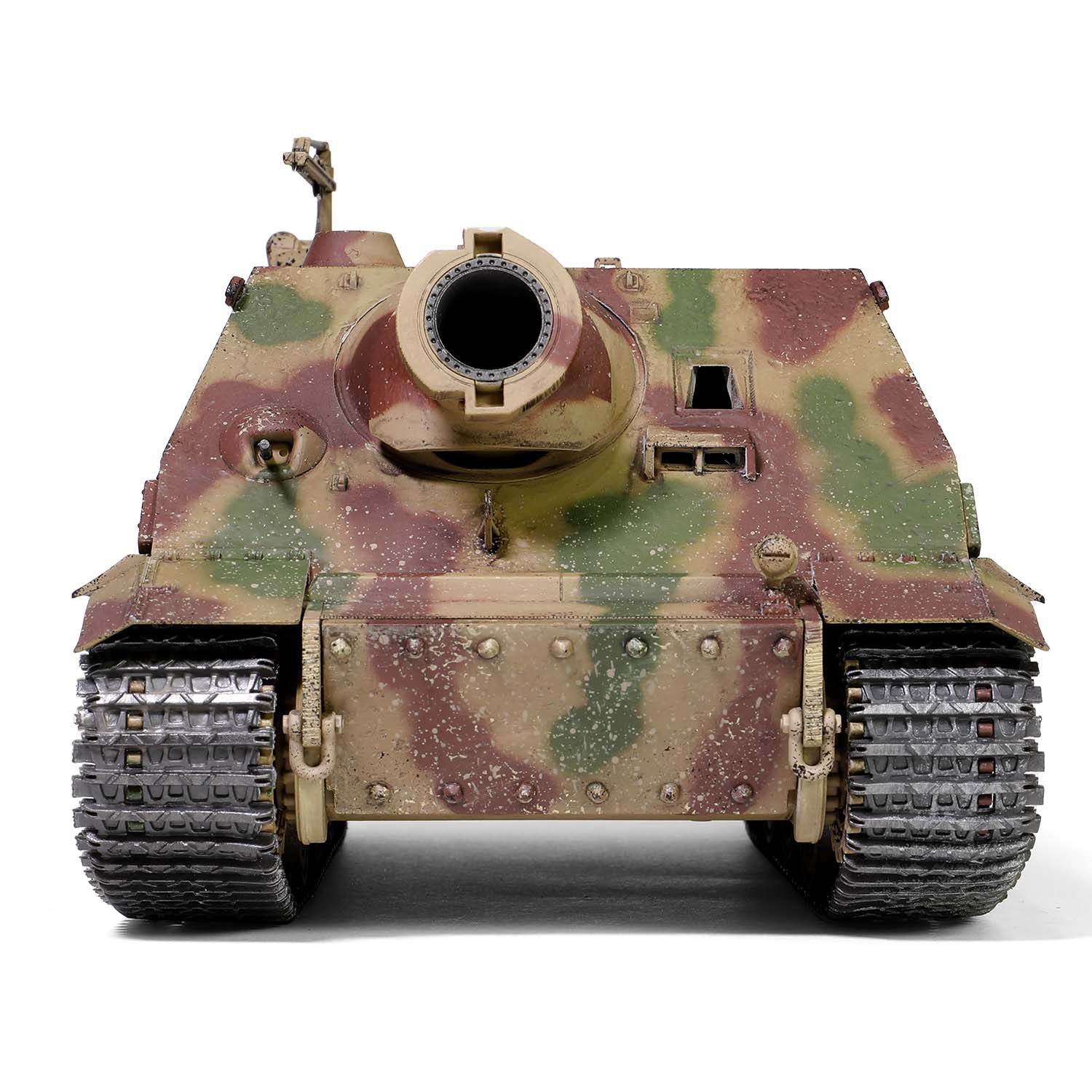
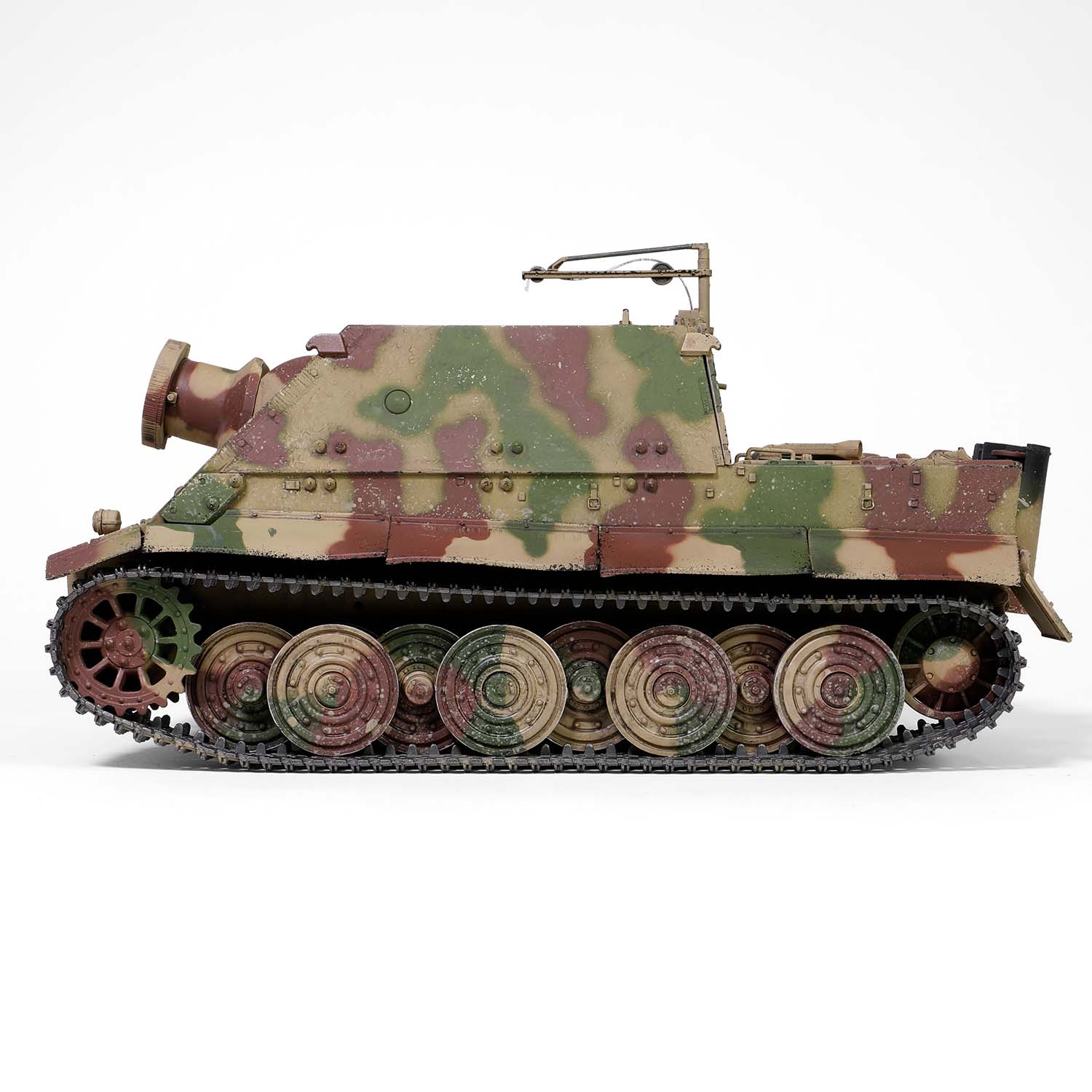
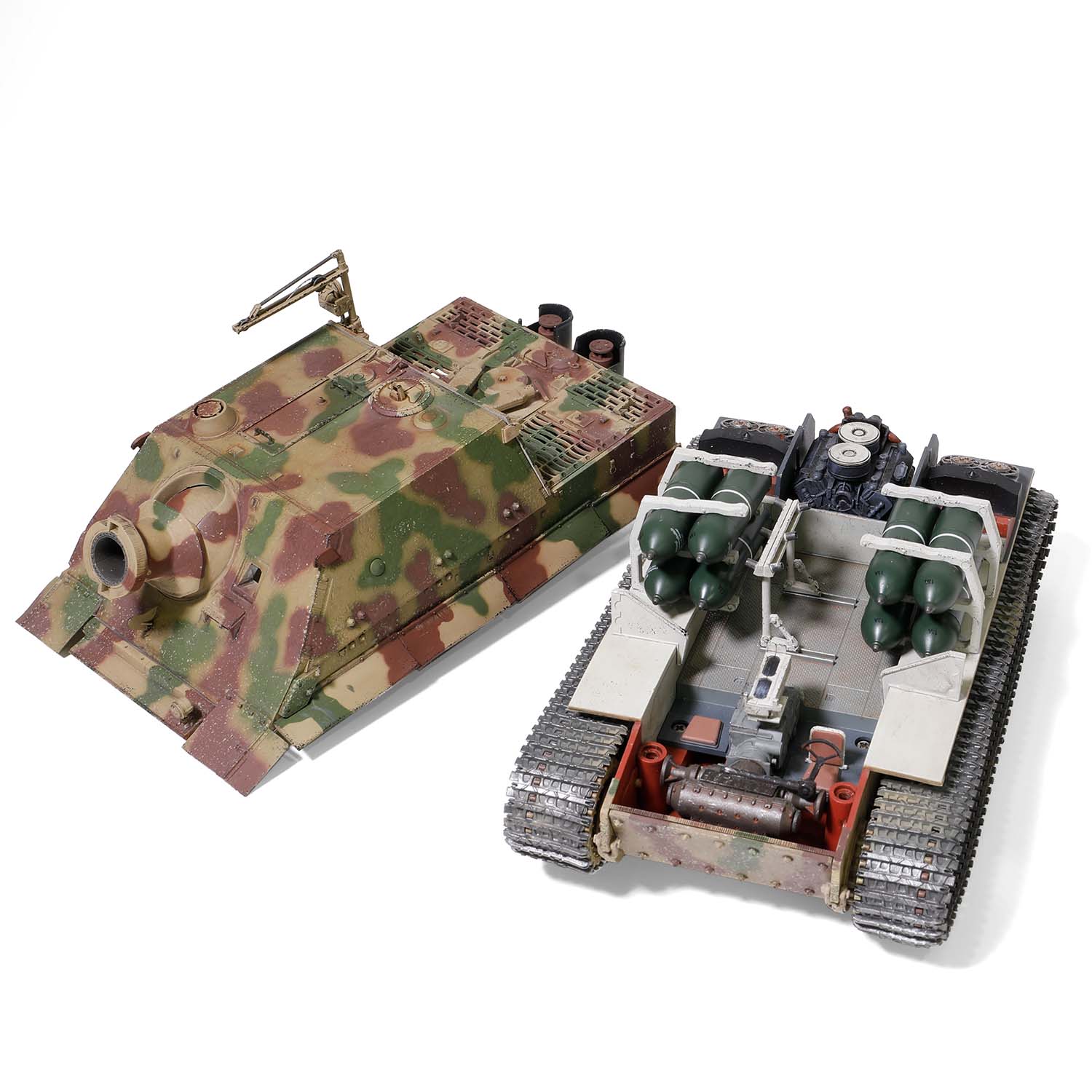
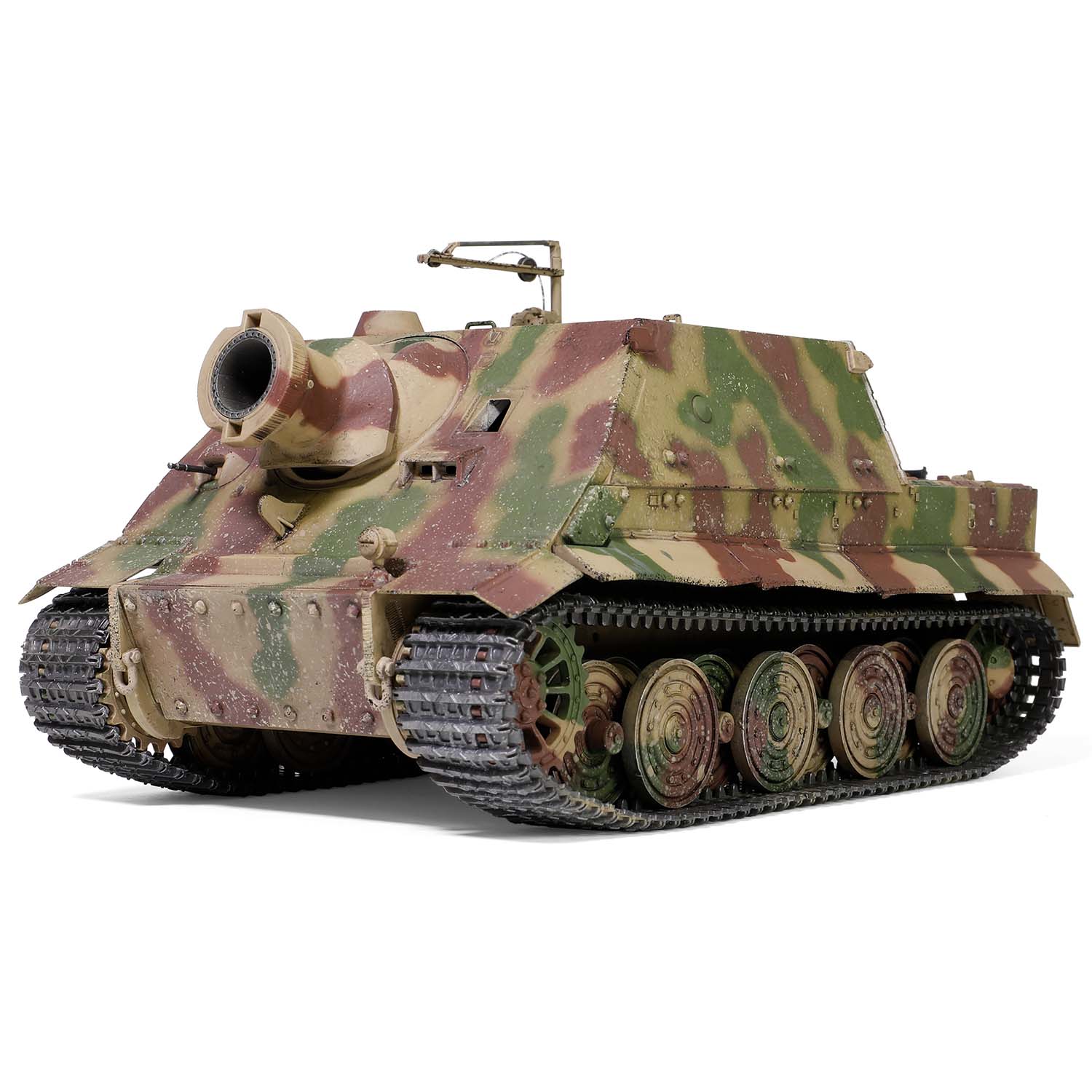
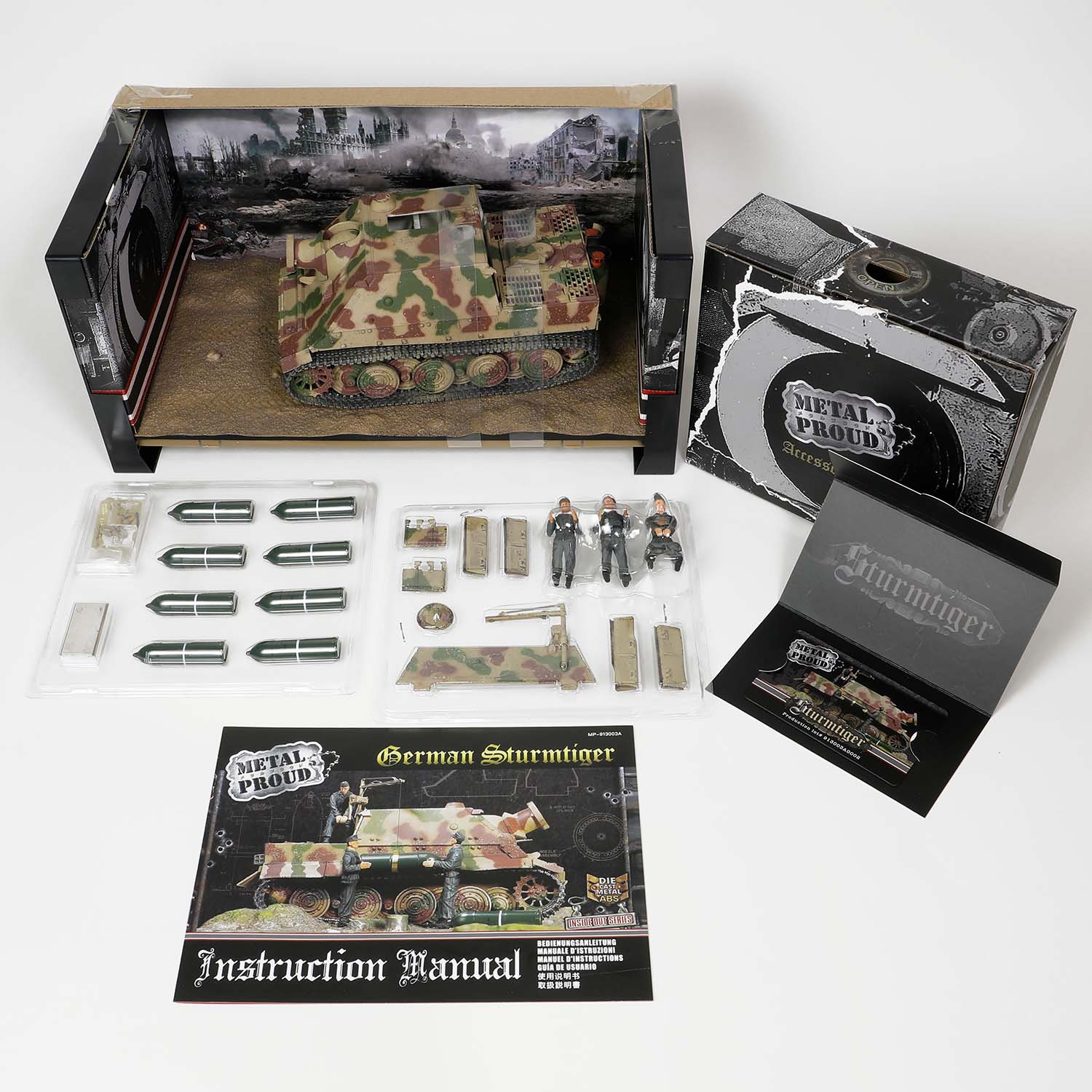
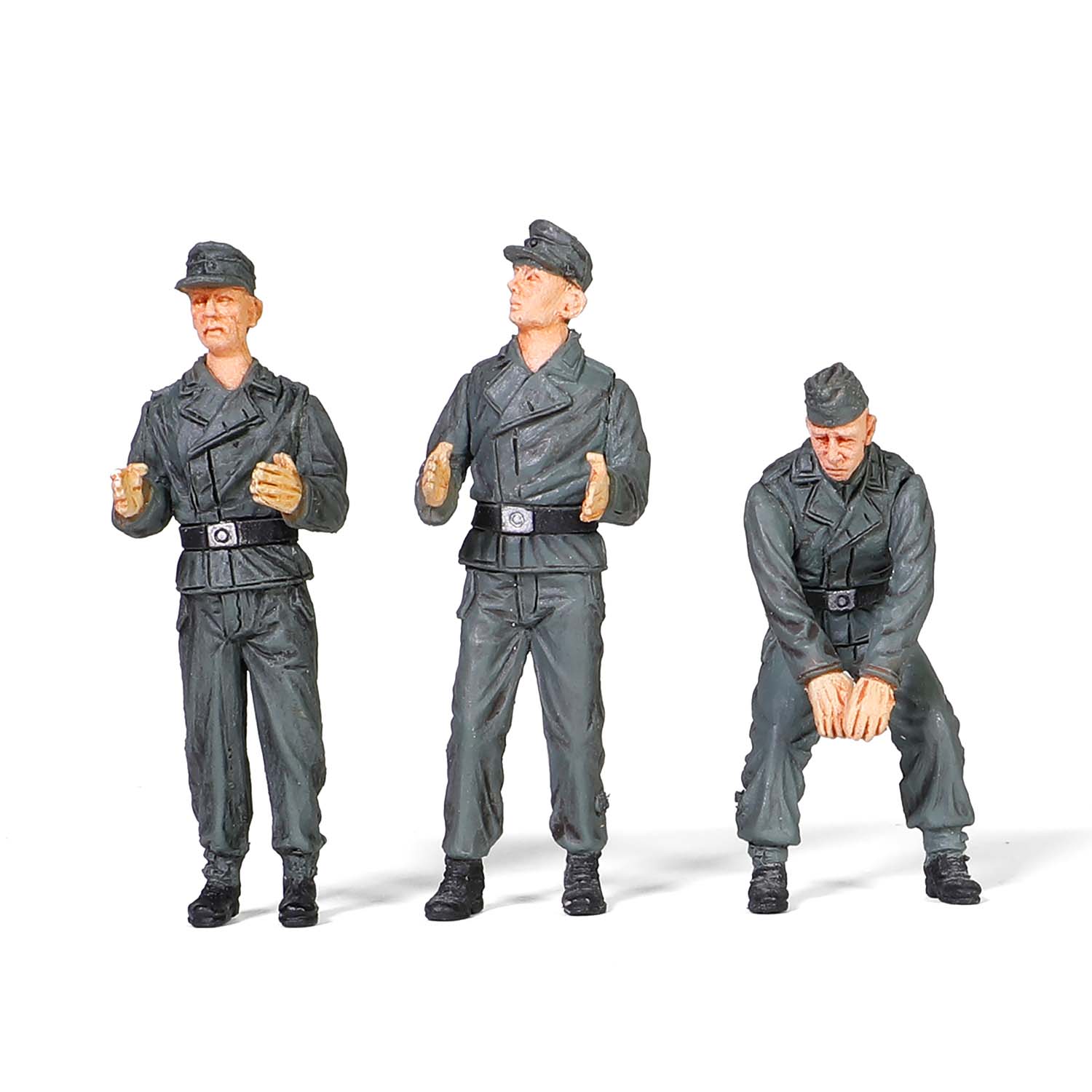
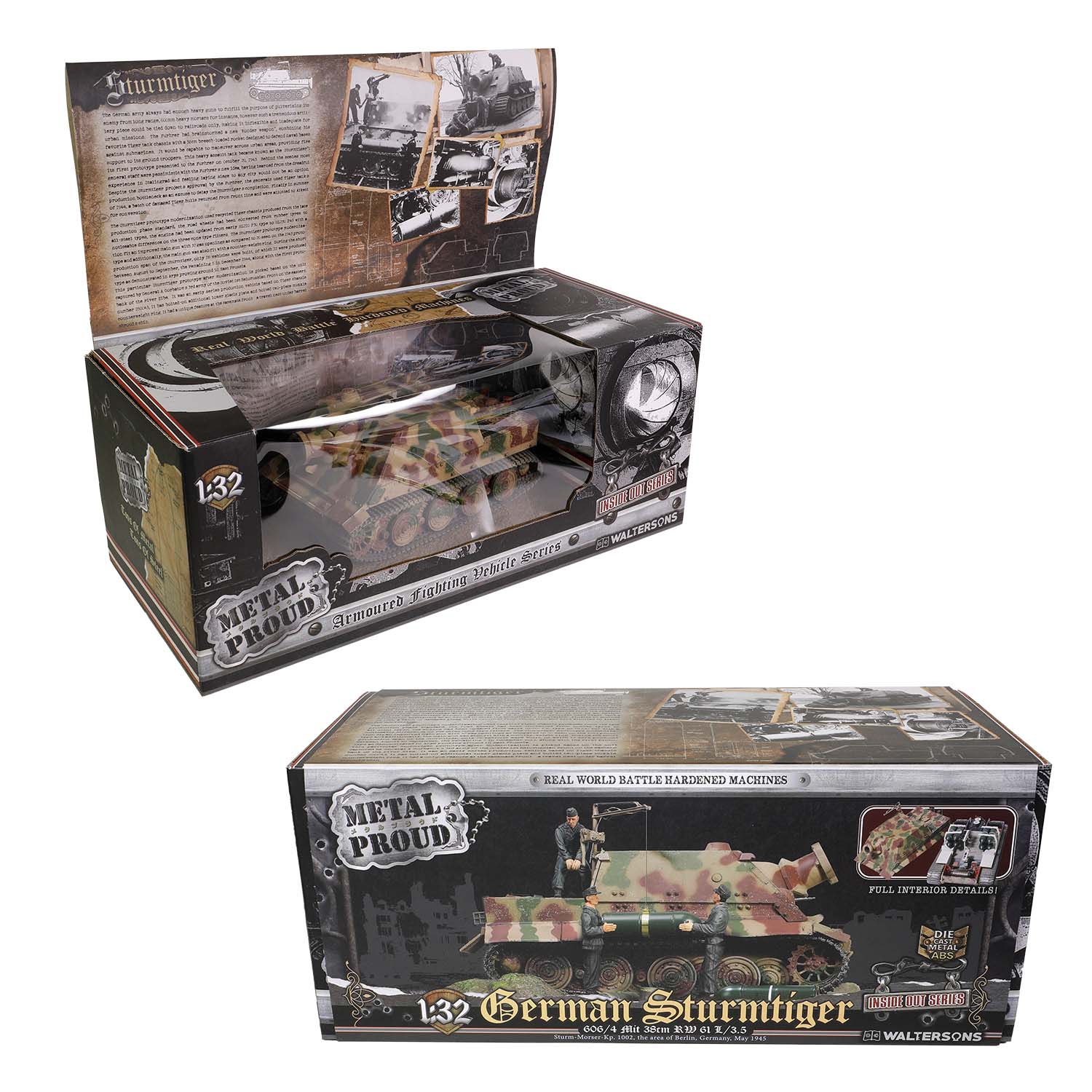
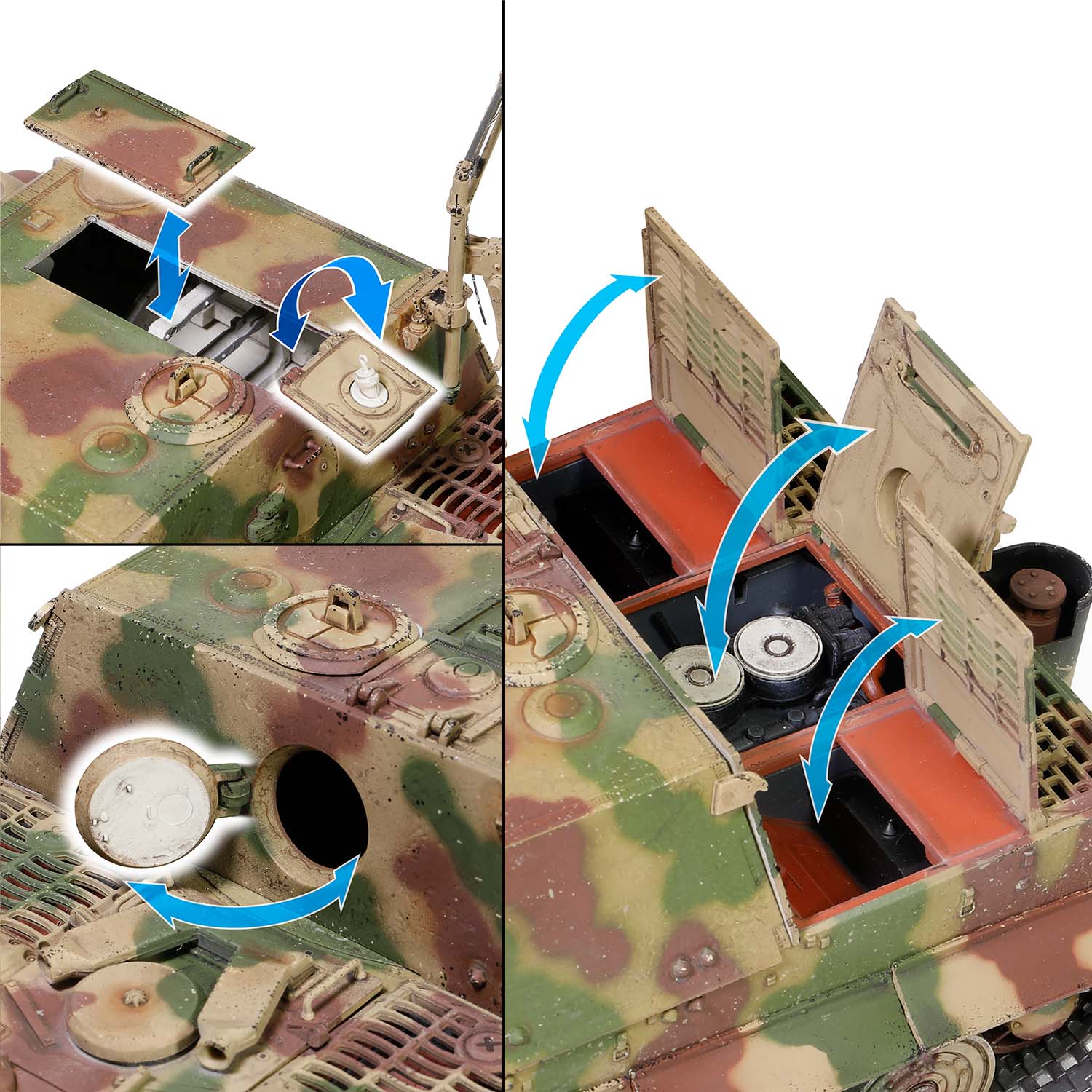
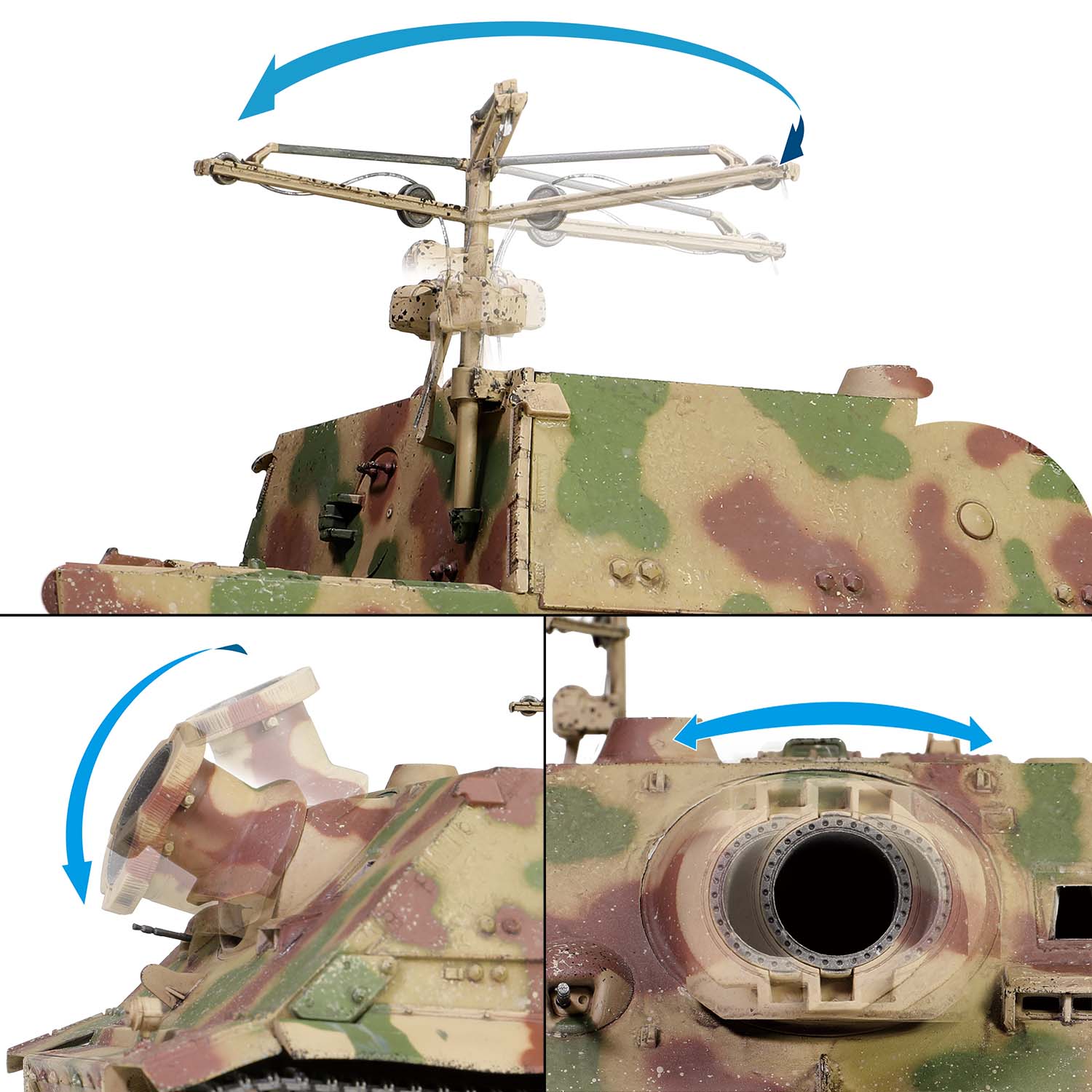
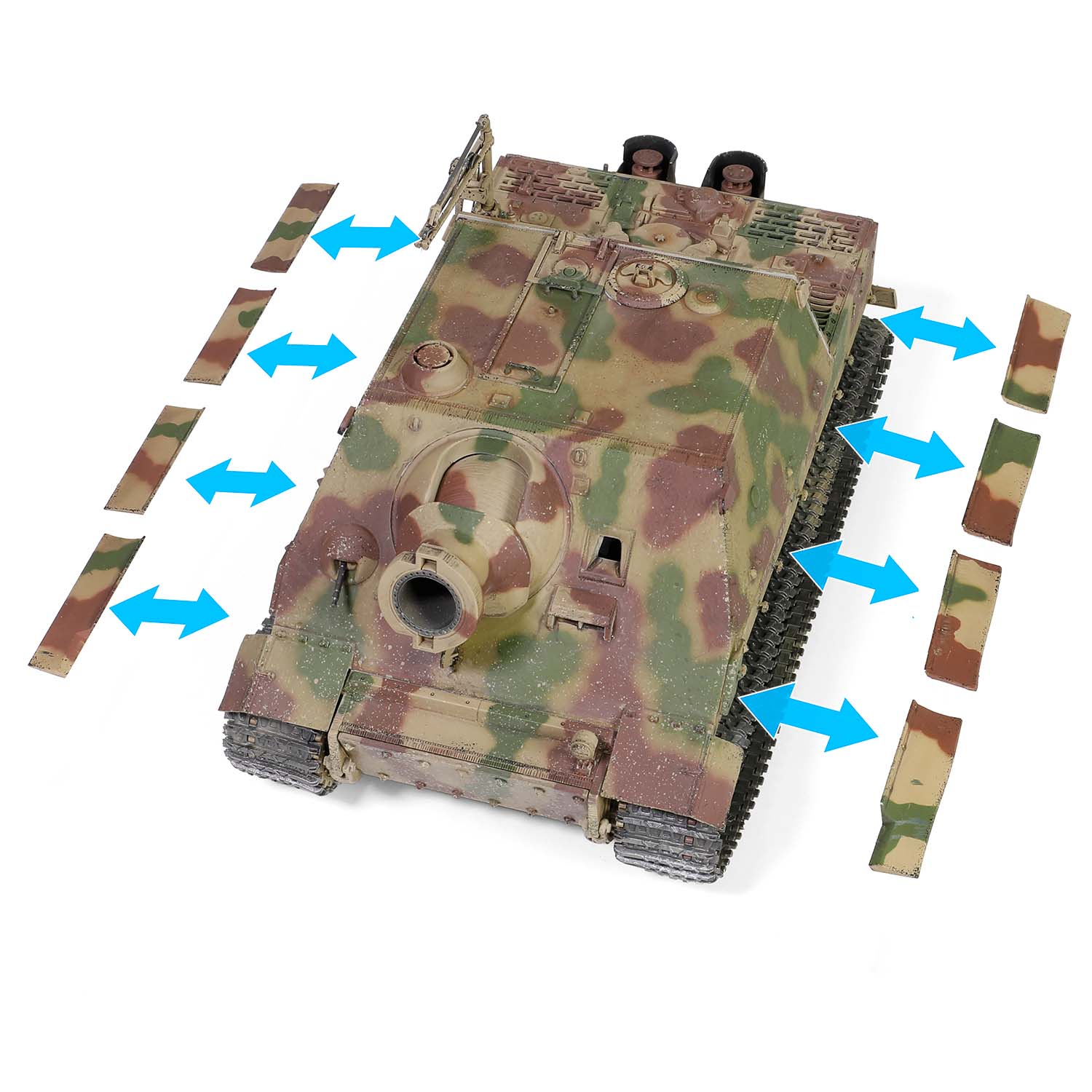
The Sturmtiger, officially known as the Sturmmörser Tiger or Sturmpanzer VI, was a German assault gun utilized during World War II. Built on the chassis of the Tiger I tank, it featured a formidable 380mm SturmMörser RW61 L/3.5 naval depth charge launcher adapted for use as a heavy mortar, aimed at providing close fire support for infantry in urban settings. Despite its impressive design, only 18 units were produced, all derived from damaged Tiger I tanks. While Germany had access to heavy artillery like the 600mm Karl-Gerät mortar for long-range attacks, these stationary weapons lacked the necessary mobility for urban combat. To overcome this challenge, German commanders innovatively combined the Tiger I chassis with a 38cm breech-loading rocket launcher initially intended for anti-submarine defense, thus creating a mobile platform capable of delivering significant firepower. The Sturmtiger was first showcased to Adolf Hitler on October 20, 1943, but many military leaders were skeptical of its practicality, particularly after the harsh lessons learned from the Battle of Stalingrad. Despite Hitler's enthusiasm, Wehrmacht generals intentionally delayed the project, using production issues with the Tiger tank chassis as a pretext for their reluctance.
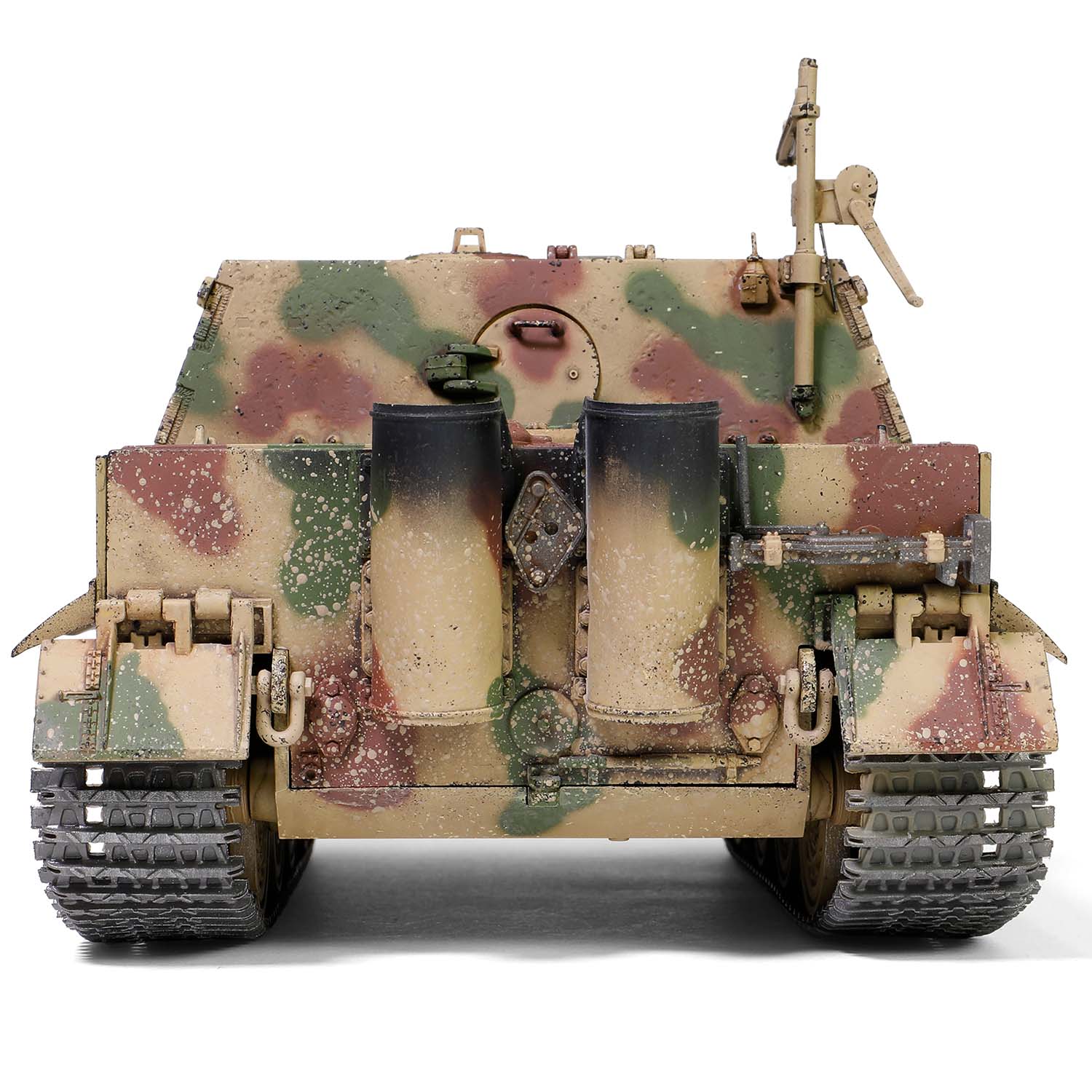
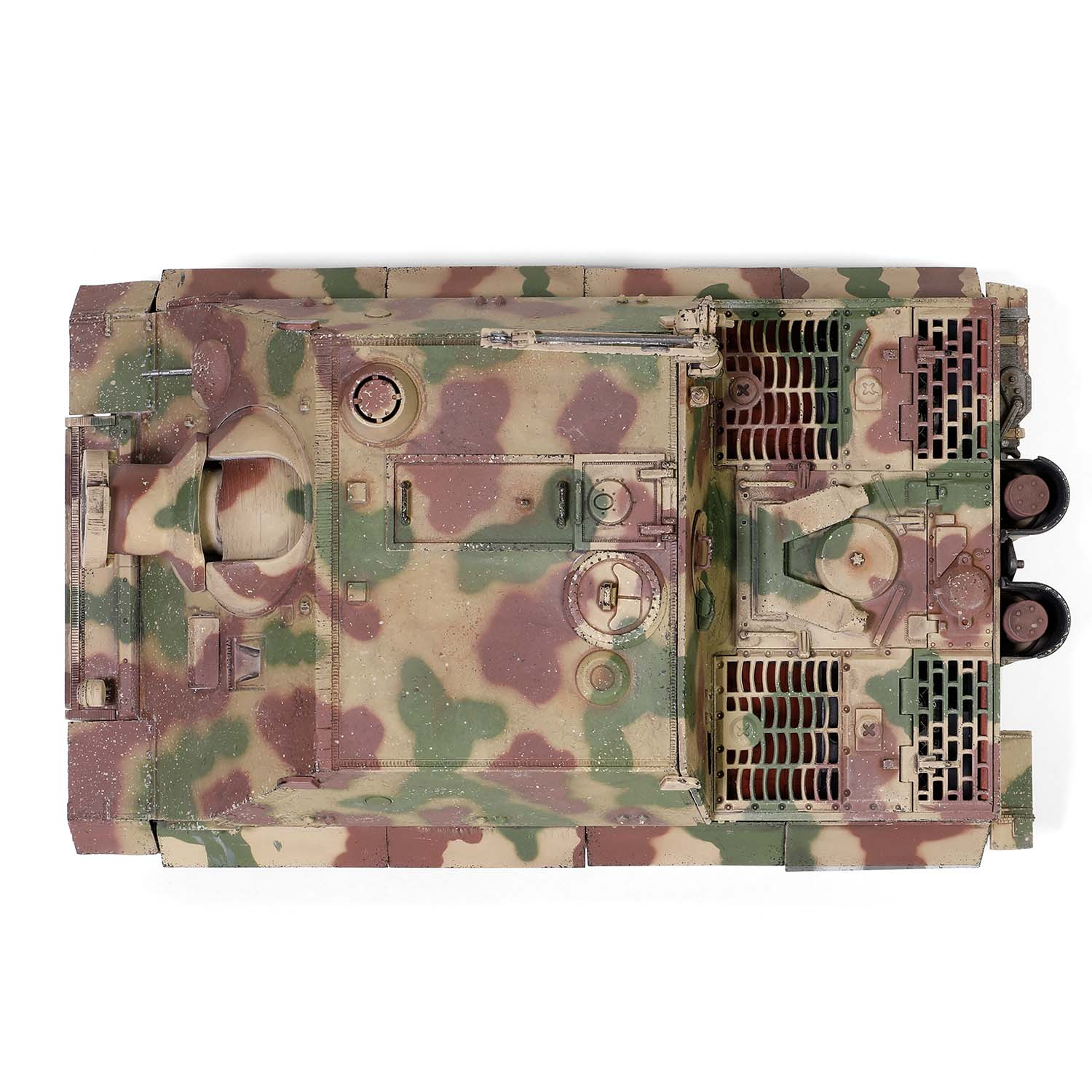
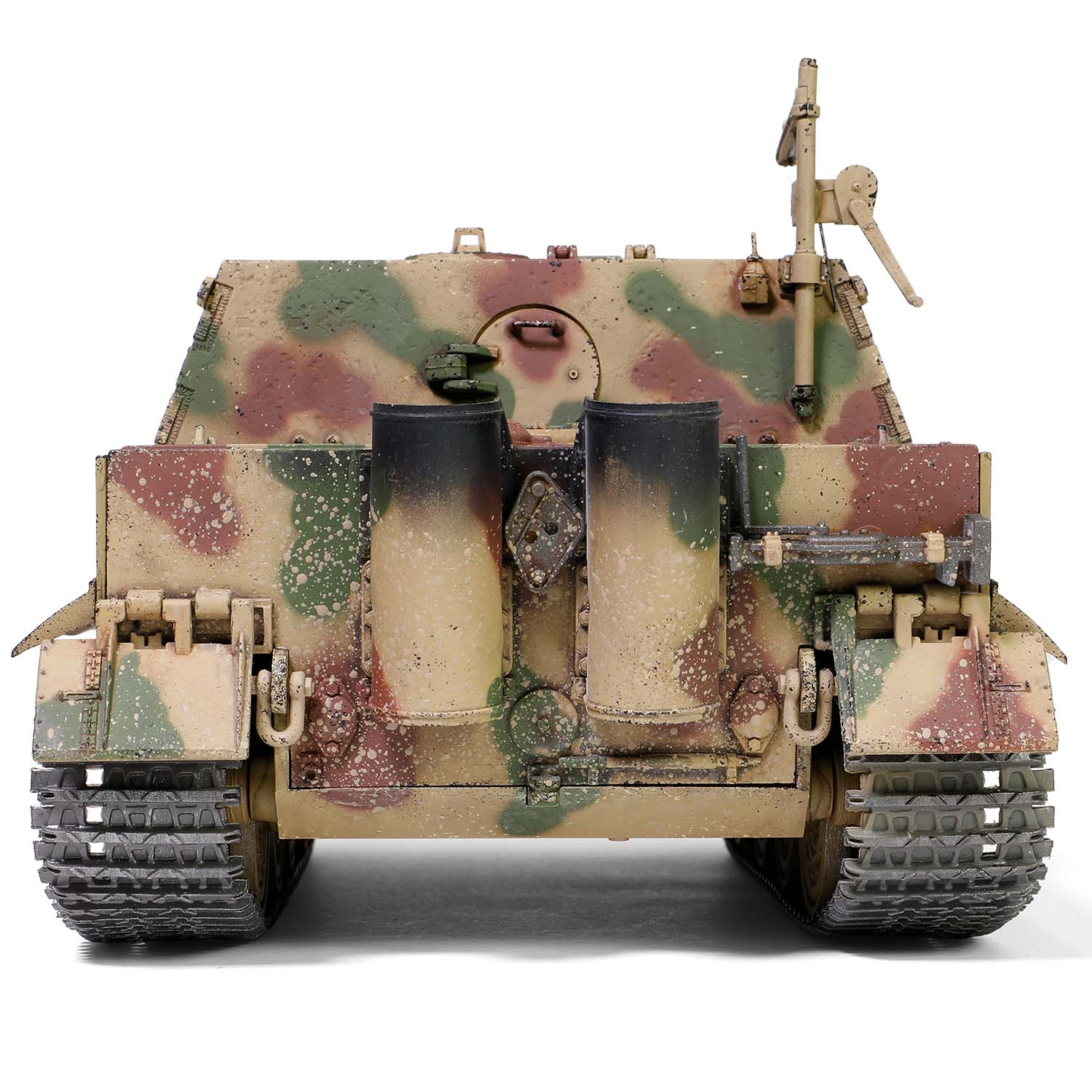
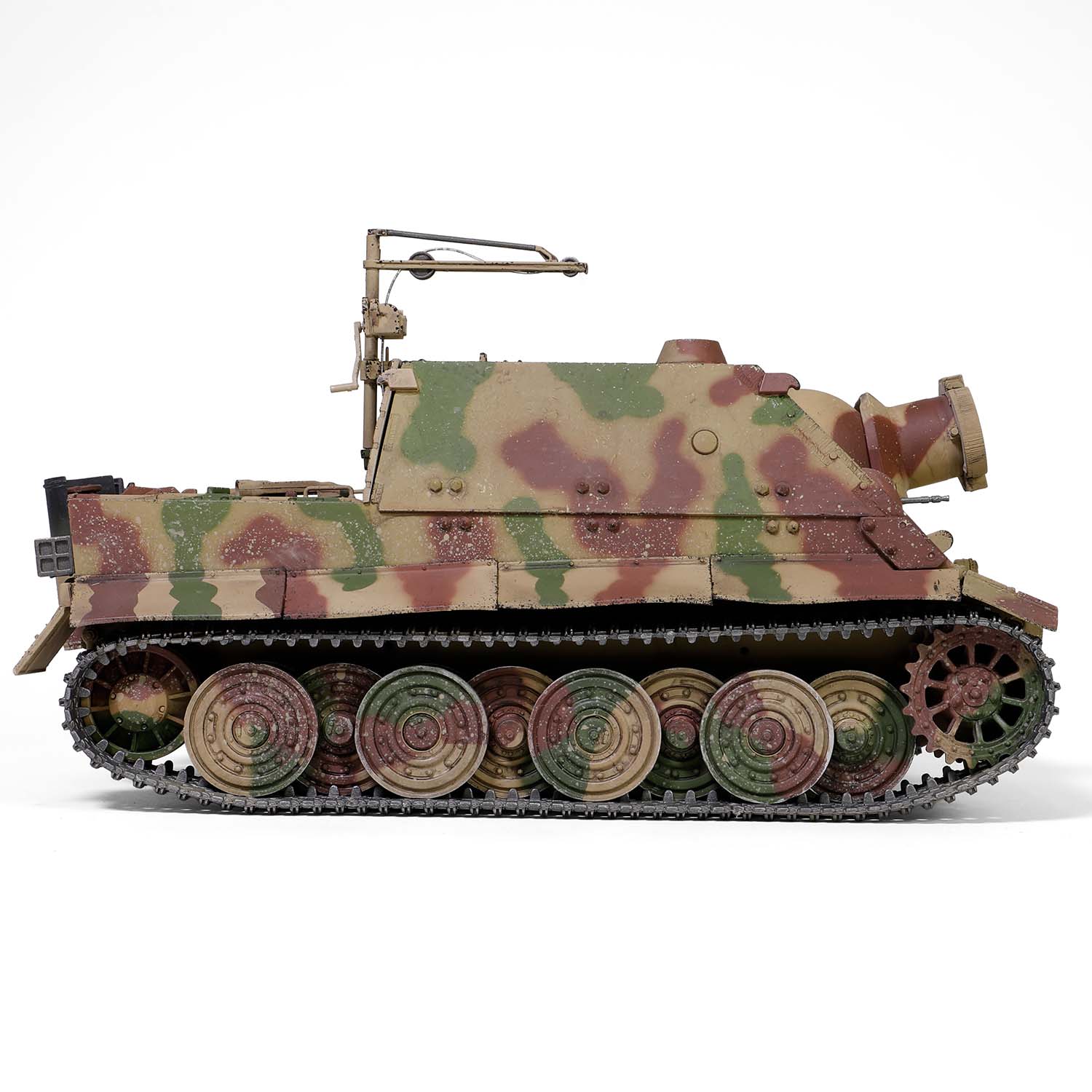
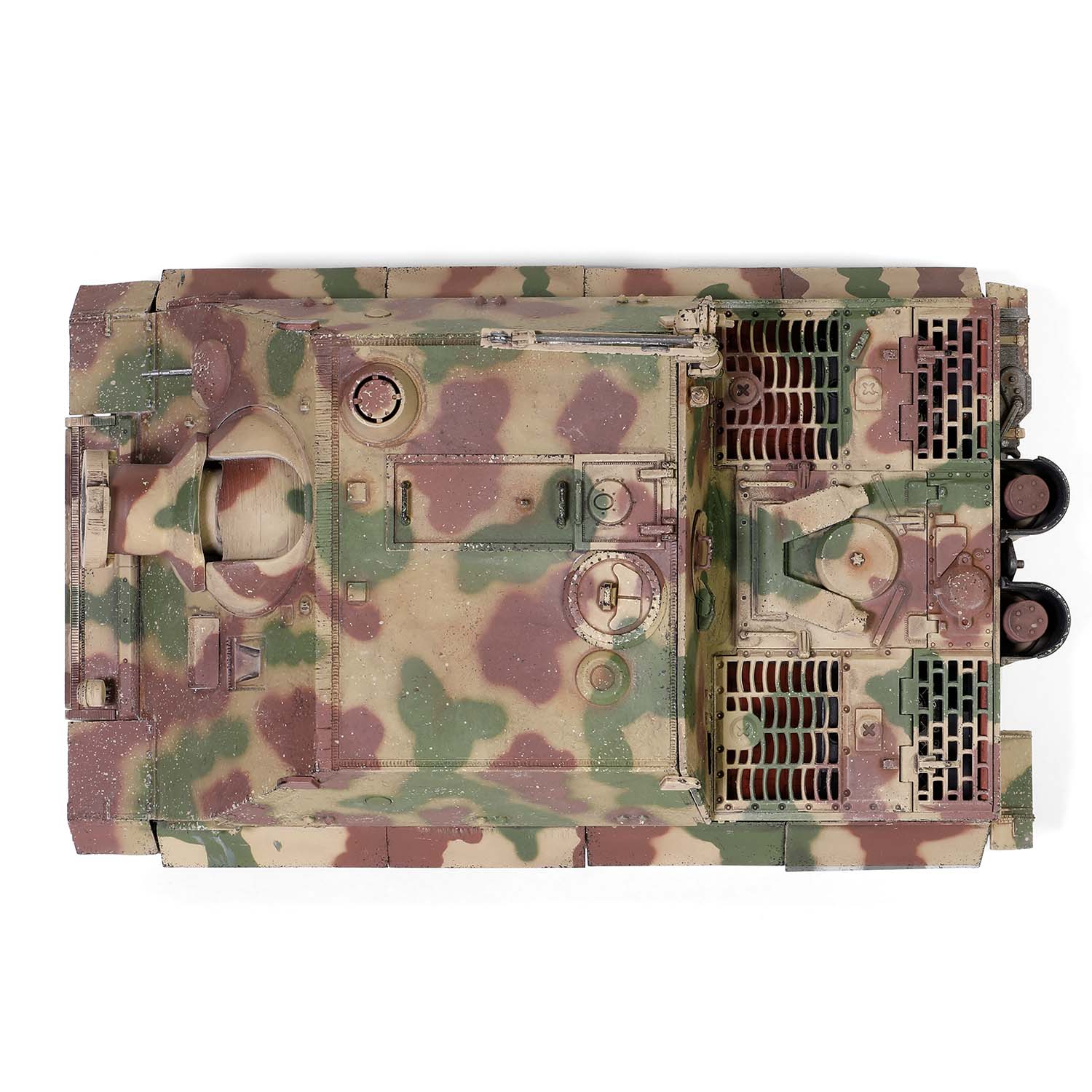
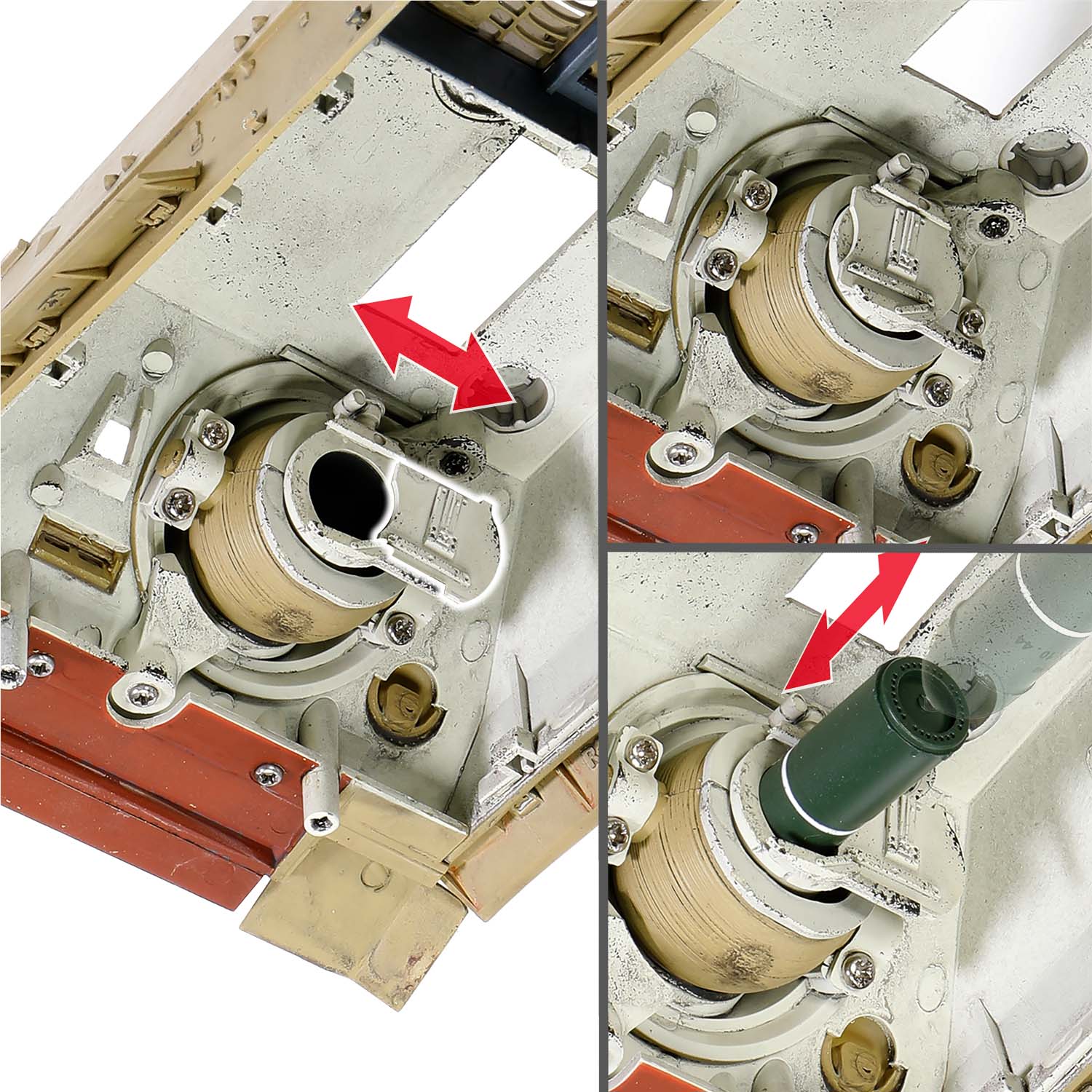
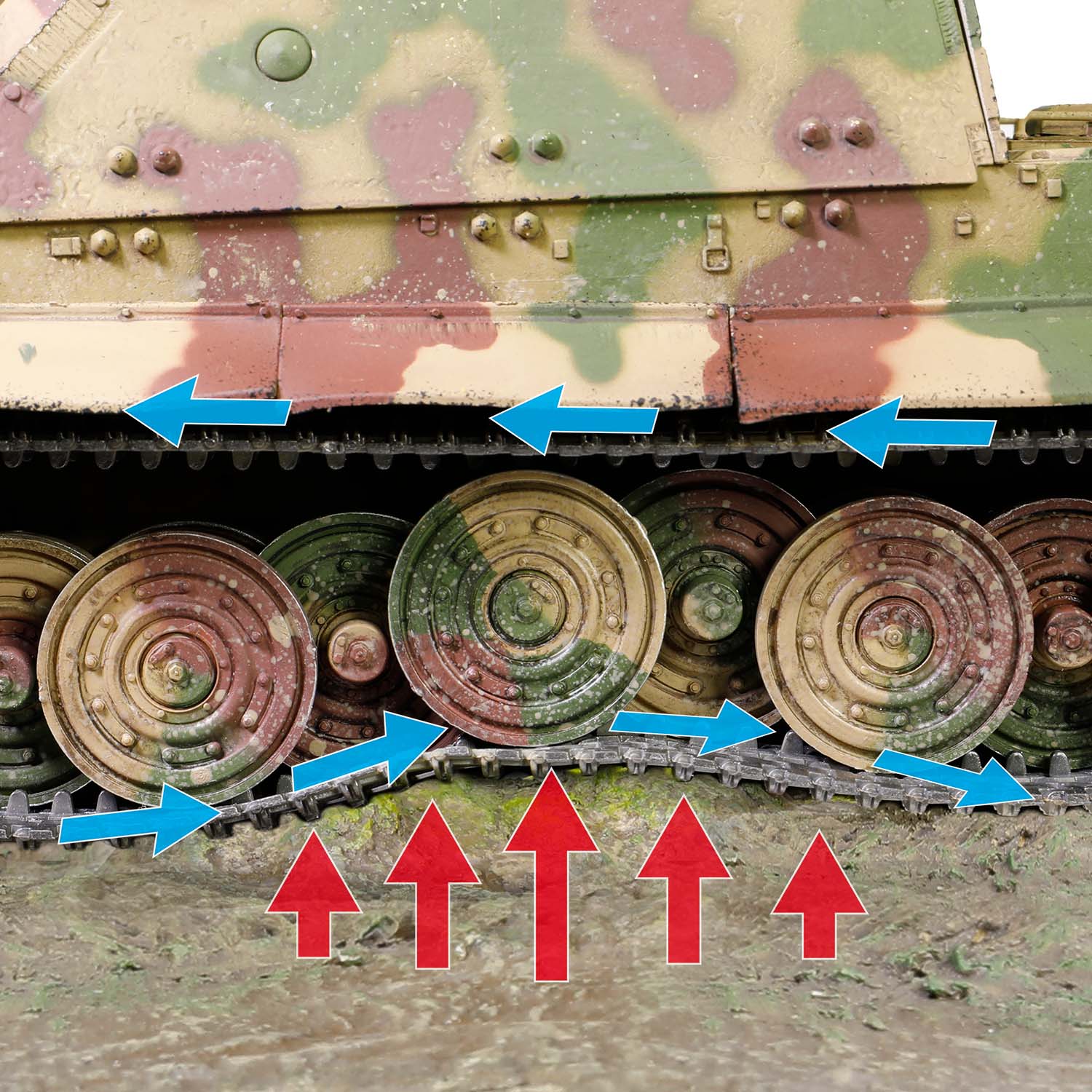
The long-awaited Sturmtiger project came to fruition in the summer of 1944 when a selection of battle-damaged Tiger tanks was recalled from the frontlines and sent to Alkett for conversion. These prototype assault guns were built on refurbished late-production Tiger chassis, which featured significant enhancements: the original rubber-rimmed road wheels were replaced with all-steel variants, and the HL210 P30 engines were upgraded to the more powerful HL230 P45 models equipped with triple conical air filters. Additionally, the massive mortar underwent engineering improvements, with the production version incorporating 32 vent holes compared to the prototype's 20, along with a counterweight ring to enhance stability. Ultimately, only 18 units were produced, with 12 completed between August and September 1944, followed by 5 more in December, and one original prototype displayed at the Arys testing grounds in East Prussia.
This modernized prototype of the Sturmtiger was seized by the Soviet 3rd Army, part of the 1st Belorussian Front, commanded by General Alexander Vasilyevich, on the eastern shore of the Elbe River. Constructed on the chassis of early-production Tiger #250043, the vehicle showcased several notable enhancements, including bolt-on ice cleats designed for winter operations, a distinctive two-piece bolted muzzle counterweight, and an innovative barrel travel lock affixed to the front of the gun mantlet.